
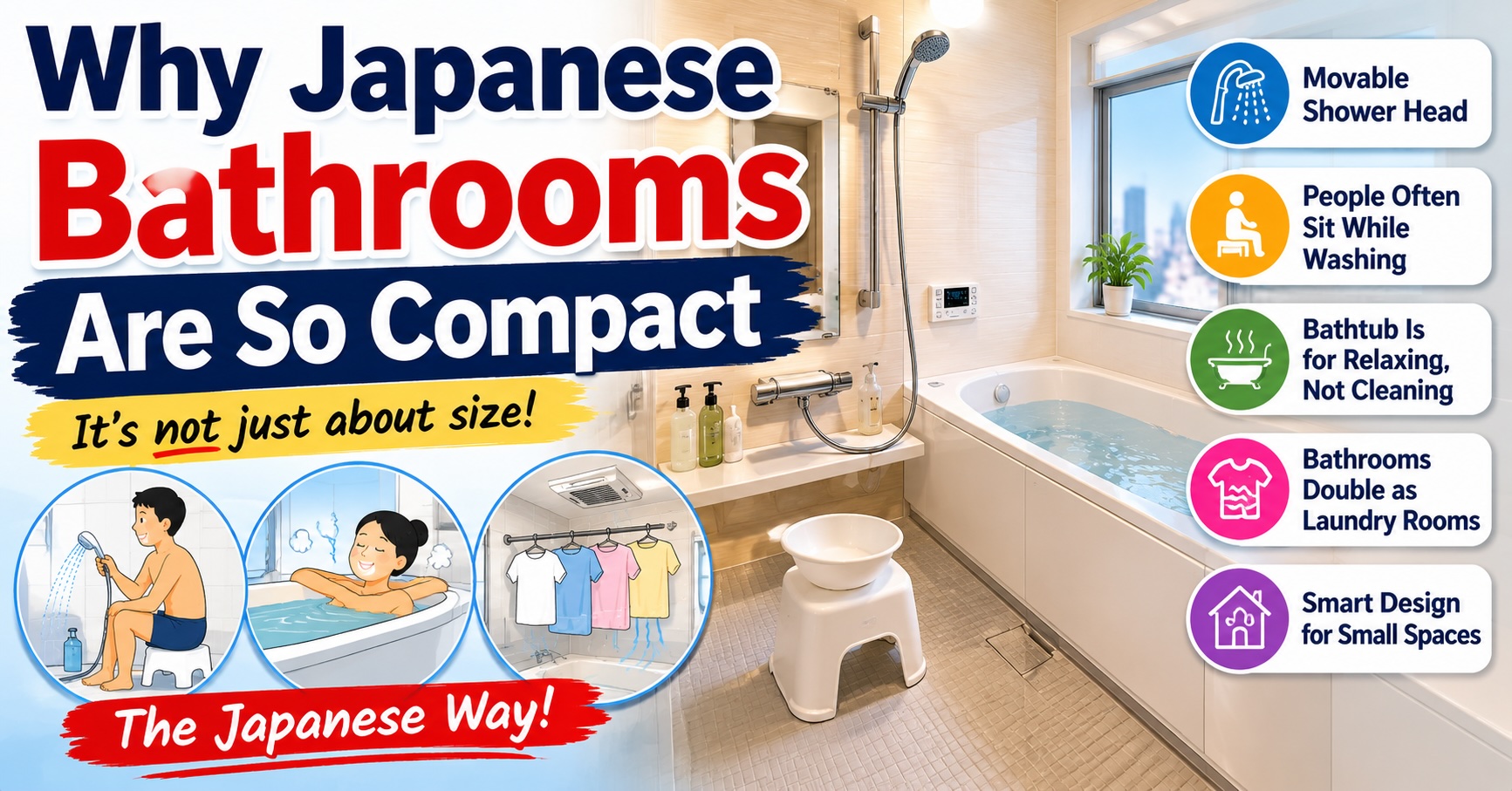
If you visit Japan for the first time, one feature of many apartments may surprise you more than the bedroom or even the kitchen.
The bathroom.
Compared to bathrooms in the United States, Canada, or Australia, Japanese bathrooms often feel remarkably compact.
At first glance, many foreigners assume this is simply because Japanese homes are smaller.
That is partly true.
But the real reason goes much deeper.
Japanese bathrooms are compact because they are designed around completely different habits, priorities, and cultural expectations.
Exchange rate used throughout this article: ¥150 = $1 USD
Space Is Expensive in Japanese Cities
The first reason is straightforward.
Space is valuable.
The average residential land price across Tokyo’s 23 wards is roughly:
¥765,000 per square meter
(about $5,100 per square meter)
In many neighborhoods, every square meter adds significant cost.
Adding just one extra square meter to a bathroom could represent thousands of dollars in additional land value.
As a result, Japanese homes are generally designed to use space as efficiently as possible.
However, this alone does not explain why Japanese bathrooms work surprisingly well despite their size.
The more interesting reason is how they are used.
Japanese Bathrooms Are Designed to Get Wet
One of the biggest differences is something many foreigners do not notice immediately.
In many Western homes, the shower area is separated from the rest of the bathroom.
You may find:
- Glass shower doors
- Large shower enclosures
- Separate shower stalls
In Japan, the entire bathing room is waterproof.
The floor, walls, and bathing area are all designed to get wet.
This means there is no need for a large shower enclosure.
The whole room effectively becomes the shower space.
As a result, Japanese bathrooms can be much smaller while still remaining practical.
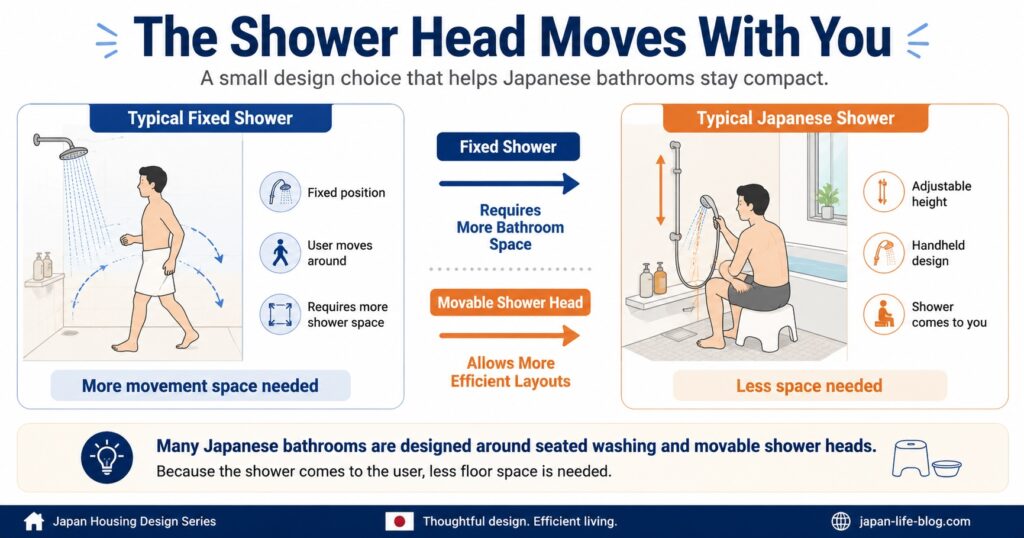
The Shower Head Moves With You
Another detail foreigners often find surprisingly convenient is the shower itself.
In many countries, fixed shower heads are common.
Japanese bathrooms usually feature handheld shower heads mounted on adjustable rails.
You can:
- Sit while washing
- Stand while showering
- Move the shower head freely
Because the shower comes to you, the room does not need a large area for movement.
This small design choice helps reduce the required space without sacrificing comfort.
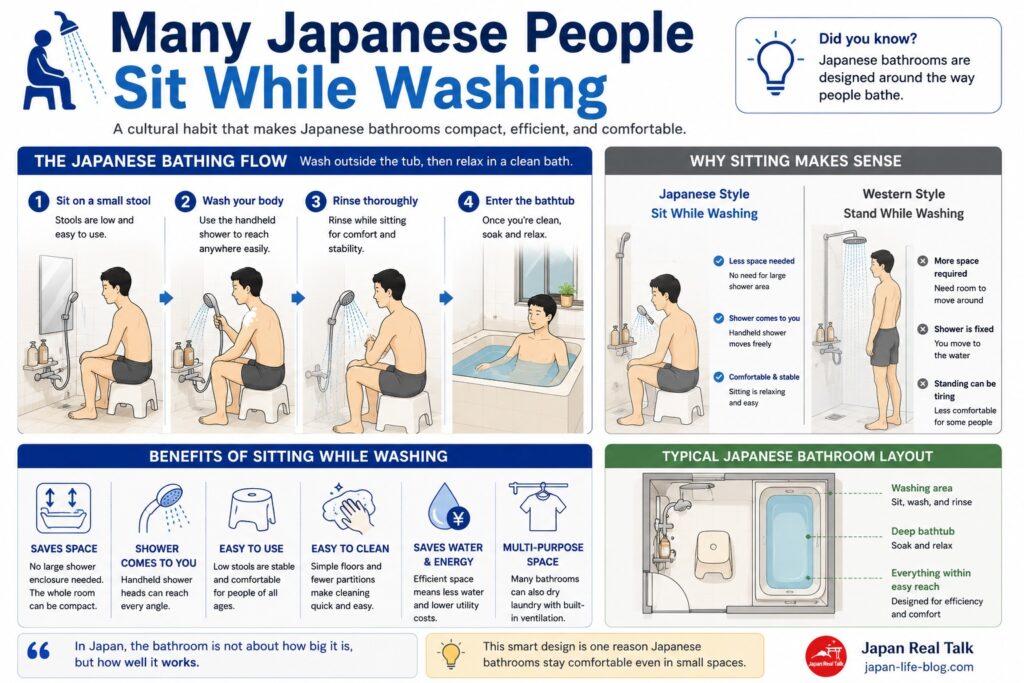
Many Japanese People Sit While Washing
This is another cultural difference that surprises many visitors.
In Japan, it is common to sit on a small stool while washing before entering the bathtub.
The process often looks like this:
- Sit down
- Wash your body
- Rinse thoroughly
- Enter the bathtub
Because bathing is done while seated, large standing shower areas are unnecessary.
The entire room can be designed more efficiently.
This approach has been common in Japan for generations.
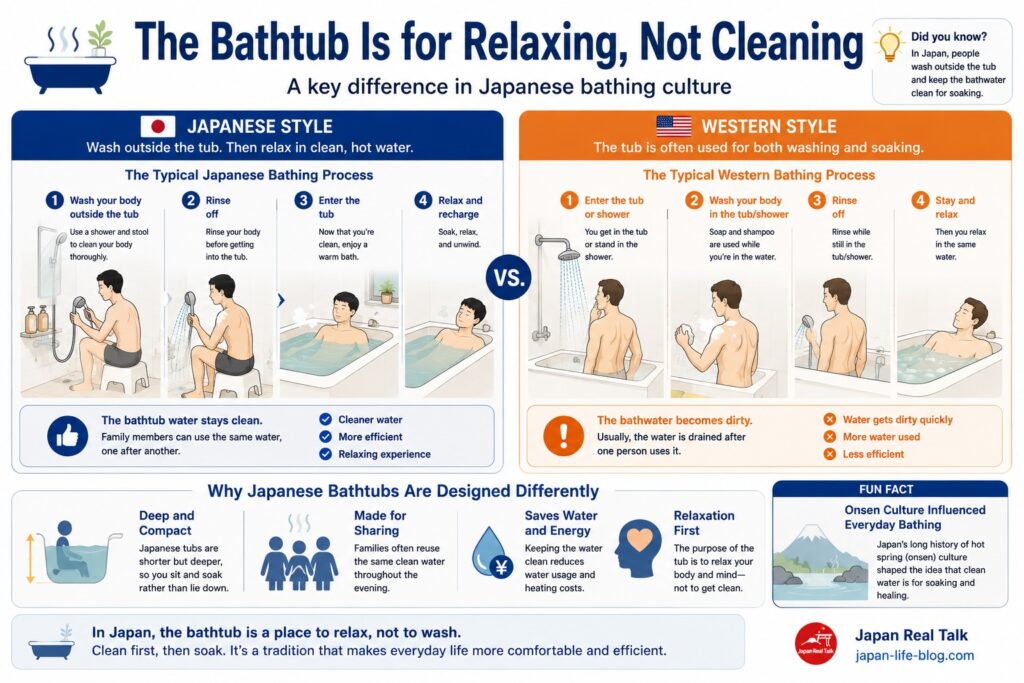
The Bathtub Is for Relaxing, Not Cleaning
Many Western households combine washing and bathing in the same tub.
Japan treats these activities separately.
People typically wash outside the tub first.
Only after they are completely clean do they enter the bathtub.
This allows the bathwater to stay clean longer.
In some households, multiple family members may use the same bathwater throughout the evening.
As a result, Japanese bathtubs are often:
- Shorter
- Deeper
- More space-efficient
Rather than stretching out, bathers sit in deeper water.
This creates a relaxing soaking experience while requiring less floor space.
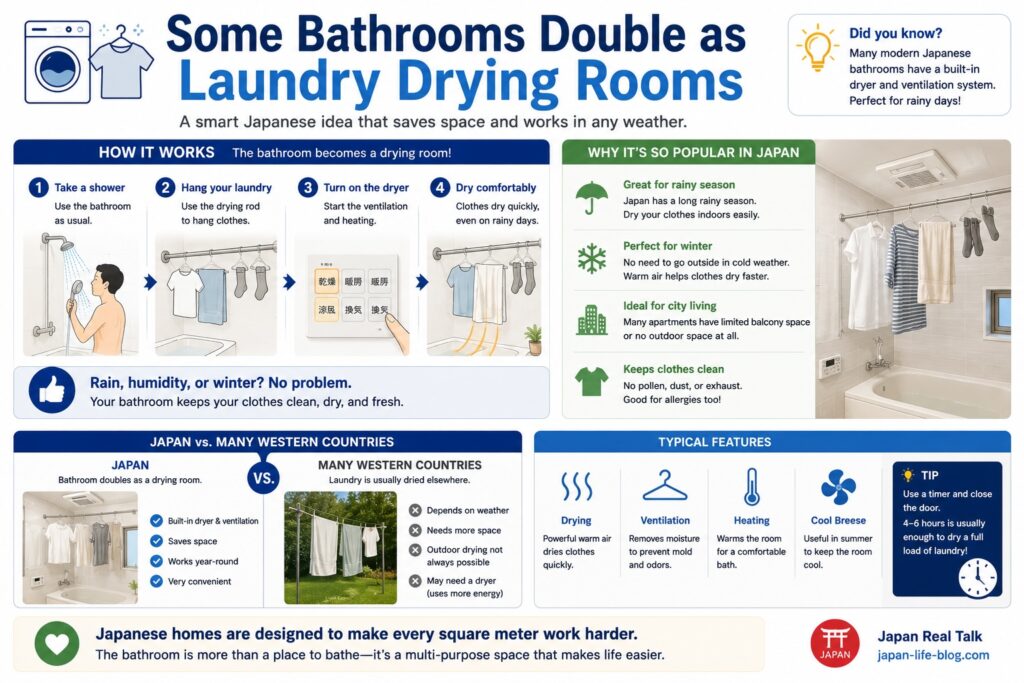
Some Bathrooms Double as Laundry Drying Rooms
One feature that many foreigners never expect is the bathroom drying system.
Many modern Japanese bathrooms include a built-in ventilation and heating system.
This allows residents to hang clothes inside the bathroom and dry them even during:
- Rainy season
- Winter
- Typhoon season
In cities where outdoor drying is not always practical, this feature can be extremely useful.
In effect, the bathroom becomes:
- A shower room
- A bathtub room
- A laundry drying room
all in the same space.
This multi-purpose design is a good example of how Japanese homes maximize limited square footage.
Small Does Not Necessarily Mean Inconvenient
Many foreigners initially see Japanese bathrooms as a compromise.
After living in Japan for a while, some begin to appreciate the advantages.
Compact bathrooms often mean:
- Faster cleaning
- Lower utility costs
- Less wasted space
- Highly functional layouts
The design may feel unusual at first, but it is often the result of decades of refinement rather than simple cost-cutting.
Final Thoughts
Japanese bathrooms are compact not only because homes are smaller.
They are compact because Japanese bathing culture evolved around efficiency.
Waterproof rooms, movable shower heads, seated washing, deep bathtubs, and bathroom drying systems all allow a surprisingly small space to perform multiple functions.
What first appears cramped often reflects a different philosophy of living.
In Japan, the goal is not to make every room larger.
The goal is to make every square meter work harder.