
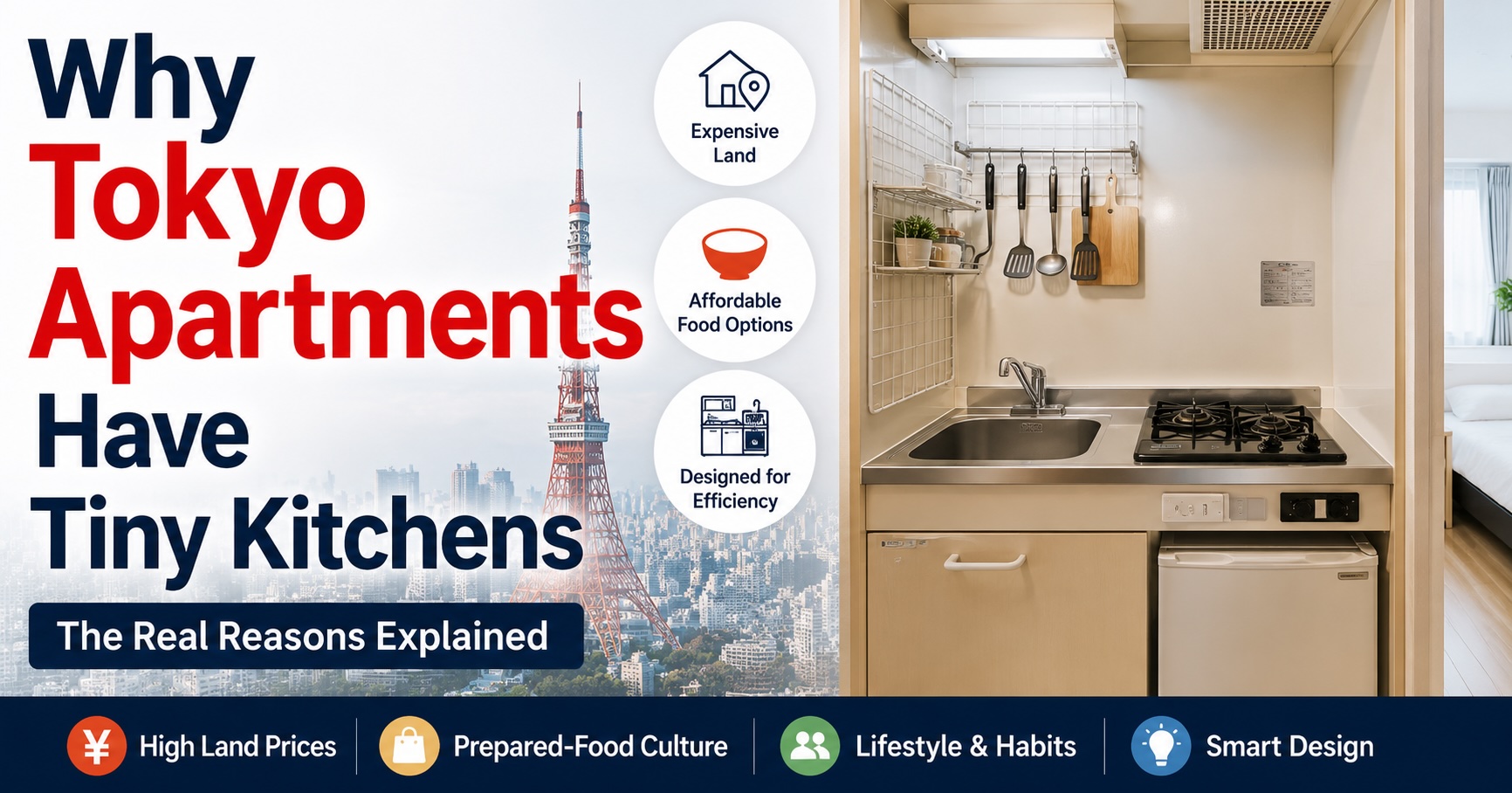
Many foreigners are surprised when they first see a typical Tokyo apartment.
The bedroom may be small, the bathroom compact, but one feature often stands out immediately:
The kitchen.
In many Tokyo apartments, the kitchen consists of a small sink, a compact cooking surface, and limited counter space. For people coming from countries where large kitchens are common, it can feel surprisingly tiny.
So why are kitchens in Tokyo apartments so small?
The answer has less to do with cooking habits and more to do with land prices, urban living, and how people actually use their homes in Tokyo.
Exchange rate used throughout this article: ¥150 = $1 USD
Space Is Expensive in Tokyo
The biggest reason is simple:
Every square meter matters.
Tokyo is one of the largest metropolitan areas in the world, yet residential land remains extremely expensive.
The average residential land price across Tokyo’s 23 wards is roughly:
$5,100 per square meter (about ¥765,000).
In some of Tokyo’s most expensive residential neighborhoods, land prices can exceed:
$47,000 per square meter (about ¥7.1 million).
When every additional square meter can cost thousands or even tens of thousands of dollars, developers must carefully decide how to use available space.
For many residents, gaining a little more living space is often considered more valuable than having a larger kitchen.
As a result, apartment layouts frequently prioritize:
- Living areas
- Bedrooms
- Storage
- Bathrooms
while keeping kitchens as compact as possible.
Related:
Many Tokyo Residents Do Not Cook Large Meals
Another important factor is lifestyle.
In many countries, kitchens are designed for:
- Large family meals
- Frequent baking
- Hosting guests
- Multiple people cooking together
Tokyo apartments are often occupied by:
- Single workers
- Students
- Young couples
Many people prepare relatively simple meals rather than large multi-course dinners.
A kitchen designed for everyday cooking simply does not need as much space as a kitchen designed for entertaining large groups.
Eating Out Is Relatively Affordable
Tokyo also has an unusually large number of affordable dining options.
Using the exchange rate above:
| Example | Approx. USD | Approx. JPY |
|---|---|---|
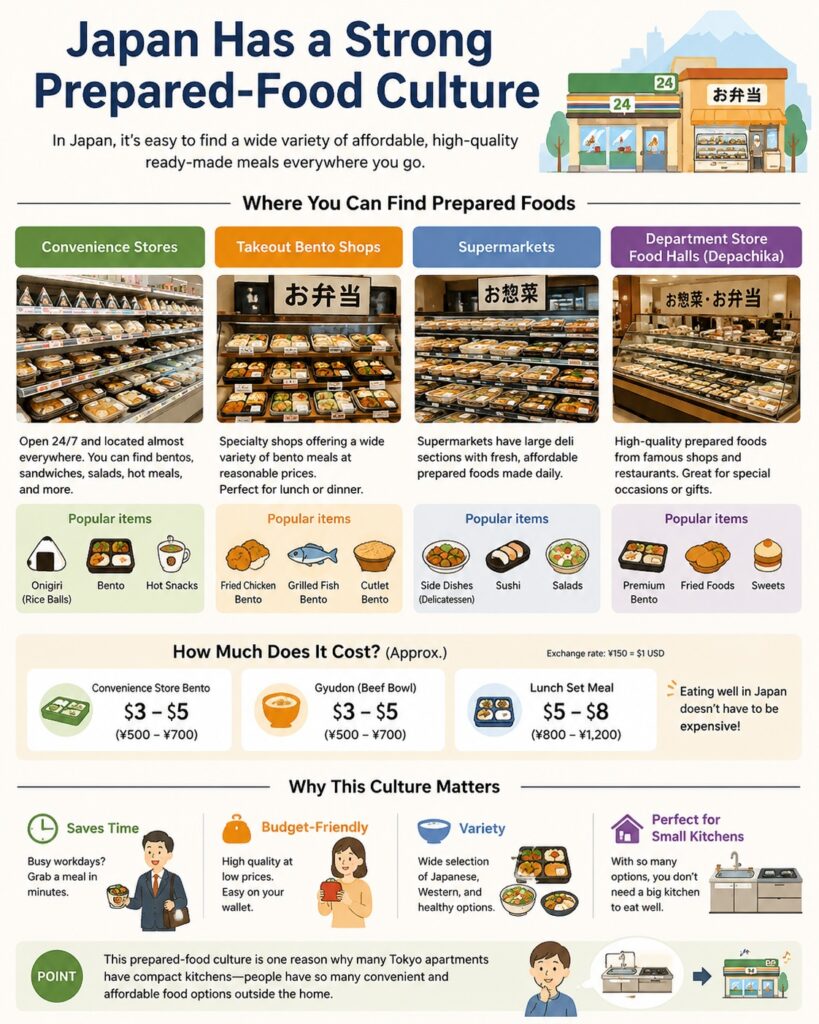
| Gyudon meal | $3–5 | ¥500–700 |
| Convenience store bento | $3–5 | ¥500–700 |
| Lunch set meal | $5–8 | ¥800–1,200 |
For many residents, a quick meal often costs less than a coffee and a snack in many major US cities.
Because affordable prepared food is widely available, many people simply do not need large kitchens.
Related:
Related:
Japan Has a Strong Prepared-Food Culture
Foreign visitors often notice Japan’s convenience stores.
However, convenience stores are only one part of the story.
Japan has a large prepared-food culture.
Residents can easily purchase ready-made meals from:
- Convenience stores
- Takeout bento shops
- Supermarkets
- Department store food halls (depachika)
As a result, many people have practical alternatives between cooking everything from scratch and eating at a restaurant.
This lifestyle makes compact kitchens more practical than many foreigners initially expect.
Small Kitchens Often Work Better Than Foreigners Expect
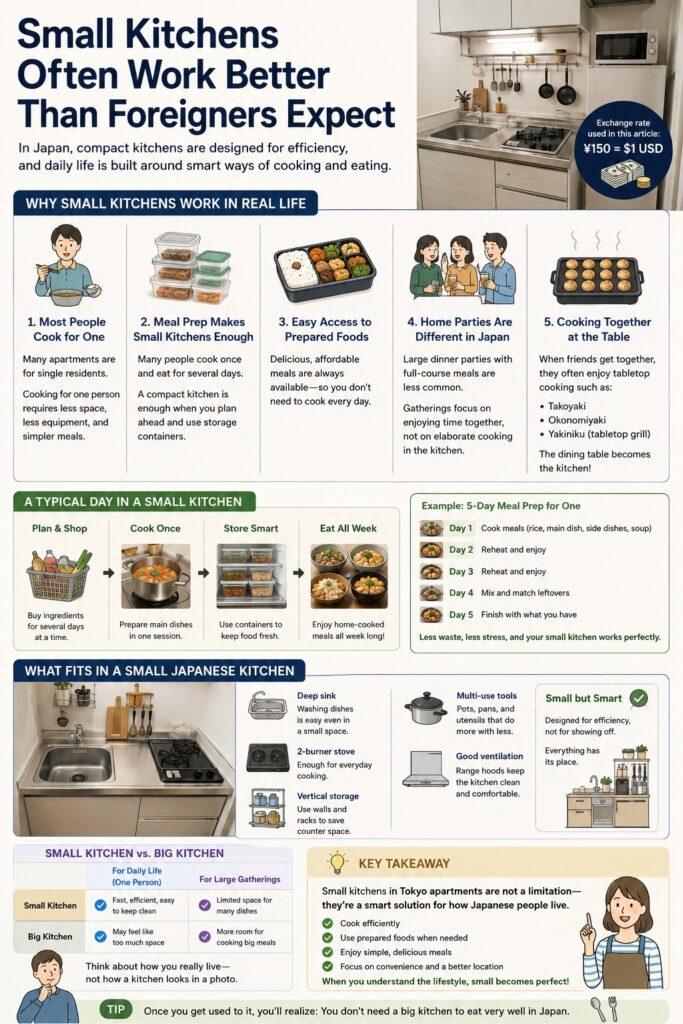
After living in Japan for more than four decades, I honestly never felt that a small kitchen was a major problem when living alone.
If you are cooking for one person, or preparing meals for several days at once, a compact kitchen is usually sufficient.
Counter space may be limited, but most daily cooking tasks can still be completed comfortably.
In fact, I would argue that many people overestimate how much kitchen space they actually need.
The limitations become more noticeable when hosting a large gathering.
However, compared with some Western countries, home dinner parties appear to be less common among single residents in Japan.
When friends gather at home, the focus is often less on serving a large meal from the kitchen and more on cooking together around the table.
Common examples include:
- Takoyaki parties
- Okonomiyaki parties
- Yakiniku using a tabletop grill
In these situations, the dining table effectively becomes part of the cooking space.
The experience is often more about enjoying the cooking process together than preparing an elaborate meal in a large kitchen.
Small Kitchens Are Designed for Efficiency
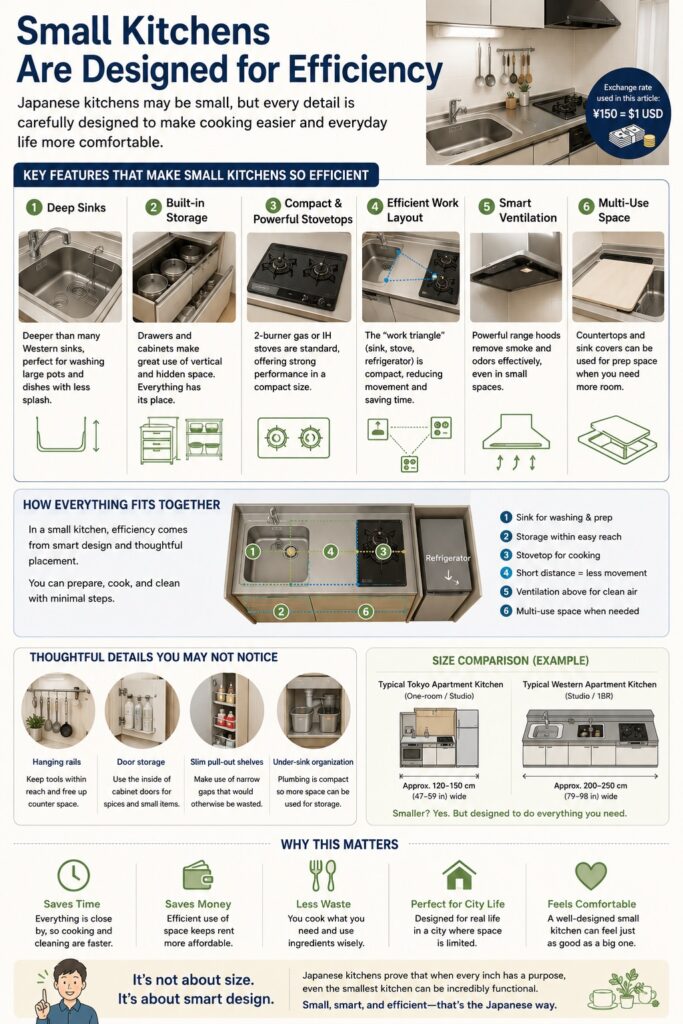
Although they are small, many Japanese kitchens are surprisingly functional.
Common features include:
- Deep sinks
- Built-in storage
- Compact ventilation systems
- Efficient work layouts
- Multi-purpose cooking areas
Japanese designers often focus on making small spaces practical rather than simply making them larger.
This reflects a broader philosophy found throughout Japanese housing.
Related:
Larger Apartments Often Have Larger Kitchens
It is important to note that not all kitchens in Japan are tiny.
Family apartments and detached houses often include:
- Larger counters
- Separate dining kitchens
- Additional storage
- Multiple burners
The extremely small kitchens foreigners often notice are usually found in:
- Studio apartments
- One-room apartments
- Small urban rentals
These homes are designed for affordability and convenience rather than spacious cooking areas.
The Trade-Off Tokyo Residents Make
Ultimately, tiny kitchens are part of a broader trade-off.
Residents often choose:
- Better locations
- Shorter commutes
- Lower rent
- Access to train stations
- Greater convenience
instead of larger living spaces.
A bigger kitchen is certainly possible in Tokyo.
However, it usually comes with a larger apartment and significantly higher housing costs.
Related:
Related:
Final Thoughts
Tokyo apartments have tiny kitchens because space is valuable, land is expensive, and many residents simply do not need large cooking areas.
What initially appears restrictive to foreigners often reflects how people actually live in Tokyo.
The goal is not to maximize kitchen size.
The goal is to make the entire apartment work as efficiently as possible.
In a city where millions of people live close together, that trade-off has shaped apartment design for decades.