
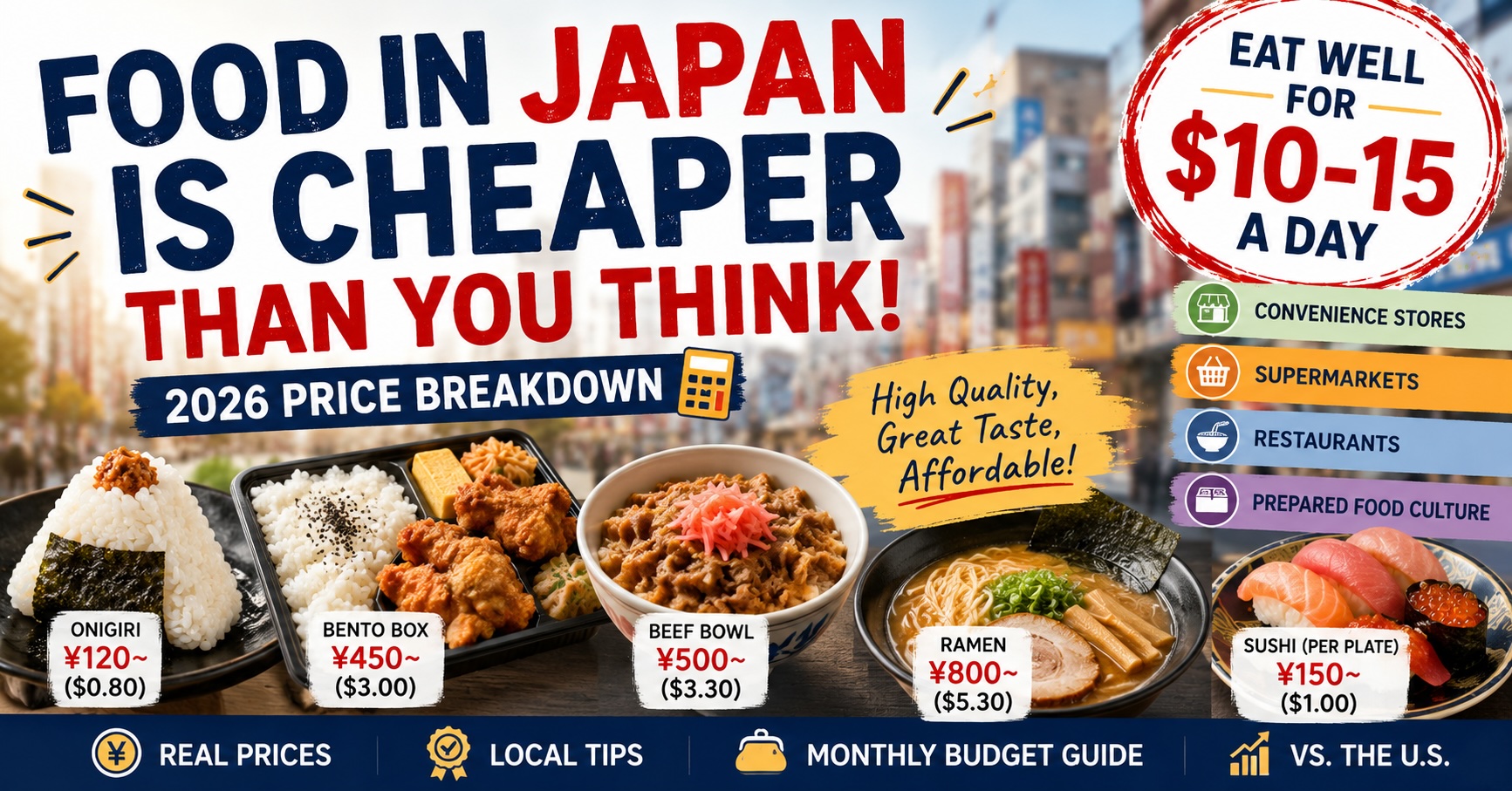
Many foreigners assume food in Japan must be expensive.
After all, Japan is famous for sushi, wagyu beef, premium fruit, and some of the world’s most respected restaurants.
However, after living in Japan for decades, I have often noticed that many visitors are surprised by the opposite reality.
For everyday meals, Japan can be remarkably affordable.
In many cases, people spend less on daily food than they would in the United States, Canada, Australia, or parts of Western Europe.
The surprising part is not just the price.
It is the combination of affordability, convenience, and quality.
Exchange rate used throughout this article:
¥150 = $1 USD
How Much Does Food Cost in Japan?
The answer depends on your lifestyle, but many foreigners are surprised by how far their money can go.
A typical daily food budget might look something like this:
| Lifestyle | Daily Cost |
|---|---|
| Budget-conscious | $10–15 |
| Typical local lifestyle | $15–30 |
| Frequent dining out | $30–60+ |
Even in Tokyo, it is still possible to eat reasonably well without spending a large amount of money.
This is one reason many foreign residents find their overall living costs lower than expected.
If you’re planning a move to Japan, you may also find our detailed guide useful:
Living Cost in Japan for Foreigners (2026 Guide)
Real Food Prices in Japan
Let’s look at some common examples.
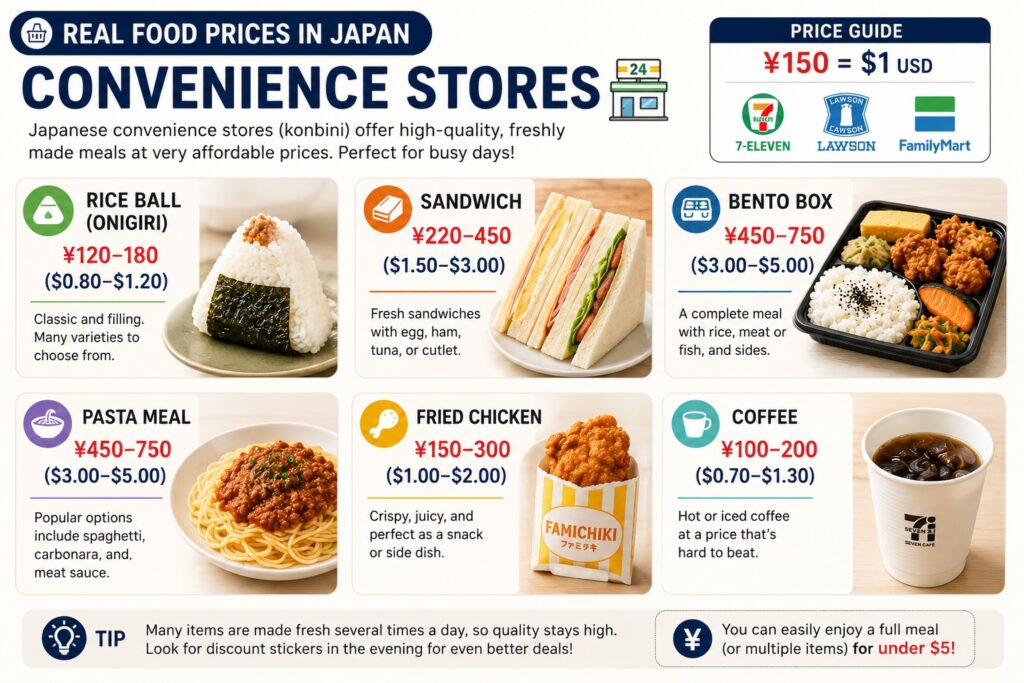
Convenience Stores
Japanese convenience stores are very different from those in many Western countries.
They sell freshly prepared meals, snacks, sandwiches, and lunch boxes throughout the day.
Typical prices include:
- Rice ball (onigiri): $0.80–1.20
- Sandwich: $1.50–3.00
- Bento box: $3–5
- Pasta meal: $3–5
- Fried chicken: $1–2
A simple lunch can often cost less than $5.
Supermarkets
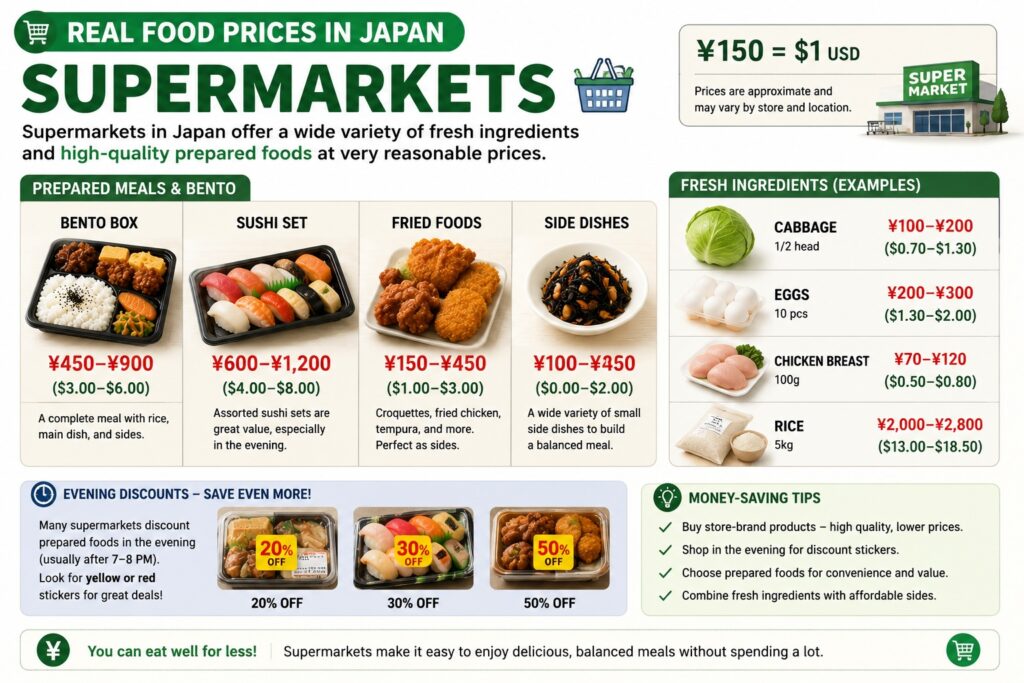
Many Japanese people regularly buy prepared food from supermarkets.
Common examples include:
- Bento box: $3–6
- Sushi set: $4–8
- Fried foods: $1–3
- Prepared side dishes: $1–4
Many supermarkets also discount prepared meals in the evening, making them even more affordable.
Restaurants
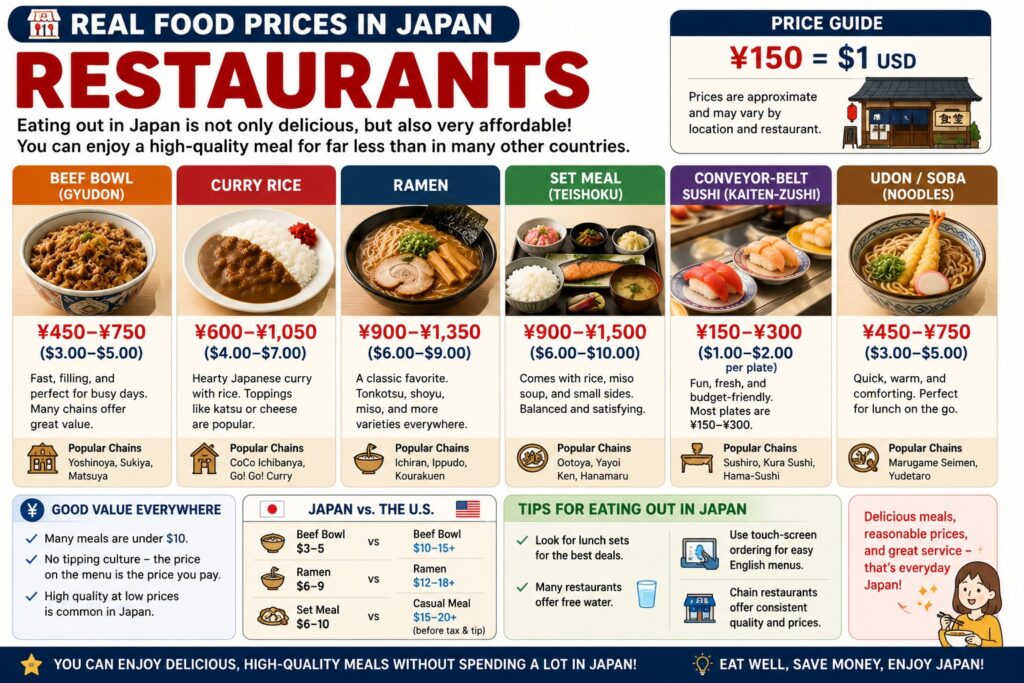
Affordable restaurants are everywhere.
Typical prices include:
- Beef bowl: $3–5
- Curry rice: $4–7
- Ramen: $6–9
- Set meal (teishoku): $6–10
- Conveyor-belt sushi: $1–2 per plate
In many neighborhoods, a filling restaurant meal can still be found for under $10.
How Much Do Japanese People Spend on Food Each Month?
Many foreigners researching Japan are not tourists.
They are planning to live here.
Food spending varies significantly depending on lifestyle, location, and household size.
As a rough guide, many single residents fall somewhere within the following ranges:
- Budget-conscious: $200–300
- Typical lifestyle: $300–500
- Frequent dining out: $500–800+
Actual spending can be higher or lower depending on individual habits.
Why Is Food in Japan Surprisingly Affordable?
Many people assume Japanese food is cheap because wages are lower than in some Western countries.
The reality is more complicated.
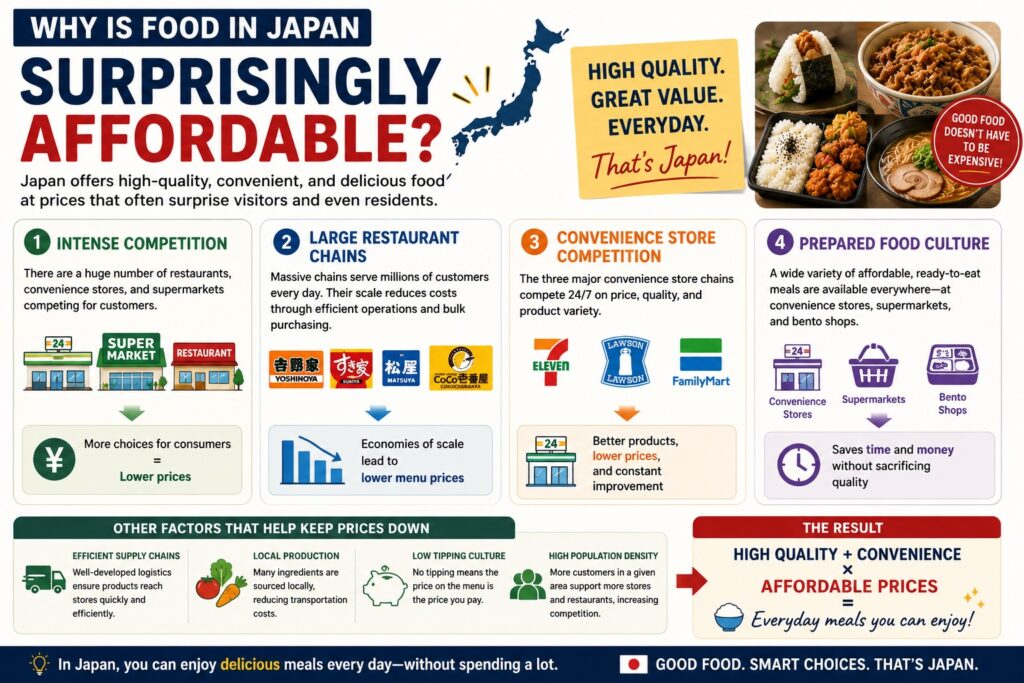
Several factors help keep everyday food prices relatively affordable.
Intense Competition
Japan has an enormous number of restaurants.
In cities such as Tokyo, restaurants often compete heavily for customers.
This competition helps keep prices reasonable.
Large Restaurant Chains
Chains such as:
- Yoshinoya
- Sukiya
- Matsuya
- CoCo Ichibanya
serve millions of customers every year.
Their scale helps reduce costs and keep menu prices relatively low.
Convenience Store Competition
Three major chains dominate Japan’s convenience store market:
- Seven-Eleven
- Lawson
- FamilyMart
They compete aggressively on quality, pricing, and product variety.
As a result, convenience store meals are often surprisingly affordable.
Japan’s Secret Advantage: Prepared Food Culture
This is the factor many foreigners overlook.
In many countries, people often choose between:
- Cooking at home
- Eating at a restaurant
Japan has a third option.
Prepared food.
Prepared food is available almost everywhere:
- Convenience stores
- Supermarkets
- Bento shops
You can buy a complete meal without paying restaurant prices.
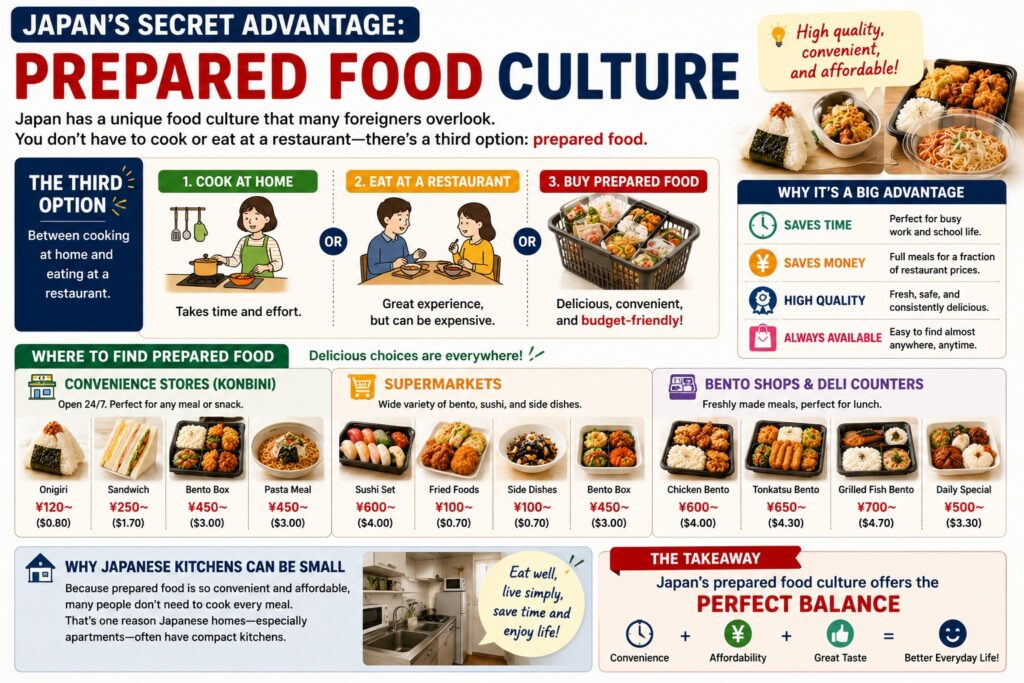
This helps many people save both time and money.
In my opinion, this is one reason Japanese homes can function well with relatively small kitchens.
People simply do not need to cook every meal from scratch.
You can read more here:
Why Tokyo Apartments Have Tiny Kitchens
Can You Really Eat on $10–15 Per Day?
For many people, yes.
A sample day might look like this:
Breakfast
- Rice ball
- Coffee
Lunch
- Beef bowl
Dinner
- Discounted supermarket bento
Total:
Approximately $10–15
It may not be luxurious, but it is entirely realistic.
This is one reason visitors are often surprised by how affordable everyday life can be in Japan.
Is Food in Japan Cheaper Than the United States?
The answer depends on what you buy.
Luxury products such as premium fruit or imported foods can be expensive.
However, everyday meals are often significantly cheaper.
For example:
- A beef bowl in Japan may cost $3–5
- A casual restaurant meal in many U.S. cities can easily exceed $15–20 before tax and tips
Japan also has no tipping culture.
The price shown on the menu is usually very close to the amount you actually pay.
For many foreigners, this makes food expenses feel both lower and more predictable.
To better understand how food costs fit into the broader financial picture, see:
Average Salary in Japan (2026 Guide)
The Reality
Food prices in Japan have increased in recent years.
However, compared with many developed countries, Japan still offers a rare combination of affordability, convenience, and quality.
For many foreigners, the biggest surprise is not how expensive Japan is.
It is how much value they receive for their money.