
If you plan to work in Japan, one important question is:
How much is the minimum wage in Japan?
Unlike some countries, Japan does not have a single nationwide minimum wage.
Instead, each prefecture sets its own minimum wage.
As a result, the minimum amount an employer must legally pay depends on where you work.
In this guide, we explain Japan’s minimum wage in 2026, compare wages across prefectures, and explore why minimum wages vary so much throughout the country.
Exchange rate used throughout this article: ¥150 = $1 USD
What Is Japan’s Minimum Wage in 2026?
Japan’s minimum wage is revised annually.
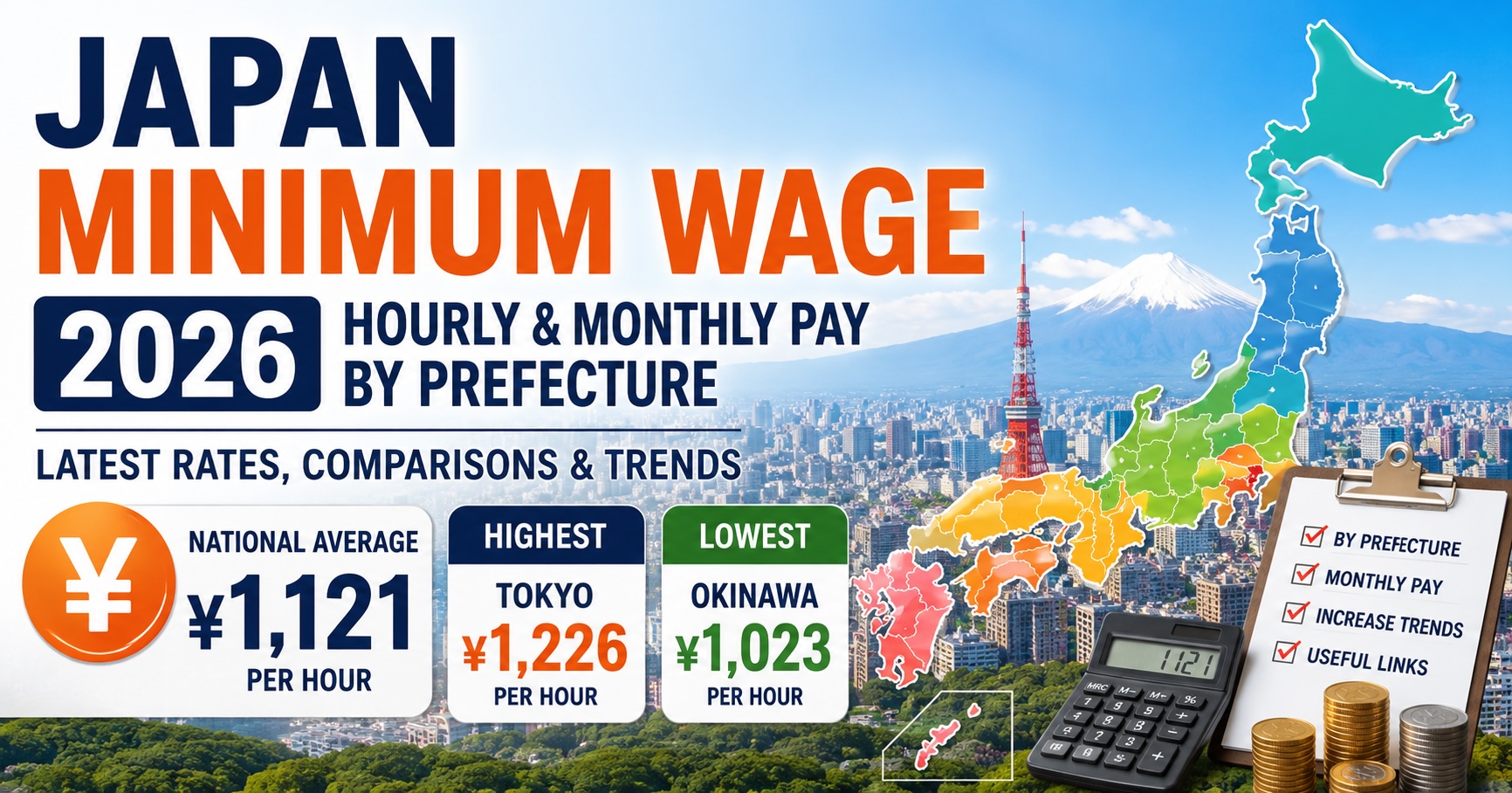
As of 2026, the national weighted average minimum wage is approximately:
¥1,121 per hour ($7.47 USD)
However, actual minimum wages vary significantly depending on the prefecture.
Major metropolitan areas generally offer higher wages, while rural prefectures tend to have lower minimum wages.
Why Doesn’t Japan Have a National Minimum Wage?
Many people are surprised to learn that Japan does not use a single nationwide minimum wage.
The reason is simple.
Living costs vary considerably across the country.
For example, housing costs in central Tokyo are significantly higher than in many rural prefectures.
Labor demand, population density, and local economic activity also differ greatly from region to region.
Because of these differences, minimum wages are determined at the prefectural level rather than nationally.
Highest Minimum Wages in Japan
The highest minimum wages are concentrated around Japan’s largest metropolitan areas.
| Prefecture | Minimum Wage | USD Equivalent |
|---|---|---|
| Tokyo | ¥1,226 | $8.17 |
| Kanagawa | ¥1,225 | $8.17 |
| Osaka | ¥1,177 | $7.85 |
| Saitama | ¥1,141 | $7.61 |
| Chiba | ¥1,140 | $7.60 |
Tokyo currently has the highest minimum wage in Japan, although Kanagawa is only one yen behind.
Lowest Minimum Wages in Japan
Lower minimum wages are generally found in rural prefectures where housing costs and living expenses are also lower.
| Prefecture | Minimum Wage | USD Equivalent |
|---|---|---|
| Okinawa | ¥1,023 | $6.82 |
| Several rural prefectures | ¥1,020–1,050 | $6.80–7.00 |
Although wages are lower, many regional cities offer significantly cheaper housing and lower everyday expenses.
Minimum Wage by Region
Minimum wages generally follow regional economic strength.
| Region | General Wage Level |
|---|---|
| Tokyo / Kanto | Highest |
| Kansai | High |
| Chubu | Medium |
| Tohoku | Lower |
| Kyushu | Lower |
| Okinawa | Lowest |
Tokyo and the surrounding Kanto region consistently record the highest minimum wages in Japan.
How Much Can You Earn Per Month on Minimum Wage?
Hourly wages can be difficult to visualize.
Assuming a full-time schedule of approximately 173 working hours per month, the monthly income looks roughly like this:
| Location | Hourly Wage | Monthly Gross Income |
|---|---|---|
| Tokyo | ¥1,226 | Approximately ¥212,000 ($1,413) |
| National Average | ¥1,121 | Approximately ¥194,000 ($1,293) |
| Okinawa | ¥1,023 | Approximately ¥177,000 ($1,180) |
This income is before taxes and social insurance deductions.
How Fast Has Japan’s Minimum Wage Increased?
Japan’s minimum wage has risen significantly over the past decade.
| Year | National Weighted Average |
|---|---|
| 2015 | ¥798 |
| 2020 | ¥902 |
| 2025 | ¥1,121 |
| 2026 | ¥1,121+ |
Labor shortages, inflation, and government policy have contributed to steady wage growth.
Recent increases have been among the largest seen in decades.
Why Tokyo’s Minimum Wage Is Higher Than Okinawa’s
Many people wonder why minimum wages differ so much between prefectures.
The primary reasons include:
- Housing costs
- Population density
- Business concentration
- Labor demand
- Local economic activity
Tokyo has the highest concentration of corporate headquarters, financial institutions, and high-paying industries in Japan.
As a result, wages are generally higher.
Why Minimum Wage Doesn’t Tell the Whole Story
Minimum wage is only one part of the picture.
Quality of life also depends on:
- Rent
- Transportation costs
- Food prices
- Healthcare expenses
- Whether a car is required
Because these costs vary significantly across Japan, two workers earning similar wages may enjoy very different lifestyles.
Related Guides
- Tokyo Minimum Wage 2026: Hourly Pay and Living Costs
- Can You Live on Minimum Wage in Japan?
- How Much Money Do You Actually Take Home on Minimum Wage?
- Minimum Wage Jobs in Japan
- How Much Can You Save on Minimum Wage in Japan?
- Average Rent in Japan (2026)
- Living Cost in Japan for Foreigners (2026 Guide)
- Average Salary in Japan (2026)
Frequently Asked Questions
What is the minimum wage in Japan in 2026?
The national weighted average minimum wage is approximately ¥1,121 per hour, although actual rates vary by prefecture.
Which prefecture has the highest minimum wage?
Tokyo currently has the highest minimum wage at ¥1,226 per hour.
Why does Japan have different minimum wages?
Each prefecture sets its own minimum wage to reflect local living costs and economic conditions.
How much can you earn per month on minimum wage?
A full-time worker typically earns approximately ¥177,000–212,000 per month before deductions, depending on location.
Has Japan’s minimum wage been increasing?
Yes. Japan’s minimum wage has increased significantly over the past decade due to labor shortages, inflation, and policy changes.
Conclusion
Japan’s minimum wage varies considerably across prefectures.
Tokyo currently offers the highest minimum wage, while rural regions generally offer lower wages but often lower living costs as well.
Understanding these regional differences is important for anyone considering work in Japan.
While minimum wage provides a useful benchmark, housing costs and everyday expenses are often just as important when evaluating living standards.