
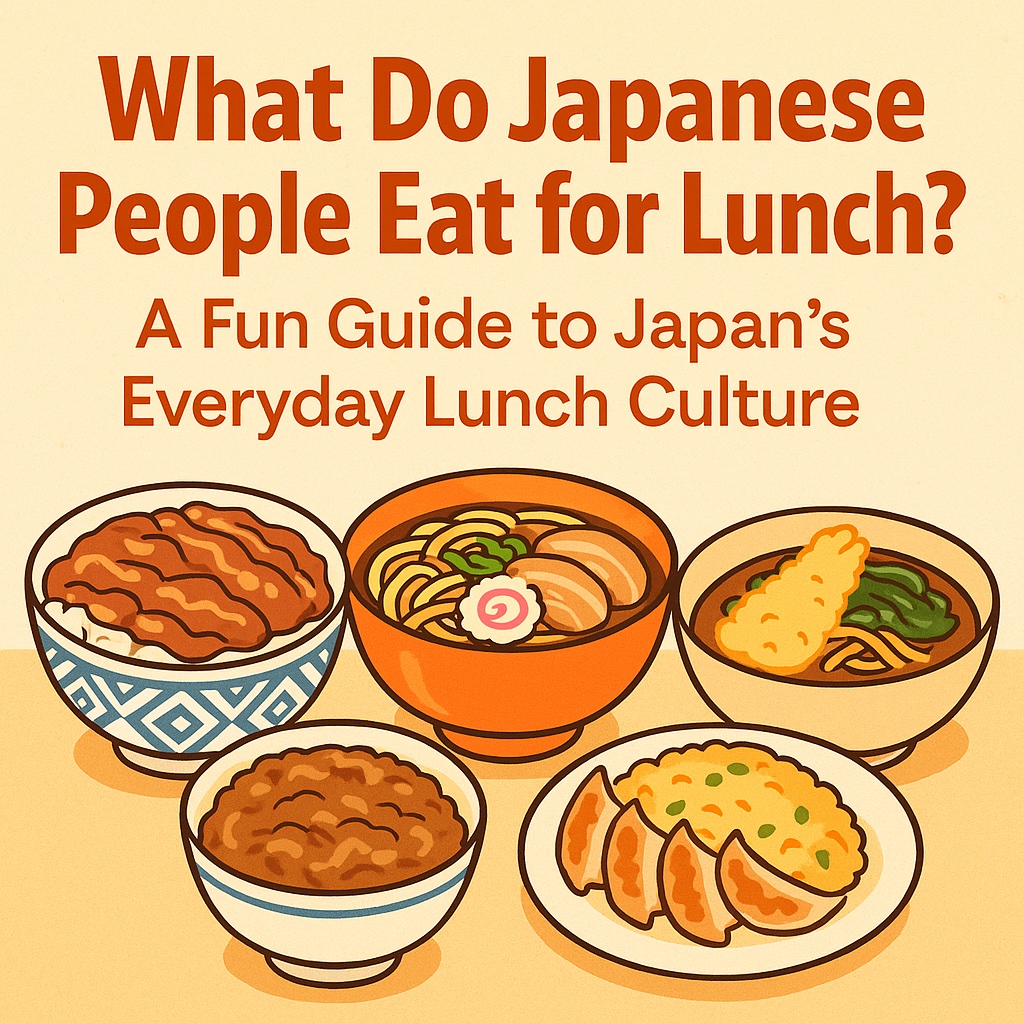
A Real Guide to Everyday Lunch Culture in Japan
If you picture lunch in Japan as sushi and beautifully arranged bento boxes every day, you might be surprised.
At noon on a typical weekday in Japan, something very different happens.
Office workers flood the streets.
Lines form outside ramen shops.
Curry restaurants fill up fast.
Beef bowl chains move customers in and out within minutes.
Sushi?
Surprisingly uncommon for daily lunch.
Let’s take a realistic look at what people in Japan actually eat at lunchtime.
🍱 Lunch in Japan Is Practical, Not Fancy
For most people, lunch isn’t a special event.
It’s simply a necessary break during a busy day.
Three things matter most:
- Speed
- Affordability
- Satisfaction
That’s it.
Most workers don’t want a long, relaxing meal.
They want something filling, reasonably priced, and served quickly.
🍜 The Most Common Lunch Choices
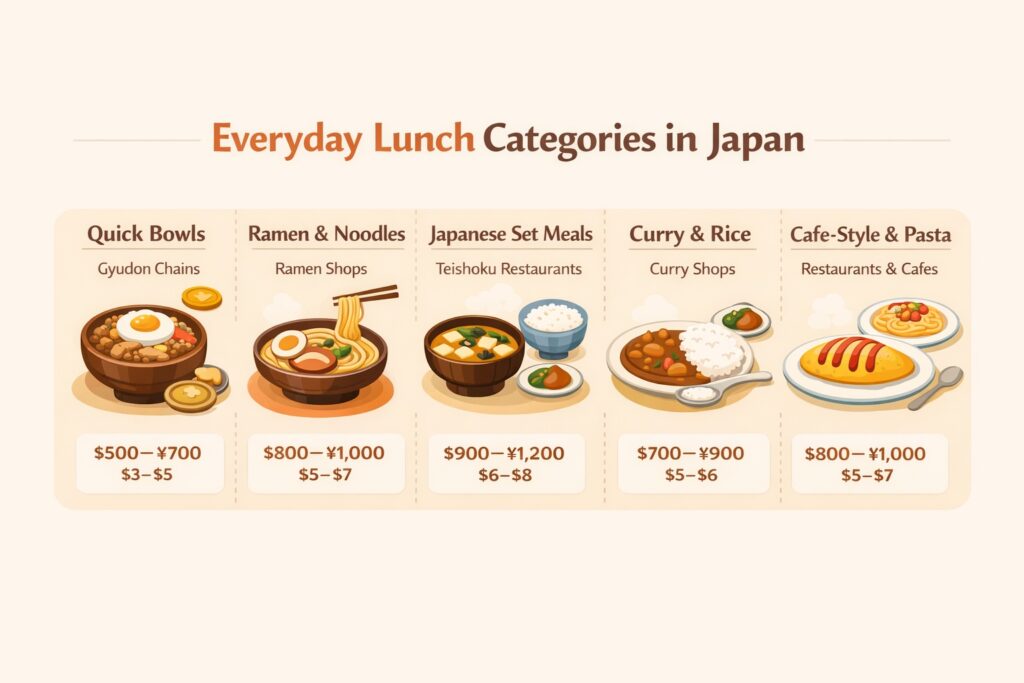
Based on daily observation and trends often reported in Japanese business media and food surveys, typical weekday lunches include:
- Japanese set meals (grilled fish, karaage fried chicken, ginger pork)
- Ramen
- Udon and soba
- Gyudon (beef bowl chains like Yoshinoya or Sukiya)
- Curry rice
- Chinese-style dishes (fried rice, mapo tofu, stir-fries)
- Western-style meals (hamburg steak, omurice)
- Pasta and café lunches
- Fast food (McDonald’s, etc.)
💰 Typical Price Range
Most weekday lunches fall between:
¥700–¥1,000
(≈ $4.70–$6.70 USD, exchange rate approx. ¥150/USD, 2025)
This price range is one reason eating out in Japan feels accessible for daily life.
👔 Who Eats What? (General Patterns)
While everyone’s preferences differ, some tendencies are noticeable.
🔥 Fast & Filling Options (Very Popular with Office Workers)
- Ramen
- Gyudon
- Udon or soba
- Chinese set meals
Gyudon chains remain extremely popular because they are:
- Very fast
- Affordable
- Surprisingly filling
In recent years, these chains have expanded menus to include curry, pork dishes, and seasonal specials, making them even more practical.
☕ Cafés and Lighter Choices
Others prefer:
- Pasta lunches
- Café-style plates
- Family restaurants
- Salad-focused meals
But these are trends, not strict categories.
Lunch choices depend on mood, time, and budget.
🍱 Izakaya Lunch: A Hidden Gem
Many izakaya (Japanese pubs) open during lunchtime.
They often serve:
- Grilled fish set meals
- Karaage fried chicken
- Chicken nanban
- Sashimi set meals
In business districts, these lunch menus are popular because they are hearty and reasonably priced.
🍜 How I Actually Eat Lunch (Personal Experience)
In my own daily life, I eat out almost every weekday.
My most common choice is ramen.
After that:
- Chinese food
- Western-style dishes
- Occasionally Thai or Indian food
Interestingly, I rarely choose traditional Japanese set meals for lunch, and I don’t visit gyudon restaurants very often.
Why?
Because in Japan:
- Eating out is affordable
- Quality is consistently high
- Restaurant meals often feel better than convenience-store food
I usually spend around ¥1,000.
Once lunch exceeds ¥2,000, it stops feeling like a realistic daily routine.
🏙 Big Cities Mean Endless Variety
In cities like Tokyo and Osaka, the number of lunch options is overwhelming.
Some people rarely visit the same restaurant twice in a month.
No matter your taste — spicy, light, heavy, traditional, international — there’s always an option within walking distance.
💡 Why “Cheap and Fast” Wins
Lunch is a daily expense.
Over time, that matters.
That’s why places offering:
- Meals around ¥500–¥800
- Quick service
- Consistent quality
are packed on weekdays.
It’s not about tradition.
It’s about practicality.
🇯🇵 Want to Eat Like a Local?
Visitors often focus on sushi and traditional cuisine.
But everyday Japanese lunch culture is built on:
- Variety
- Speed
- Value
If you truly want to experience daily life in Japan, eat where office workers eat.
That’s where modern Japanese culture quietly reveals itself.