
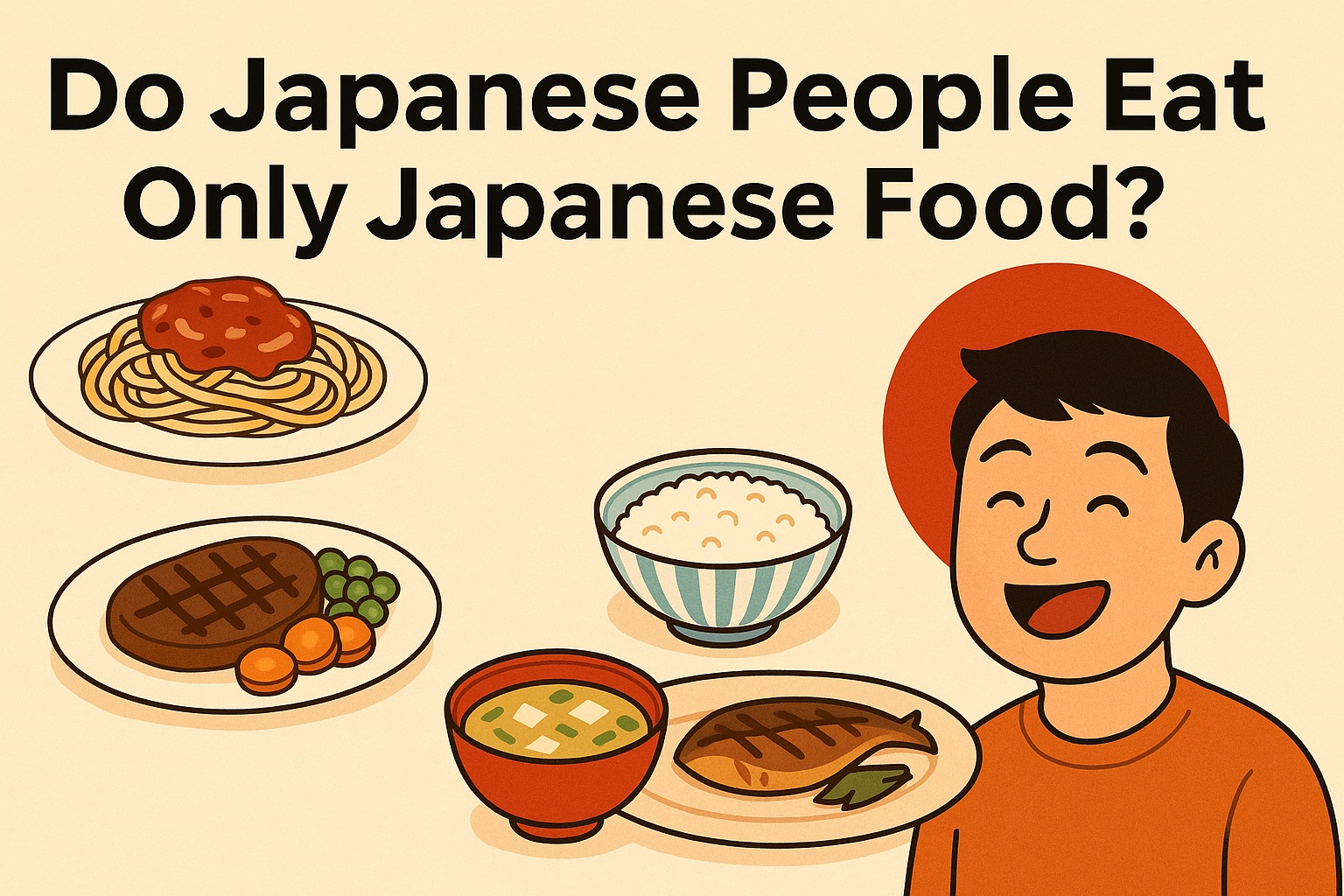
What Daily Meals Really Look Like in Japan
Have you ever wondered what Japanese people actually eat on a normal day?
If you’re imagining sushi, rice, and miso soup for every meal — I’m here to show you a very different reality.
This article explains what Japanese people really eat every day — at home, at work, and when eating out — based on everyday life in Japan. It’ll help you understand how modern Japanese eating habits truly work.
🍽️ Everyday Meals in Japan Are More Global Than You Think
Unlike the stereotype you might have seen in guidebooks or travel photos, most Japanese people mix many kinds of food in their daily meals.
Traditional dishes are still part of life, but they’re not the only things on the table.
Here’s a simple snapshot of what many people eat during a normal week:
Most Common Everyday Foods
- 🍝 Western-style meals — pasta, gratin, omelet rice
- 🍱 Asian-inspired dishes — fried rice, dumplings, mapo tofu
- 🍳 Japanese favorites — curry rice, grilled fish, miso soup
- 🍜 Casual meals out — ramen, udon, soba
- 🍛 Fast and filling — gyudon (beef bowl), donburi
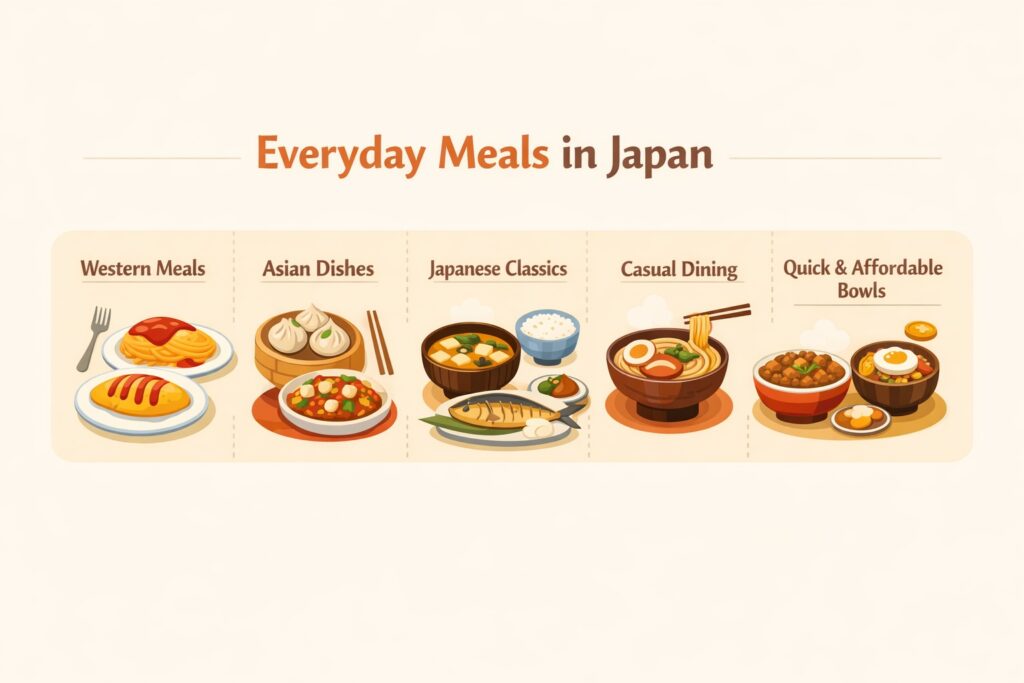
Even foods that came from abroad feel “normal” here because they are widely cooked and eaten by families across Japan.
🧠 So What Counts as “Japanese Food”?
That might sound confusing — so let’s break it down.
A typical traditional Japanese meal often includes:
✔ Rice
✔ Miso soup
✔ Seasonal vegetables
✔ Pickles
✔ Fish or tofu
But most people rarely eat meals composed only of these items.
Instead, what you’ll typically see is a blend — for example:
- Spaghetti served with a bowl of miso soup
- Hamburg steak with rice and pickles
- Fried chicken with side vegetables
This mix of styles is a common sight at dinner tables throughout Japan.
📊 Estimating Meal Types in Everyday Life
There’s no official number for how many meals are “traditional Japanese food,” but from real life:
👉 About 40–60% of weekly meals include traditional Japanese elements.
That means a lot of meals include some Japanese components — but often mixed with Western or other Asian dishes.
👨👩👧 How Generations Differ
Eating habits vary by age.
- Younger generations (under 50): Tend to prefer variety — pasta, curry, ramen, sandwiches, etc.
- Older generations (50 and above): Often eat more traditional dishes.
Younger people today care more about convenience, price, and taste variety than tradition.
🍱 Why Gyudon (Beef Bowl) Is Everywhere
One clear example of modern eating habits is gyudon — inexpensive beef and rice bowls offered at chains like Yoshinoya and Sukiya.
Why gyudon matters:
✔ Fast
✔ Cheap
✔ Filling
✔ Available everywhere
Many people eat gyudon multiple times a week — especially during busy workdays.
This highlights another point:
Japanese eating habits are shaped by lifestyle, not tradition alone.
🥗 Health and Practical Choices
Some people choose traditional Japanese food because it’s:
✔ Lower in fat
✔ Balanced
✔ Vegetable-rich
✔ Easy to adjust for health needs
But many people simply choose what’s quick, affordable, and tasty for their daily routine.
🍳 What I Eat Every Day (Personal Insight)
From my personal experience living in Japan for many years:
- Japanese traditional meals: ~40–50%
- Chinese-inspired dishes: ~20%
- Western-style meals: ~30–40%
When I eat out, I often pick:
- Ramen
- Casual Chinese restaurants
- Comfort food places
Convenience stores are my backup when I’m in a hurry — and that’s true for many people across Japan.
💡 A Realistic Conclusion
So here’s the real picture:
Japanese people do not eat only traditional Japanese food every day.
Instead, daily meals are a mix of Japanese, Western, and other Asian cuisines shaped by convenience, affordability, culture, and lifestyle.
Traditional Japanese food still plays a role — especially on special occasions or for health-minded eaters — but it’s not the only thing on most people’s plates.
Modern Japanese eating is practical, varied, and flexible.
🍽 Tips for Visitors (If You Visit Japan)
If you visit Japan and want to eat like locals:
✔ Try lunches at gyudon shops
✔ Eat at casual ramen or udon restaurants
✔ Visit supermarkets for ready-made meals
✔ Balance traditional dishes with local favorites
You’ll discover that everyday eating in Japan is both familiar and unique in delicious ways.