
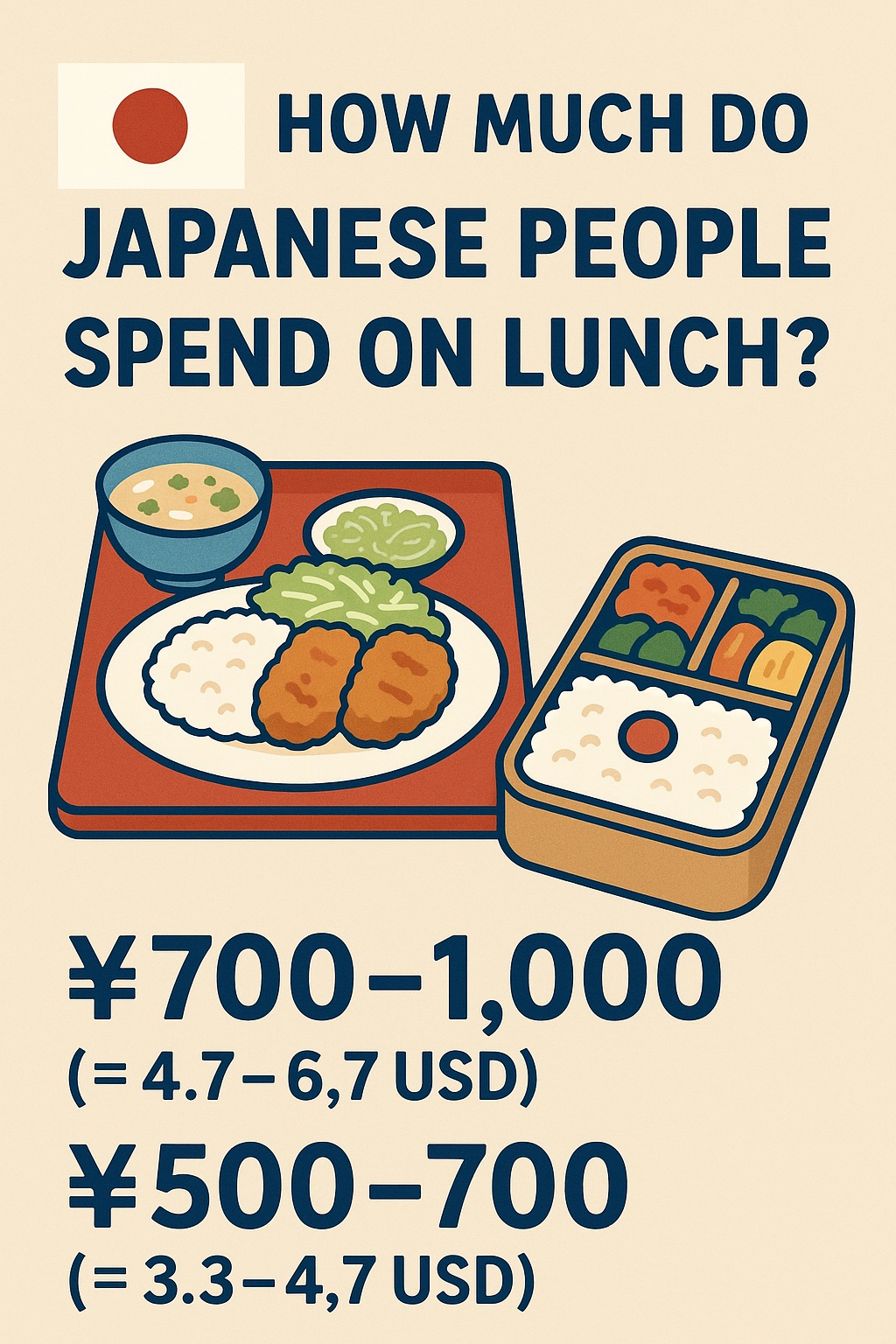
A Real Look at Everyday Lunch Budgets in Japan
If you’ve ever wondered how much people in Japan spend on lunch during a normal workweek, the reality might surprise you.
Forget sushi sets and upscale bento boxes — for most Japanese workers, lunch isn’t about luxury.
It’s about eating well without spending too much, day after day.
This article breaks down the true daily lunch budgets in Japan, with real examples, practical tips, and what visitors can learn from how locals eat.
🍱 Lunch in Japan Is About Practical Choices
In Japan, lunch isn’t a special event — it’s part of your daily routine.
For most people, three things matter most:
- Speed — get food quickly and go back to work
- Affordability — a reasonable price every single day
- Satisfaction — good portion and taste
With lunch being a weekday habit, cost becomes one of the main deciding factors.
💴 Typical Lunch Budget: ¥700–¥1,000
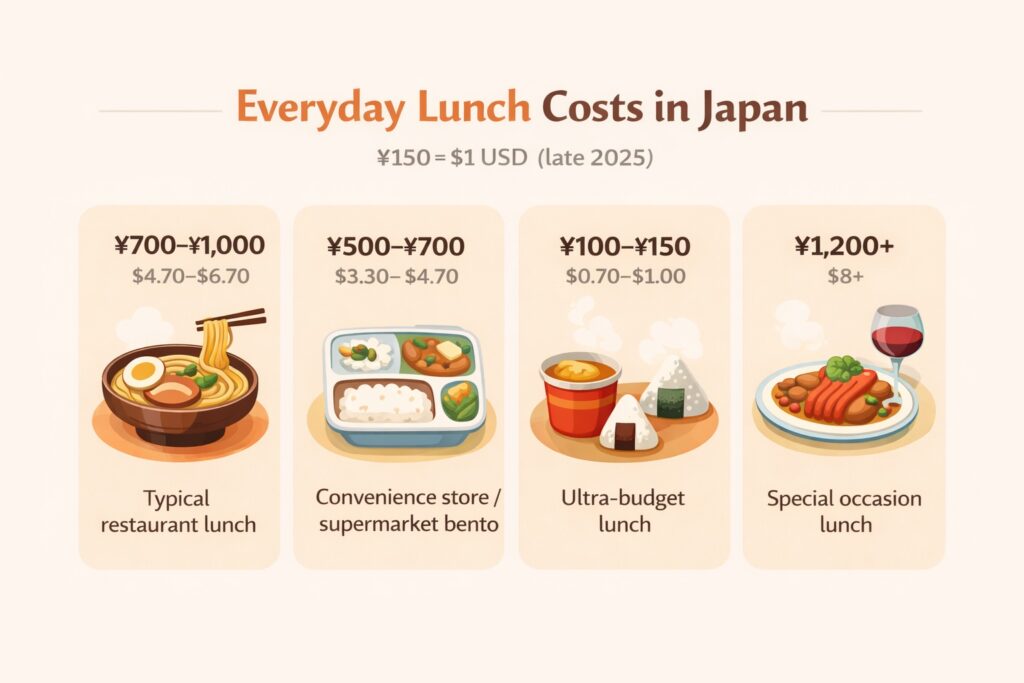
Most everyday lunches in Japan fall within this range:
| Lunch Type | Typical Price | Approx. in USD |
|---|---|---|
| Standard restaurant meal | ¥700–¥1,000 | $4.70–$6.70 |
| Convenience store bento | ¥500–¥700 | $3.30–$4.70 |
| Ultra-budget (cup noodles, onigiri) | ¥100–¥150 | $0.70–$1.00 |
(Exchange rate: approx. ¥150 ≒ $1 USD, late 2025)
Once you go above ¥1,200 ($8) for lunch, many people feel like they’re treating themselves rather than eating a typical weekday meal.
🥢 How I Eat Lunch — A Personal Example
In my own daily life in Japan:
- I eat out almost every weekday.
- My budget is usually around ¥1,000.
- Common choices include:
- Ramen
- Chinese-style meals
- Western-style lunches
I rarely eat traditional Japanese dishes for lunch, and I don’t often go to gyudon chains compared to many locals.
What matters most to me is:
- Good taste
- Enough food
- A fair price
If a place is really good, I don’t mind paying close to ¥1,000 — but once it’s above ¥2,000, it no longer feels realistic as an everyday expense.
At that price, lunch becomes a special occasion, not a daily routine.
🍱 Convenience Store and Supermarket Lunch
Convenience stores are everywhere — and their lunches are surprisingly good.
Typical convenience store prices:
- Fried chicken bento: ~¥520
- Nori (seaweed) bento: ~¥500
- Pasta-style lunch: ~¥600
These meals are:
✔ Cheap
✔ Tasty
✔ Ready to eat
For many busy people, convenience store or supermarket bento is a go-to option — especially on extremely tight schedules.
🏡 Homemade Bento — Less Common Than You Think
Many people in Japan do bring lunch from home sometimes, but it’s not the majority.
Studies and surveys suggest that roughly 10–30% of workers regularly bring homemade bento.
Reasons people bring their own lunch:
- Want to save money
- Want healthier choices
- Personal preference
The main reason many don’t?
Time — preparing lunch every morning takes effort.
🍜 Ultra-Budget Lunch — Still a Thing
Some people go even cheaper for lunch:
- Cup noodles — ¥100–¥150
- Single onigiri — ~¥120
It’s fast, simple, and very affordable — but it’s not something most people choose every day.
🍽️ The Famous “¥1,000 Wall”
In Japan’s restaurant culture, there’s a well-known pricing phenomenon:
Once lunch prices exceed ¥1,000, customer numbers drop sharply.
This psychological threshold influences how restaurants set prices — and it shows how strongly daily budgets matter in lunch culture.
Even as food costs rise, many restaurants try hard to stay under this limit.
📊 Why Lunch in Japan Feels So Efficient
Japanese lunch culture is shaped by several real-world factors:
✔ Relatively moderate take-home pay
✔ Rising food costs
✔ A cultural value on frugality
✔ The psychological impact of the “¥1,000 lunch wall”
Lunch in Japan isn’t about indulgence — it’s about efficiency and balance.
That’s why spending ¥1,500 on lunch feels like a reward — not everyday life.
🍽 For Visitors: Eat Like a Local
If you want to experience real daily life in Japan, skip the luxury restaurants.
Instead, choose:
- Busy restaurants near office districts
- Simple menus with familiar favorites
- Meals priced under ¥1,000
That’s where everyday Japanese work life happens.
And that’s where you’ll find truly authentic lunch culture.