
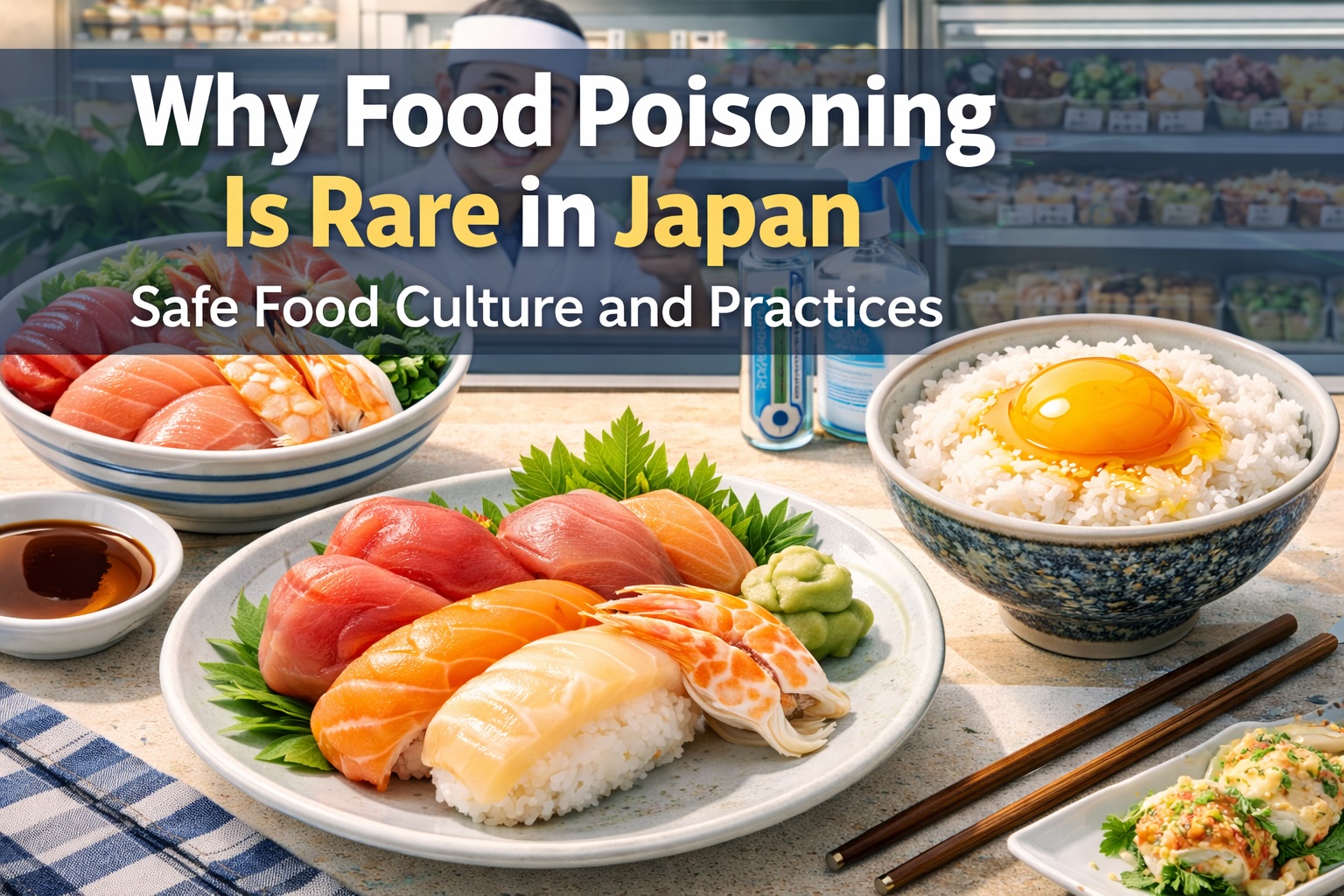
A Practical Look at Japan’s Food Safety Culture (2025 Edition)
If you’ve traveled to Japan, you may have noticed something surprising:
Even raw foods like sushi and eggs are commonly eaten — yet large-scale food poisoning cases feel rare.
So why does food in Japan generally feel safe?
Let’s look at the systems, culture, and everyday practices that help keep food safety standards high.
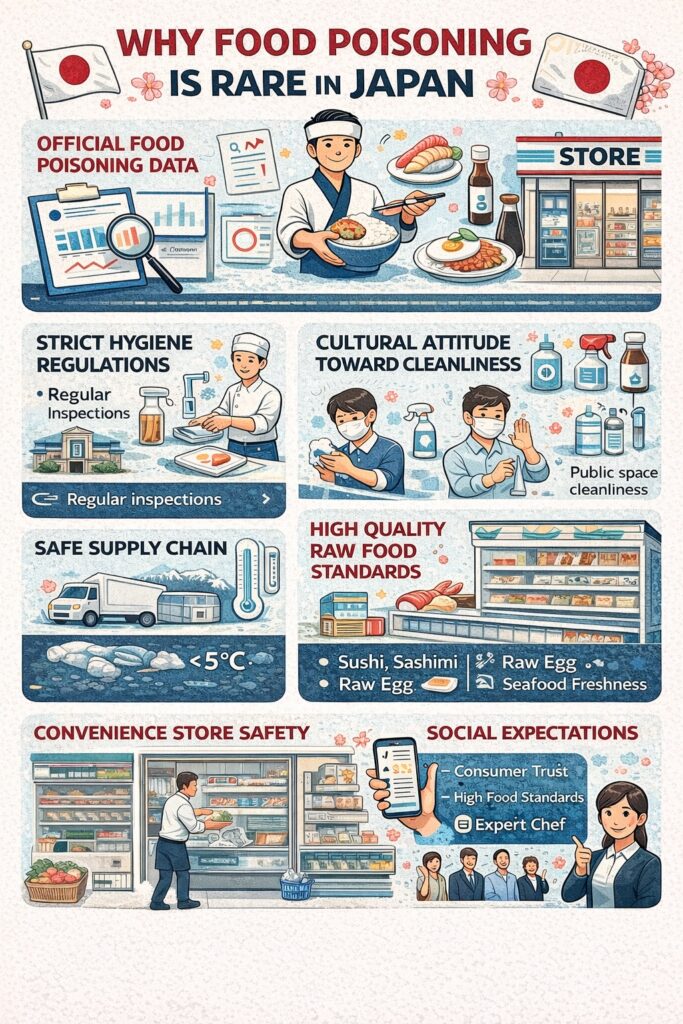
📊 1. The Numbers: What Official Data Shows
According to Japan’s Ministry of Health, Labour and Welfare, there were just over 1,000 reported food poisoning incidents nationwide in 2024, involving roughly 14,000 patients.
While cases do occur every year (as in any country), severe or fatal outbreaks remain relatively uncommon.
More importantly:
- Cases are tracked and publicly reported.
- Detailed cause investigations are conducted.
- Data collection has been ongoing for more than a century.
Japan began systematically recording food poisoning statistics in the late 1800s — an unusually long history of monitoring.
This long-term tracking plays a key role in prevention and rapid response.
❄️ 2. Strict Temperature & Expiration Control
One major reason is logistics.
In Japan:
- Cold-chain distribution is highly regulated.
- Refrigeration is consistent from factory to store.
- Expiration dates are strictly labeled and respected.
It is common for convenience stores and supermarkets to remove products well before the printed expiration time.
In fact, many stores discount items a few hours before expiry to ensure nothing questionable remains on shelves.
This reduces risk without needing dramatic intervention.
🧼 3. Cultural Attitudes Toward Cleanliness
Food safety in Japan is not only a regulation issue — it’s cultural.
From childhood, people are taught:
- Wash hands frequently
- Keep kitchens clean
- Separate raw and cooked foods
- Avoid cross-contamination
Restaurants also emphasize visible cleanliness.
Open kitchens, transparent food prep areas, and staff hygiene practices help maintain both safety and customer trust.
🏪 4. High Standards in Restaurants & Convenience Stores
Even low-cost establishments maintain structured procedures:
- Gloves and utensils are frequently changed
- Raw fish is delivered daily
- Unsold items are discarded quickly
- Surfaces are sanitized regularly
Convenience stores — which are everywhere in Japan — operate under standardized corporate safety protocols.
Because competition is intense, maintaining consumer trust is critical.
🐟 5. Raw Food Culture Comes With Rules
Japan’s raw food traditions (sushi, sashimi, raw egg over rice) are often surprising to visitors.
However:
- Eggs are produced under salmonella-control programs.
- Raw fish intended for sashimi is handled differently from fish for cooking.
- Many restaurants specialize in raw preparation and follow established sourcing systems.
Raw consumption exists — but within a structured framework.
🌦 6. Seasonal Awareness
Food poisoning trends in Japan follow seasonal patterns:
- Bacterial cases increase in hot, humid months.
- Viral cases appear more often in winter.
Public awareness campaigns increase during higher-risk seasons, and food businesses adjust handling practices accordingly.
This seasonal risk management helps limit widespread outbreaks.
💴 7. Food Quality vs. Price
Japan is not necessarily “cheap” anymore, but one consistent feature remains:
Consumers expect quality.
If a restaurant develops a reputation for poor hygiene, customers quickly stop going.
Word spreads fast.
This social pressure reinforces safe standards across the industry.
✈️ What This Means for Visitors
No country is risk-free.
However, Japan’s combination of:
- Long-term data monitoring
- Strict logistics
- Cultural hygiene norms
- Structured restaurant systems
creates an environment where large outbreaks are relatively uncommon.
For travelers, this often translates to confidence when trying new foods — including raw dishes.
🇯🇵 Final Thoughts
Food safety in Japan isn’t based on luck.
It’s built on:
- Systems
- Monitoring
- Cultural habits
- Business accountability
While food poisoning can occur anywhere in the world, Japan’s layered approach to food handling helps keep risks controlled.
For many visitors, that reliability becomes one of the most reassuring parts of everyday life in Japan.