
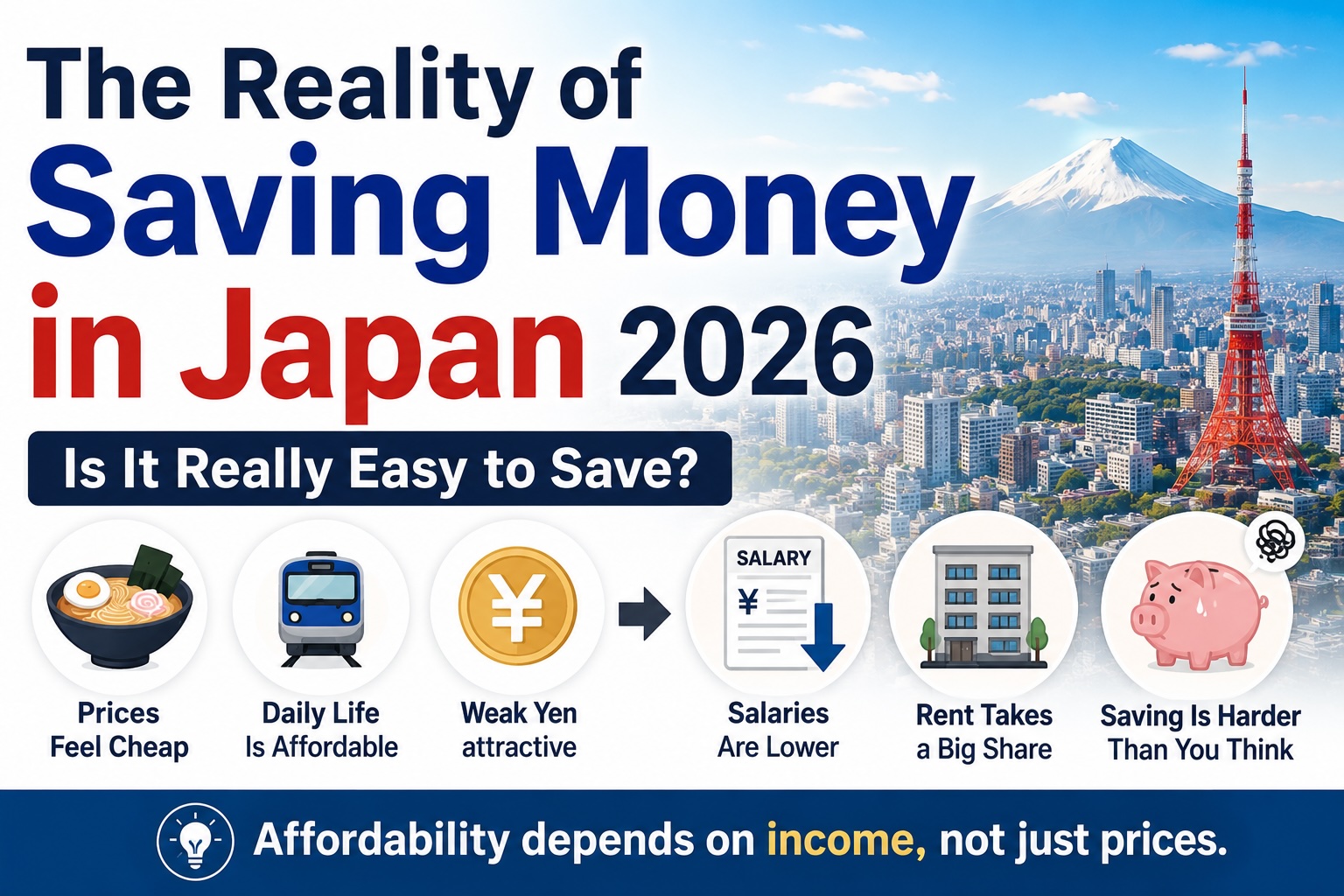
Japan is often described as an affordable country.
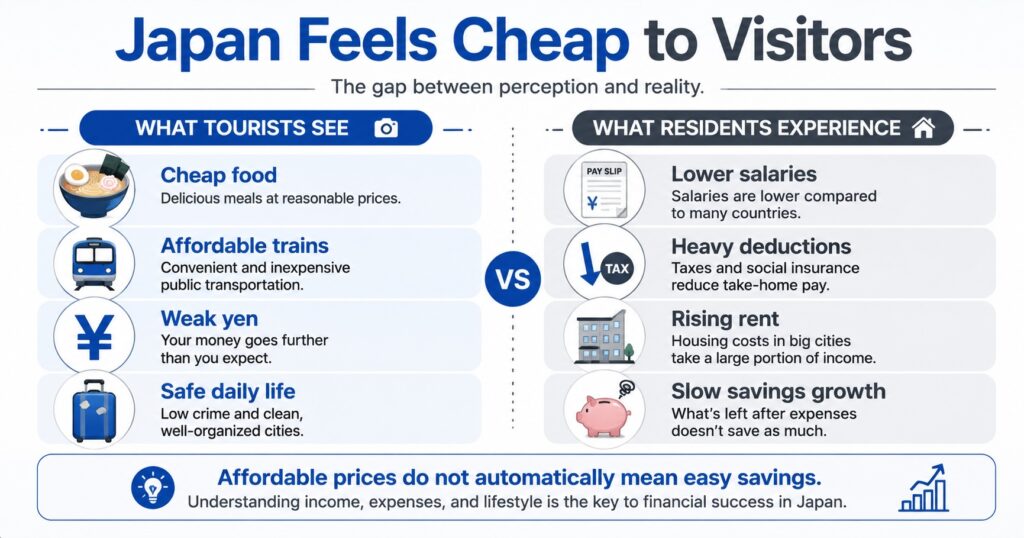
Visitors frequently notice:
- Relatively inexpensive restaurants
- Affordable public transportation
- Low crime rates
- Stable daily living costs
Because of this, many foreigners assume:
“Living in Japan must make it easy to save money.”
However, the reality is more complicated.
Japan can feel inexpensive from the outside — especially for tourists earning foreign currencies during periods of yen weakness.
But the actual ability to save money depends heavily on:
- Salary levels
- Housing costs
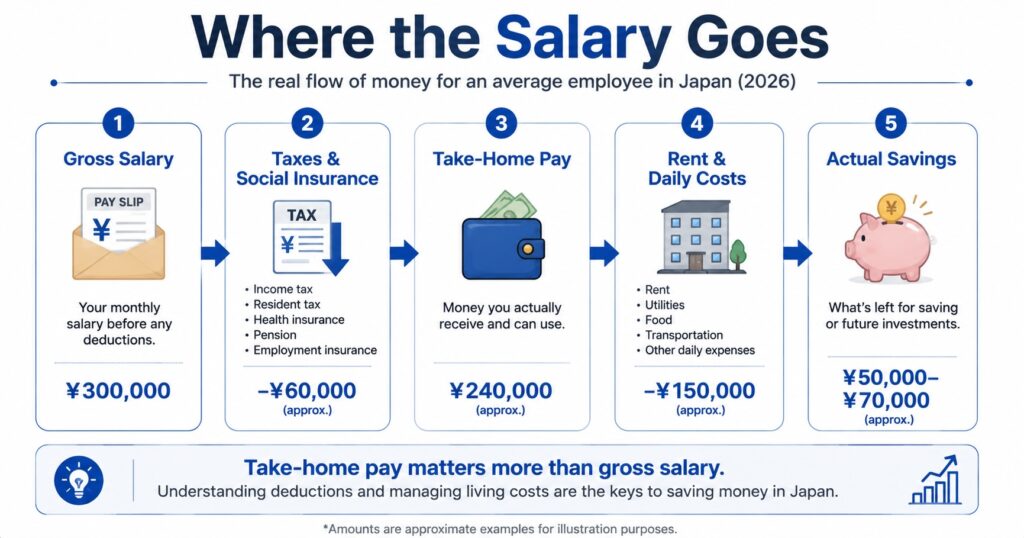
- Take-home pay after deductions
- Family structure
- Lifestyle choices
In other words:
Japan may feel cheap, but that does not automatically mean people save a lot of money.
This article explains the financial reality of living and saving money in Japan in 2026.
Why Japan Feels Cheap to Foreigners
There are several reasons why Japan is often perceived as affordable.
Food Can Be Surprisingly Affordable
Compared to many Western countries:
- Convenience store meals are relatively inexpensive
- Restaurant prices have historically remained stable
- Lunch specials are common
- Public transportation reduces car dependency
For tourists, daily spending can sometimes feel lower than expected.
This creates the impression that Japan is a low-cost country overall.
However, tourists experience Japan very differently from residents.
The Salary Reality in Japan
The biggest difference is income.
While prices may appear moderate, salaries in Japan are often lower than many foreigners expect.
Japan’s wage growth remained relatively slow for decades compared to some Western economies, although wage increases have recently accelerated in some industries.
Source:
e-Housing – Average Salary in Japan 2024: Insights on Tokyo and Beyond
In many industries:
- Bonuses remain an important part of total compensation
- Monthly take-home pay can feel limited in major cities
- Social insurance and pension deductions reduce disposable income
According to OECD-related income comparisons, Japan’s disposable household income remains below several major Western economies.
Source:
Expatica – Cost of Living in Japan
This is one reason why many residents do not feel financially comfortable despite moderate prices.
Related Articles:
- Why Bonuses Matter More Than Salary in Japan (2026 Reality)
- Tokyo Minimum Wage 2026: Hourly Wage and Salary Guide
- Best Places to Retire in Japan for Foreigners (2026 Guide)
Housing Costs Matter More Than Many People Expect
Housing is one of the biggest factors affecting savings in Japan.
Tokyo Is Expensive Relative to Salary
Tokyo is not necessarily as expensive as New York or London in absolute terms.
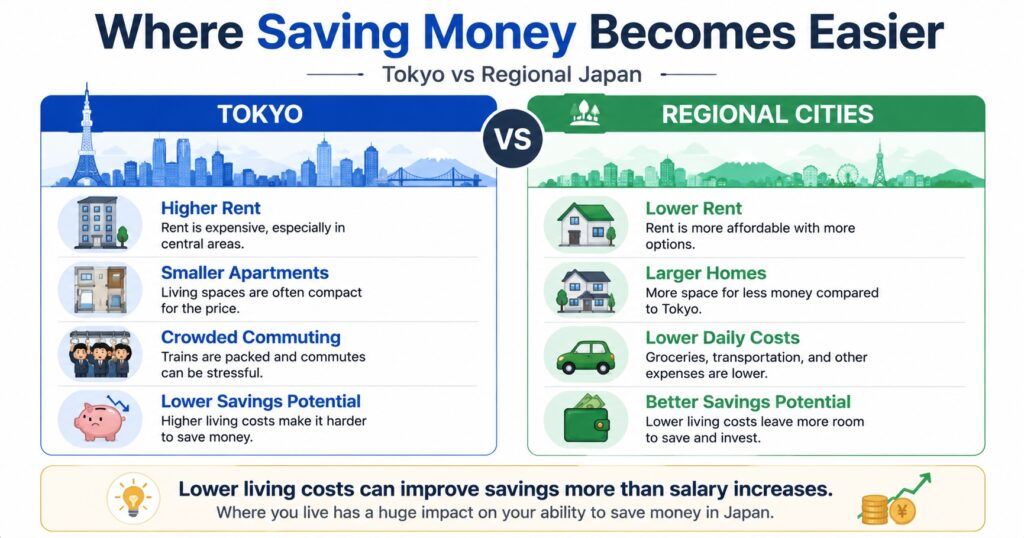
However, relative to local salaries, housing costs can still feel heavy for many workers.
Financial guidance in Japan often recommends keeping housing costs below roughly 25–30% of take-home pay.
Source:
XROSS HOUSE – How Much Rent Should You Pay in Japan?
In practice, many workers in Tokyo spend a large portion of their income on rent.
This reduces monthly savings potential significantly.
Regional Cities Can Change the Equation
Outside Tokyo, the financial situation can improve considerably.
Cities such as:
- Fukuoka
- Sapporo
- Sendai
often offer:
- Lower rent
- Larger apartments
- Lower commuting stress
- Better balance between salary and living costs
For some people, moving away from Tokyo dramatically improves their ability to save money.
Related Articles:
Can People Actually Save Money in Japan?
The answer is:
Yes — but usually not as easily as many foreigners imagine.
Savings potential depends heavily on lifestyle and location.
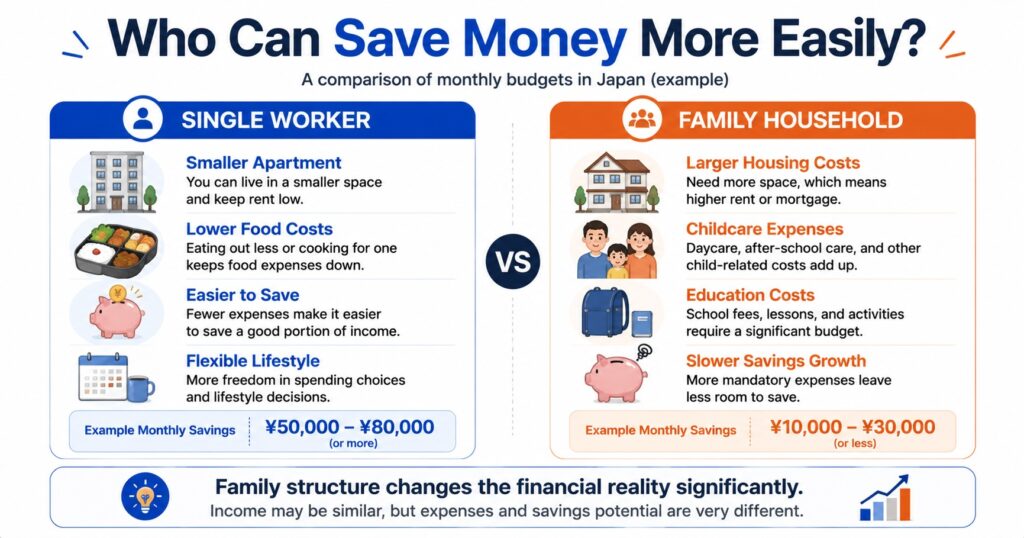
Single Workers
A single person living modestly outside central Tokyo may still save money consistently.
Especially if they:
- Cook at home frequently
- Avoid excessive nightlife spending
- Live near public transportation
- Keep rent under control
Some financial guidance sources in Japan recommend saving roughly 10–20% of take-home pay when possible.
Source:
XROSS HOUSE – How Much Rent Should You Pay in Japan?
Families Face More Financial Pressure
Families often experience greater financial pressure due to:
- Education costs
- Childcare expenses
- Larger housing requirements
- Food inflation
Recent household spending data suggests living costs for families have increased noticeably due to inflation pressures and rising food prices.
Source:
Resident Magazine – This Is How Much You Actually Need to Live in Japan in 2026
Even middle-class households may feel that savings grow slowly.
Why Some Foreigners Misunderstand Japan’s Cost Reality
A major reason is exchange rates.
When the yen weakens:
- Japan feels cheaper to tourists earning foreign currency
- Imported comparisons become distorted
- Dollar-based visitors may underestimate local salary realities
For example:
A visitor earning US dollars may feel Japan is inexpensive.
But Japanese workers are earning in yen — not dollars.
This creates a major perception gap.
The Hidden Factor: Stability
One important advantage Japan still offers is stability.
Compared to some countries:
- Violent crime rates are relatively low
- Public transportation is reliable
- Healthcare costs are comparatively predictable
- Daily life is highly structured
Because of this, some people accept lower salaries in exchange for a more stable lifestyle.
This is one reason why financial satisfaction in Japan can feel very different from simple salary comparisons.
The Real Financial Reality of Japan in 2026
Japan is neither extremely cheap nor impossibly expensive.
The reality is more balanced:
- Daily life can be affordable
- Salaries are often lower than foreigners expect
- Housing costs matter heavily
- Savings are possible, but usually require planning
The key point is this:
Affordability depends on income, not just prices.
Japan may look inexpensive from the outside.
But for people actually living and working there, the financial reality is much more complex.