Japan is often seen as a great place to visit—but a growing number of people are asking a different question:
“Can I actually retire in Japan?”
The answer is not a simple yes or no.
Japan offers safety, healthcare, and stability, but also has visa restrictions and lifestyle barriers that many people underestimate.
This guide explains:
- Why foreigners consider retiring in Japan
- The best locations depending on lifestyle
- Real costs and hidden challenges
Why Foreigners Consider Retiring in Japan
1. Safety Is Not Just a Perception — It’s Real
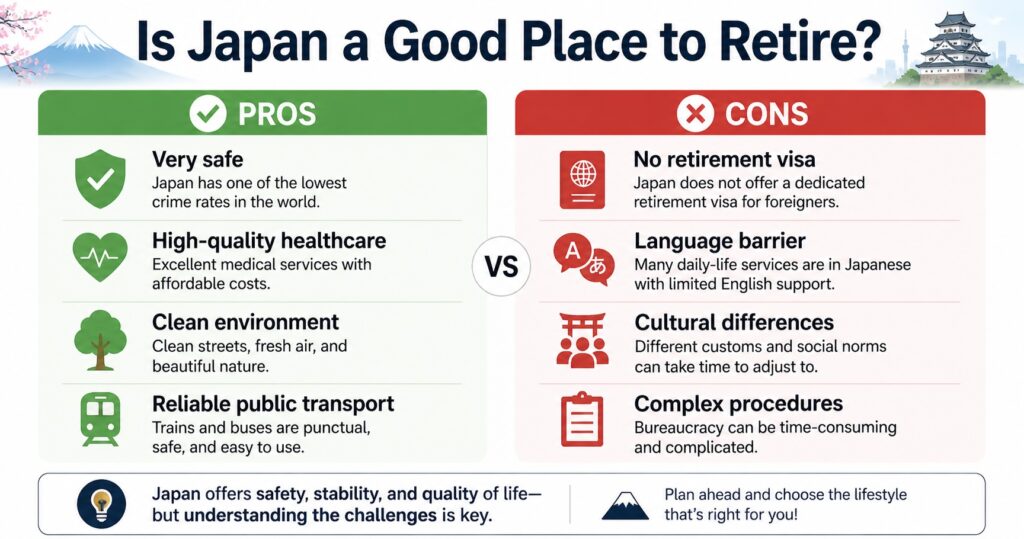
Japan consistently ranks among the safest countries globally.
- Very low violent crime rate
- Safe public transport even at night
- Strong social order
👉 For retirees, this means:
less stress, fewer risks, and more independence in daily life
2. Healthcare Is High Quality and Affordable
Japan’s healthcare system is one of its strongest advantages.
- Universal health insurance system
- High-quality hospitals and clinics
- Relatively low out-of-pocket costs
👉 Even retirees can access care at a reasonable price
3. Cost of Living Can Be Lower Than Expected
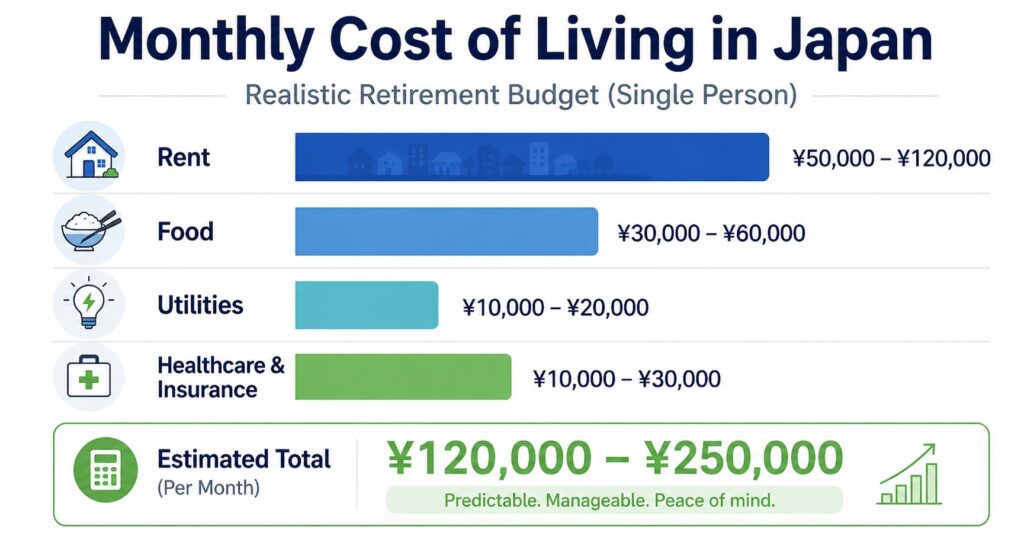
While Tokyo is expensive, many regional cities are surprisingly affordable.
- Lower rent outside major cities
- Affordable public transportation
- Reasonable food costs
👉 The key is choosing the right location
For example, Tokyo costs are explained here:
👉 Cost of Living in Tokyo (2026 Guide)
But rent drops significantly outside major cities:
👉 Tokyo vs Rural Japan Rent: How Much Cheaper?
If you want a full breakdown of monthly expenses:
👉 Cost of Living in Japan for a Single Person
Best Places to Retire in Japan
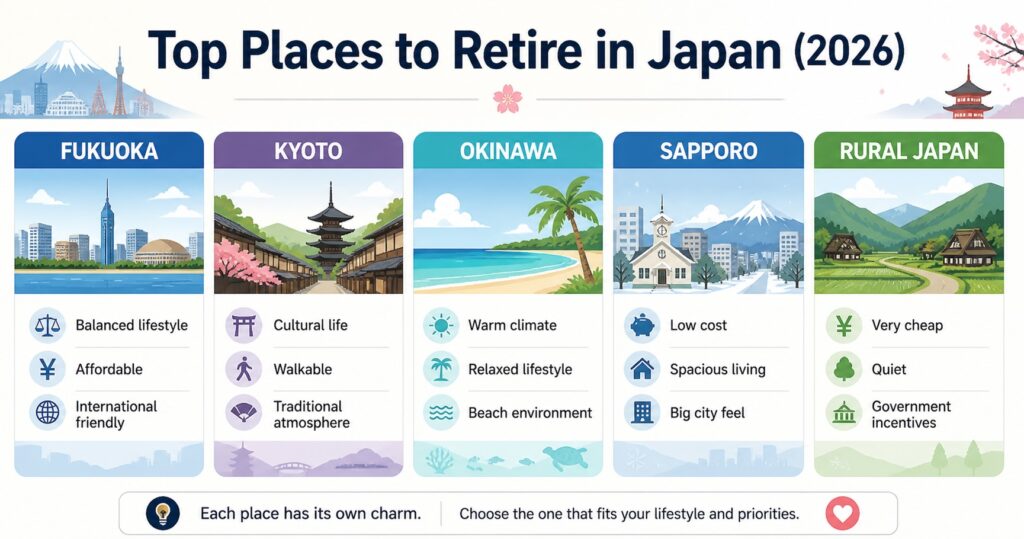
1. Fukuoka — Balance of City and Relaxation
- Lower cost than Tokyo/Osaka
- Modern infrastructure
- Access to nature
👉 Ideal for those who want urban life without extreme costs
2. Kyoto — Culture and History
- Traditional atmosphere
- Walkable city
- Rich cultural life
👉 Best for culture-oriented retirees
3. Okinawa — Warm Climate and Slow Life
- Subtropical weather
- Relaxed lifestyle
- Lower stress environment
👉 Great for those prioritizing quality of life over convenience
For a broader comparison of where to live in Japan:
👉 Best Places to Live in Japan (2026)
Hidden Challenges You Should Know
1. Visa Limitations
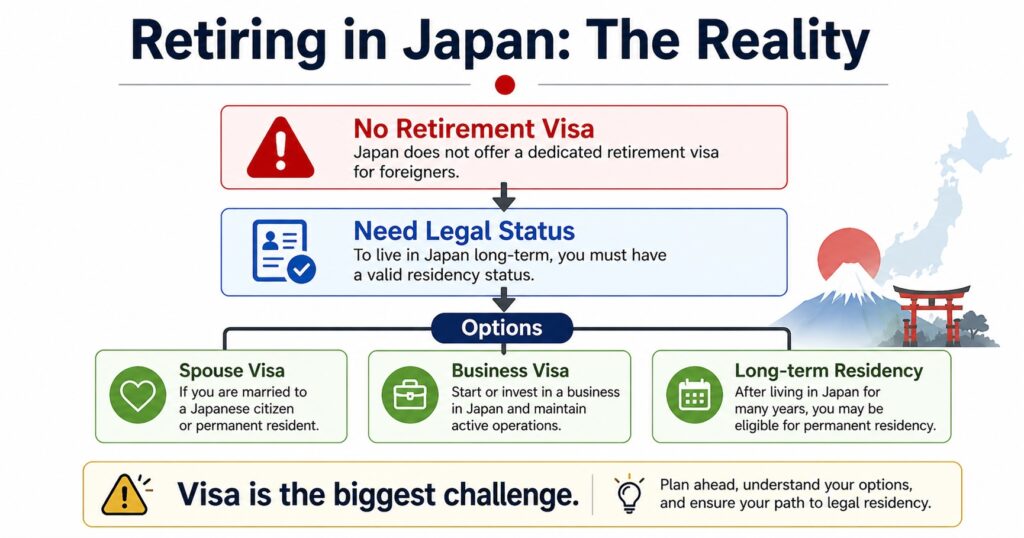
Japan does NOT have a dedicated retirement visa.
This is one of the biggest barriers.
- Long-term stay requires alternative visas
- Financial self-sufficiency is essential
2. Language Barrier
English is not widely used in daily life.
- Medical visits can be difficult
- Government procedures require Japanese
👉 Some level of Japanese is strongly recommended
3. Rental Challenges for Foreigners
Finding housing can be harder than expected.
- Some landlords refuse foreign tenants
- Guarantor requirements
Full guide:
👉 How to Rent an Apartment in Japan (2026 Guide)
Final Thoughts
Retiring in Japan is possible—but it requires preparation.
Japan offers:
- Safety
- Healthcare
- Stability
But also requires:
- Visa planning
- Language adaptation
- Realistic expectations
👉 If you plan carefully, Japan can be one of the most rewarding places to retire.