
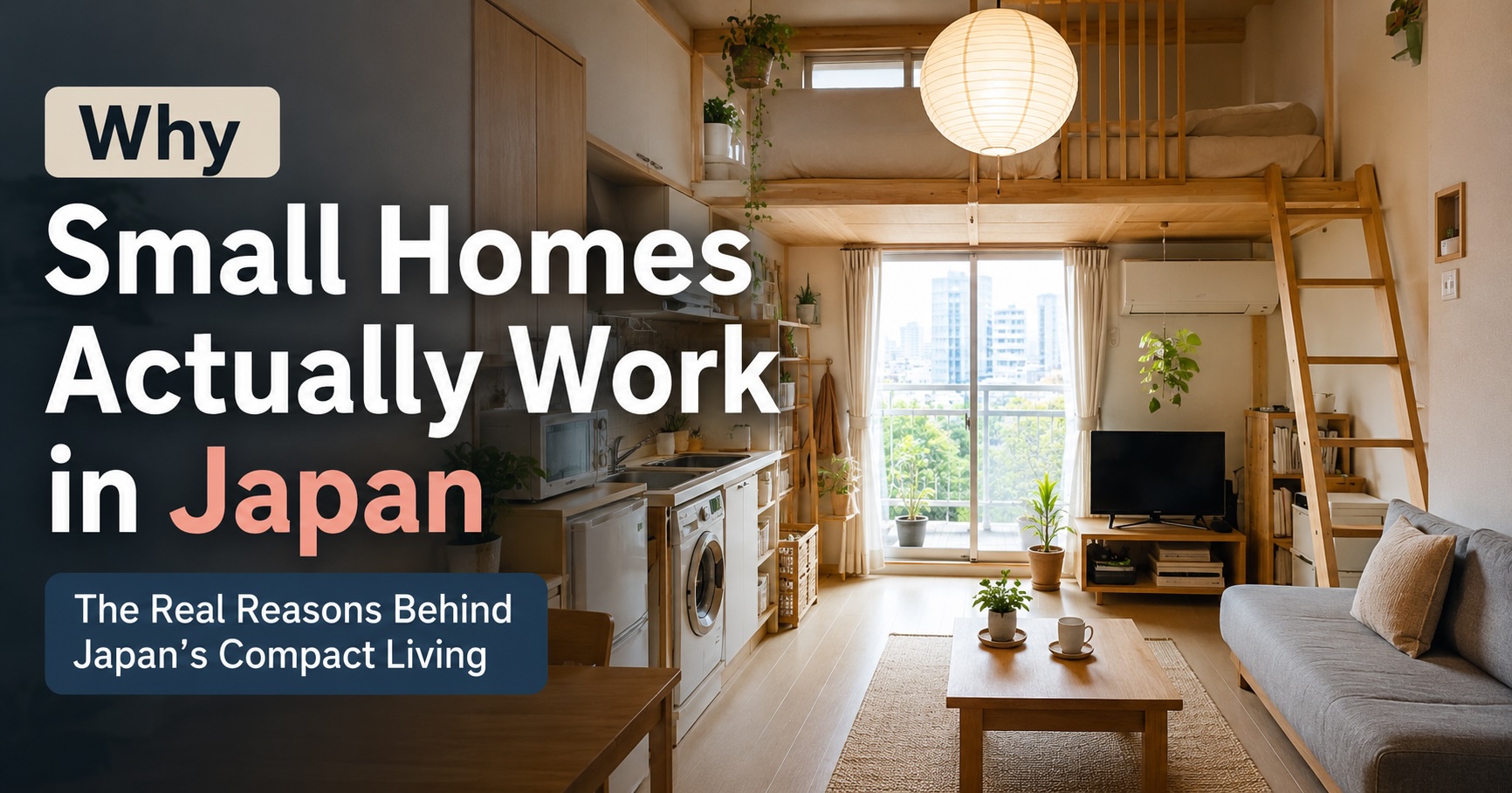
If you visit Japan for the first time, one thing often surprises people immediately:
👉 Homes and apartments can feel very small.
A typical one-room apartment in Tokyo may only be around:
- 15–25㎡ (160–270 sq ft)
Even family apartments in urban Japan are often:
- 50–70㎡ (540–750 sq ft)
For many foreigners—especially people from the United States, Canada, or Australia—this can feel extremely compact.
At first glance, it may seem uncomfortable or even unrealistic.
But here’s the interesting part:
👉 Millions of people in Japan live this way every day without considering it unusual.
So why does small-home living work in Japan?
The answer is not simply:
“Because Japan is crowded.”
In reality, Japan has built an entire lifestyle and urban system around compact living.
Small Homes Are Supported by the City Itself
One of the biggest differences in Japan is this:
👉 Daily convenience exists outside the home.
In many countries, people rely heavily on large houses because they store many functions inside them:
- large kitchens
- storage rooms
- entertainment spaces
- laundry areas
- home offices
- large parking spaces
Japan works differently.
Japanese cities are designed around:
- convenience stores
- supermarkets
- restaurants
- vending machines
- public transportation
- compact neighborhood shopping streets
In Tokyo, Osaka, and many other cities, daily necessities are often only a few minutes away on foot.
This changes how people use their homes.
For many residents, the home becomes:
👉 a highly efficient personal space rather than a large multi-purpose environment.
Eating Out Is Relatively Accessible
Another important factor is food culture.
Japan still has relatively affordable restaurant options compared to many Western countries.
It is possible in many areas to buy:
- convenience store meals
- lunch sets
- noodle dishes
- fast casual meals
for relatively low prices.
As a result:
👉 many people do not need extremely large kitchens or dining spaces.
This is one reason even small apartments can remain functional.
Related article:
How Cheap Is Eating Out in Japan Compared to the US?
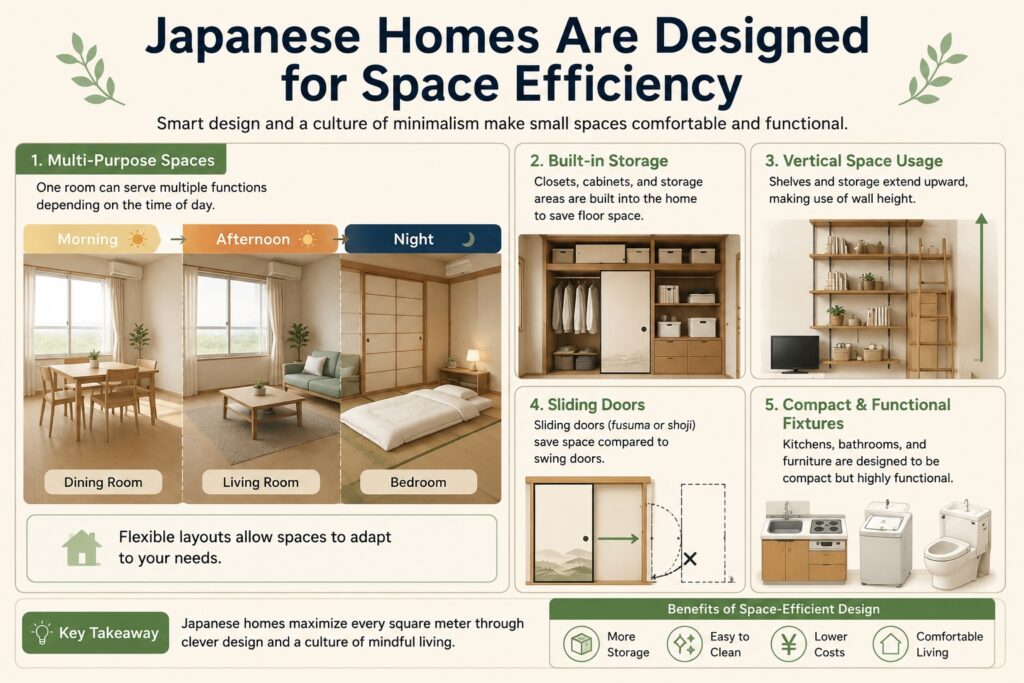
Japanese Homes Are Designed for Space Efficiency
Japan has spent decades optimizing compact living.
Small homes often include:
- built-in storage
- sliding doors
- deep closets
- vertical shelving
- folding furniture
- multi-purpose rooms
Space is used very differently compared to countries where larger homes are common.
For example:
A single room may function as:
- living room
- dining room
- bedroom
depending on the time of day.
This flexibility is deeply integrated into Japanese housing culture.
Public Transportation Reduces the Need for Large Space
Cars also influence housing size.
In countries where driving is essential, homes often need:
- garages
- large parking areas
- storage for vehicles and equipment
But in major Japanese cities:
👉 many people do not rely on cars daily.
Train systems allow residents to live with fewer possessions and less required storage space.
This helps compact housing remain practical.
Safety Makes Compact Urban Living Easier
Japan’s relatively high level of public safety also changes how cities function.
People often feel comfortable:
- walking at night
- using public transportation
- shopping frequently in small amounts
Because daily life can be handled outside the home more easily, large private living spaces become less necessary.
The Economic Reality Behind Small Homes
At the same time, this does not necessarily mean Japanese people “prefer” living in small homes.
Many people would likely enjoy having larger homes if cost were not a major issue.
However, in cities like Tokyo, housing prices can become extremely expensive.
A larger home in central Tokyo may easily cost hundreds of millions of yen, placing it far beyond the reach of average salaried workers.
Even homes around ¥100 million can create heavy long-term mortgage burdens.
As a result, many people prioritize:
- manageable living costs
- convenient urban access
- financial stability
- lifestyle flexibility
over maximizing home size itself.
In other words:
👉 compact living in Japan is often not only cultural, but also deeply economic.
Related articles:
- Cost of Living in Tokyo (2026 Guide)
- Tokyo vs Rural Japan Rent: How Much Cheaper Is It?
- Is Japan Cheap to Live In? (2026 Guide)
Land Prices Changed Housing Culture
Of course, economics still matters.
Japan has limited flat land, and major cities—especially Tokyo—have extremely high land prices.
As urban populations concentrated around train networks and business districts, compact housing became economically practical.
Over time:
👉 society adapted around smaller spaces.
In other words:
Japan did not simply “accept” small homes.
Japan built an entire urban lifestyle that makes small homes workable.
Small Does Not Always Mean Unlivable
For many foreigners, Japanese homes may initially feel surprisingly small.
But after spending time in Japan, some people begin to notice something unexpected:
👉 convenience can sometimes compensate for space.
When transportation, food access, safety, and infrastructure work efficiently together, people may rely less on large private living areas.
That does not mean everyone prefers compact housing.
But it helps explain why small-home living has become a normal part of life in Japan.
Final Thoughts
Japanese homes are small for many reasons:
- limited urban land
- high city land prices
- population concentration
- transportation systems
- cultural adaptation
- convenience-focused city design
But the more interesting question may be this:
👉 Why does compact living feel far more sustainable in Japan than many people expect?
The answer is not just about apartment size.
It is about how an entire society was built around making small spaces work.