
Is Japan Really Cheap? A Local’s Reality Check
Last weekend, I picked up a bag of potato chips at my local supermarket.
Same price as before.
But when I held it in my hand, something felt off.
Lighter.
That quiet, almost invisible change says a lot about grocery shopping in Japan in 2025.
From the outside, people often describe Japan as a “cheap country.”
But if you actually live here, the story feels different.
Prices have crept up.
Portions have quietly shrunk.
And people have adjusted without making much noise.
Here’s what everyday food really costs in Japan right now — based on discount supermarkets that locals actually use.
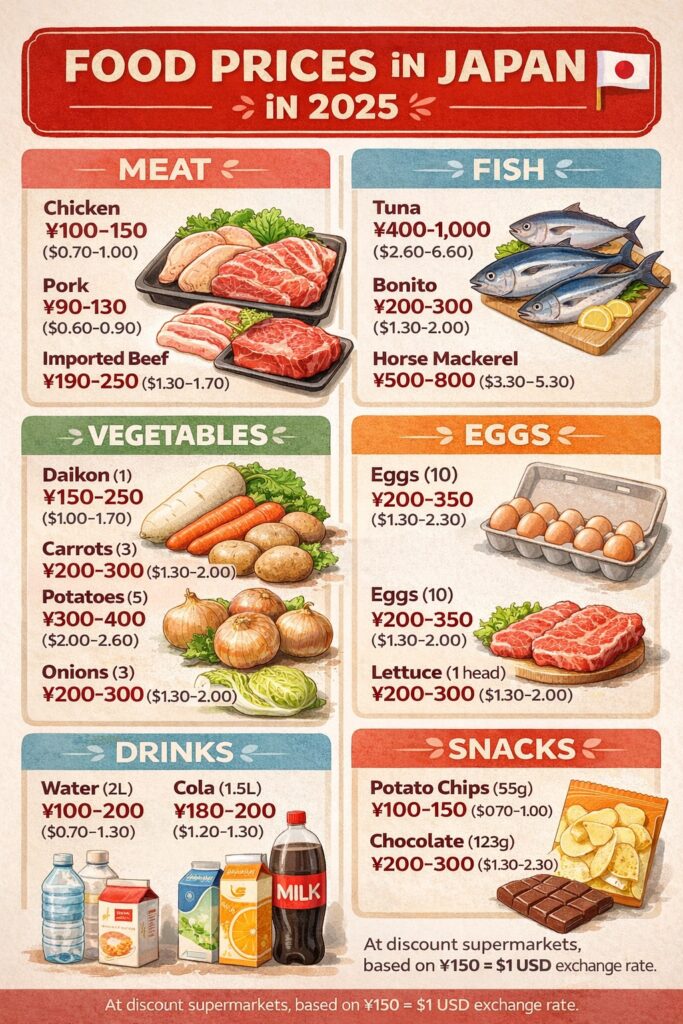
Exchange rate reference: ¥150 = $1 USD
🥩 Meat: Chicken Still Wins
Chicken remains the most common protein in Japanese homes.
It’s affordable, versatile, and works for everything from karaage to stir-fry.
Typical prices (100g):
- Chicken: ¥100–150 ($0.70–1.00)
- Pork: ¥90–130 ($0.60–0.90)
- Imported beef: ¥190–250 ($1.30–1.70)
- Domestic beef: ¥500–1,000 ($3.30–6.60)
Domestic Japanese beef — including wagyu — is not everyday food.
It’s more “birthday dinner” than Tuesday night.
For daily cooking, chicken dominates.
🐟 Fish: An Island Nation, Yet Expensive
Japan is surrounded by ocean.
But fish prices have risen significantly over the past decade.
Many locals feel this change strongly.
Typical prices (100g unless noted):
- Tuna: ¥400–1,000 ($2.60–6.60)
- Bonito: ¥200–300 ($1.30–2.00)
- Horse mackerel (3 fish): ¥500–800 ($3.30–5.30)
Fresh sashimi still tastes incredible.
But it’s no longer something most families buy casually every week.
🥕 Vegetables: The Weather Decides
Vegetable prices in Japan swing dramatically depending on season and weather.
A typhoon or heatwave can change everything overnight.
Typical prices:
- Daikon (1): ¥150–250 ($1.00–1.70)
- Carrots (3): ¥200–300 ($1.30–2.00)
- Potatoes (5): ¥300–400 ($2.00–2.60)
- Onions (3): ¥200–300 ($1.30–2.00)
- Cabbage (1 head): ¥150–300 ($1.00–2.00)
- Lettuce (1 head): ¥200–300 ($1.30–2.00)
When cabbage hits ¥600, social media fills with complaints.
It happens almost every year.
And yes — everyone notices.
🥚 Eggs: More Expensive, Still Essential
There was a time when ten eggs cost ¥100.
That time is gone.
Eggs (10): ¥200–350 ($1.30–2.30)
Even so, eggs remain a staple.
Japanese eggs are high quality, safe to eat raw, and known for their rich yolks.
Despite rising prices, households haven’t cut them out.
🥤 Drinks: Supermarkets vs. Convenience Stores
Locals rarely buy drinks in bulk from convenience stores.
They’re convenient — but expensive.
At supermarkets:
- Water (2L): ¥100–200 ($0.70–1.30)
- Cola (1.5L): ¥180–200 ($1.20–1.30)
- Milk (1L): ¥200–250 ($1.30–1.70)
- Orange juice (1L): ¥200–250 ($1.30–1.70)
Convenience stores are for emergencies.
Not for weekly shopping.
🍫 Snacks: The Quiet Shrinkage
Snack prices haven’t changed dramatically.
But the contents have.
Examples:
- Potato chips (55g): ¥100–150 ($0.70–1.00)
- Chocolate (123g): ¥200–300 ($1.30–2.00)
Same price.
Less product.
In Japan, this is often called “stealth price increases.”
No announcements.
Just smaller packages.
🛒 Where You Shop Matters
These prices reflect discount chains like:
- OK Store
- Gyomu Super
At premium supermarkets such as:
- Seijo Ishii
- Kinokuniya
Prices can easily be 1.5 to 2 times higher.
Grocery shopping in Japan becomes almost strategic.
People remember:
“Chicken is ¥98 at that store.”
“Eggs are cheaper on Tuesdays.”
Some will walk an extra ten minutes to save ¥20.
That’s normal.
🛒 A Realistic Weekly Grocery Budget (Single Person, 2025)
To make these numbers easier to imagine, here’s a simple weekly grocery example for one person shopping at a discount supermarket in Japan.
This assumes mostly home cooking and simple meals.
🥩 Protein
- Chicken (800g total): ¥800
- Pork (400g total): ¥480
- Eggs (10): ¥280
Subtotal: ¥1,560
🥕 Vegetables
- Cabbage (1): ¥200
- Carrots (3): ¥250
- Onions (3): ¥250
- Potatoes (5): ¥350
- Lettuce (1): ¥250
Subtotal: ¥1,300
🍚 Staples
- Rice (5kg, weekly portion estimate): ¥600
- Tofu (3 packs): ¥150
- Milk (1L × 2): ¥440
Subtotal: ¥1,190
🍫 Snacks & Extras
- Potato chips (2): ¥260
- Yogurt: ¥200
- Seasonings & small extras: ¥300
Subtotal: ¥760
💰 Estimated Weekly Total
¥4,800 – ¥5,500
(≈ $32–37 USD at ¥150 = $1)
What This Means
For a single person cooking mostly at home:
- Around ¥20,000–22,000 per month for groceries
- Eating out increases that quickly
- Careful shopping can reduce costs further
For comparison:
- Add convenience store lunches daily → +¥3,000–5,000 per week
- Add regular eating out → easily ¥30,000+ per month total food cost
🇯🇵 Reality Check
Japan isn’t “cheap.”
But if you cook at home and shop smart,
food costs are still manageable compared to many major cities worldwide.
🇯🇵 Final Thoughts: Rising Prices, Steady Standards
Food prices in Japan are definitely rising.
But what still stands out is consistency:
- Clean stores
- Strict food safety
- Accurate labeling
- Reliable quality
You may pay more than you expected.
But you rarely feel misled.
Everything works as advertised.
And that quiet reliability — more than cheapness — is what defines grocery shopping in modern Japan.