
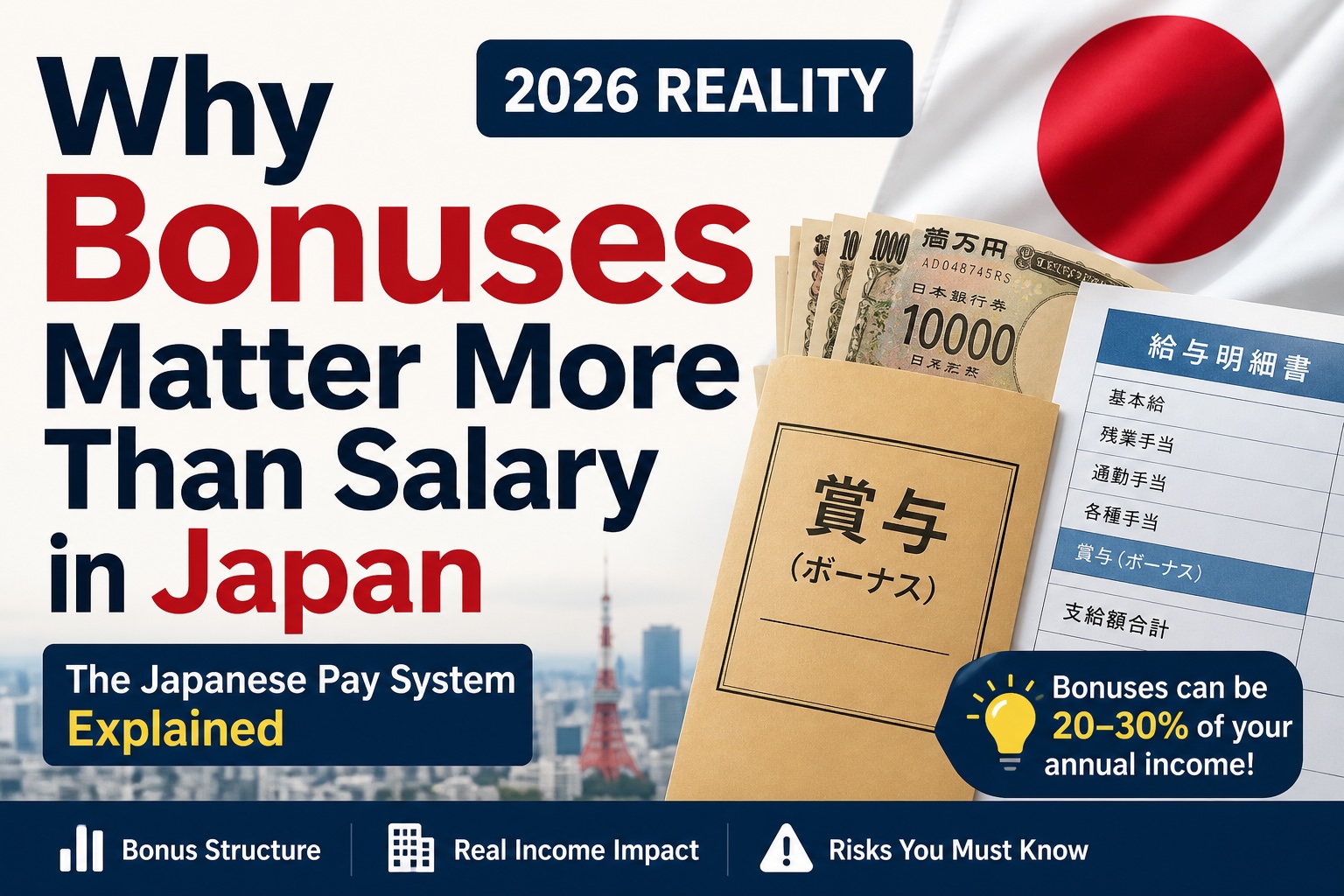
Japan’s salary system looks simple — but it isn’t.
You might see a job offer like:
- ¥250,000/month
- ¥3 million per year
At first glance, it looks straightforward.
But here’s the reality:
👉 In Japan, bonuses often matter more than monthly salary.
If you don’t understand this, you will misjudge your real income.
The Hidden Structure of Japanese Salaries
In many countries:
👉 Salary = your main income
In Japan, it’s different.
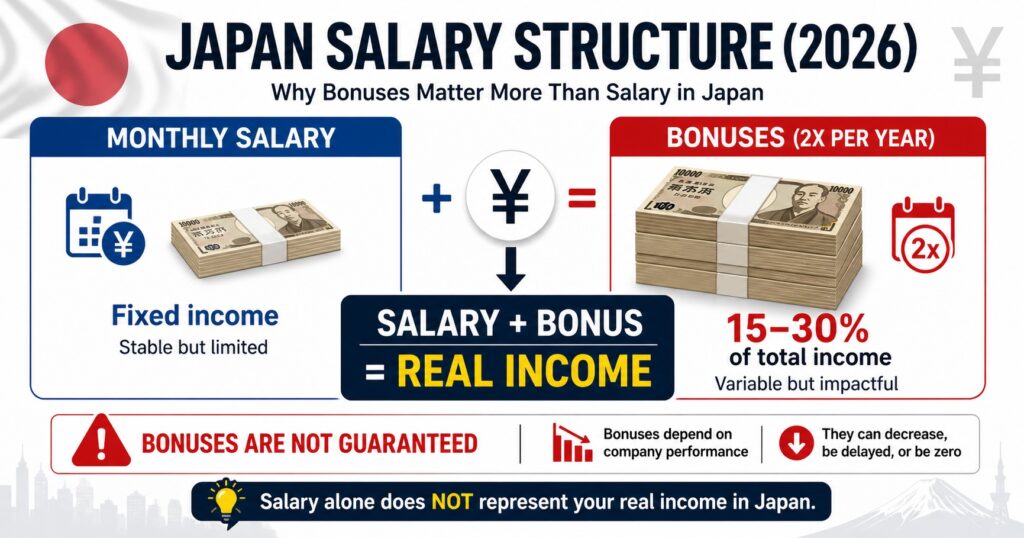
- Monthly salary (base pay)
- + Bonuses (twice a year)
These are typically paid:
- Summer (June–July)
- Winter (December)
👉 This structure is standard across many companies [JETRO]
How Big Are Bonuses in Japan?
Bonuses are usually calculated as “months of salary.”
Typical ranges:
- Large companies: 2–6 months
- SMEs: 1–3 months
👉 Bonuses often make up 15–30% of total annual income
In fact, large companies in Japan paid an average winter bonus of over ¥1,000,000 in 2025
Real Income Example
- Monthly salary: ¥250,000
- Bonus: 4 months
Annual:
- Base salary: ¥3,000,000
- Bonus: ¥1,000,000
👉 Total: ¥4,000,000
💡 This means a large portion of income does NOT come from monthly pay.
Why Companies Use Bonuses
1. Cost Flexibility
Bonuses depend on:
- Company performance
- Economic conditions
👉 They can be reduced or cut if needed [ウィキペディア]
https://en.wikipedia.org/wiki/Seasonal_bonuses_%28Japan%29?utm_source=chatgpt.com
Salary is fixed.
Bonus is adjustable.
2. Lower Fixed Salary Structure
Japanese companies intentionally keep base salary lower.
👉 Why?
Because lowering salary is difficult,
but reducing bonuses is easier.
3. Retention Strategy
Bonuses are paid twice a year.
👉 This creates behavior like:
“I’ll stay until my bonus is paid.”
This helps companies reduce turnover.
The Biggest Risk: Bonuses Are NOT Guaranteed
This is critical.
👉 Bonuses are not legally guaranteed.
They can:
- Decrease
- Be delayed
- Become zero
Example:
- Year 1: 4 months bonus
- Year 2: 2 months bonus
👉 You lose hundreds of thousands of yen.
Why Foreigners Misunderstand This
1. Salary Looks Low
Monthly salary appears small compared to Western countries.
2. Annual Salary Is Confusing
Some job offers include bonuses, others don’t.
3. Cash Flow Timing Is Different
Income is not evenly distributed monthly.
Why Bonuses Matter More Than Salary
- They make up a large part of income
- They determine real earnings
- They reflect company performance
- They create income volatility
👉 In simple terms:
Salary = stability
Bonus = real income power
What You Must Check Before Taking a Job
- Is bonus included in annual salary?
- How many months is typical?
- Is it performance-based?
- What is the past bonus history?
👉 Without this, you are guessing your income.
Final Takeaway
Japan’s salary system is not what it looks like.
👉 If you only look at monthly salary:
You will misunderstand your real earnings.