
If you’re visiting Japan from the U.S., Canada, or Europe, this moment often happens:
You finish a great meal.
The service was warm and attentive.
Your water glass was never empty.
And instinctively, your hand moves toward your wallet.
Then you pause.
“Wait… am I supposed to tip?”
The answer is simple:
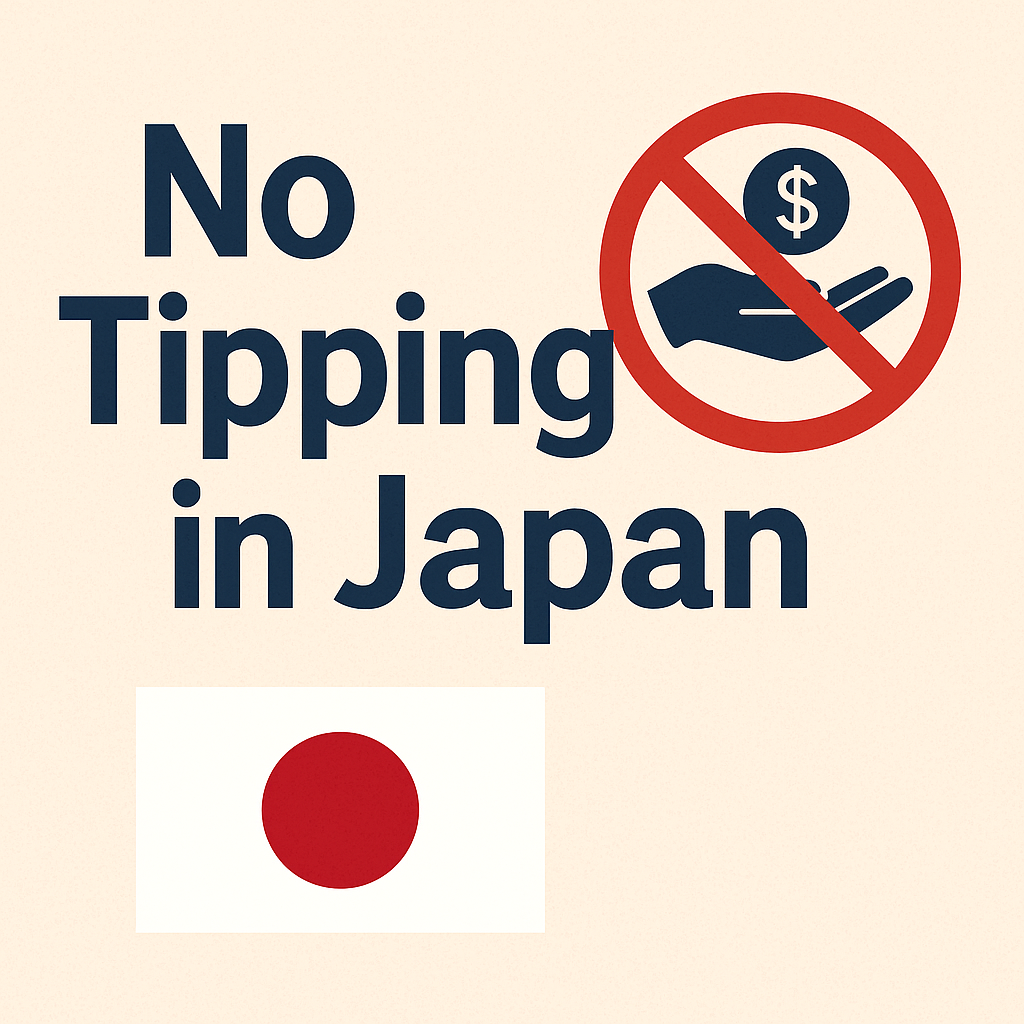
👉 No. You don’t tip in Japan.
And more importantly — you don’t need to feel guilty about it.
💴 Why Japan Doesn’t Have a Tipping Culture
In Japan, service is not something you reward with extra money.
It’s something that is expected and built into the system.
Employees:
- Receive fixed wages
- Do not rely on tips for income
- Are trained to provide consistent service
Good service is considered:
- Professional responsibility
- Basic job standard
- A matter of personal pride
It’s not about impressing customers.
It’s about doing the job properly.
🌸 The Concept Behind It: Omotenashi
Japanese hospitality is often described with one word:
Omotenashi (おもてなし)
It means wholehearted service without expectation of return.
The idea is:
“I will take care of you because that is my role — not because I expect extra money.”
This cultural mindset is why service can feel surprisingly attentive even in very casual places.
Convenience stores.
Budget ramen shops.
Small family-run restaurants.
You’ll often receive politeness that feels above the price you paid.
🚫 Why Tipping Can Feel Awkward
Tipping isn’t illegal.
But it often feels out of place.
In Japanese service culture, fairness and equality matter.
If one customer pays extra and receives special treatment, it disrupts the balance.
Because of this, staff may:
- Politely refuse the tip
- Look confused
- Even run after you to return “forgotten” money
They are not rejecting your kindness.
They are simply following cultural norms.
💡 So How Do You Say Thank You?
Words matter far more than money.
Try these:
“Gochisousama deshita.”
Thank you for the meal.
“Oishikatta desu.”
It was delicious.
Even a warm smile and “Arigatou” is perfect.
In Japan, sincerity carries more weight than cash.
🏨 What About Hotels and Taxis?
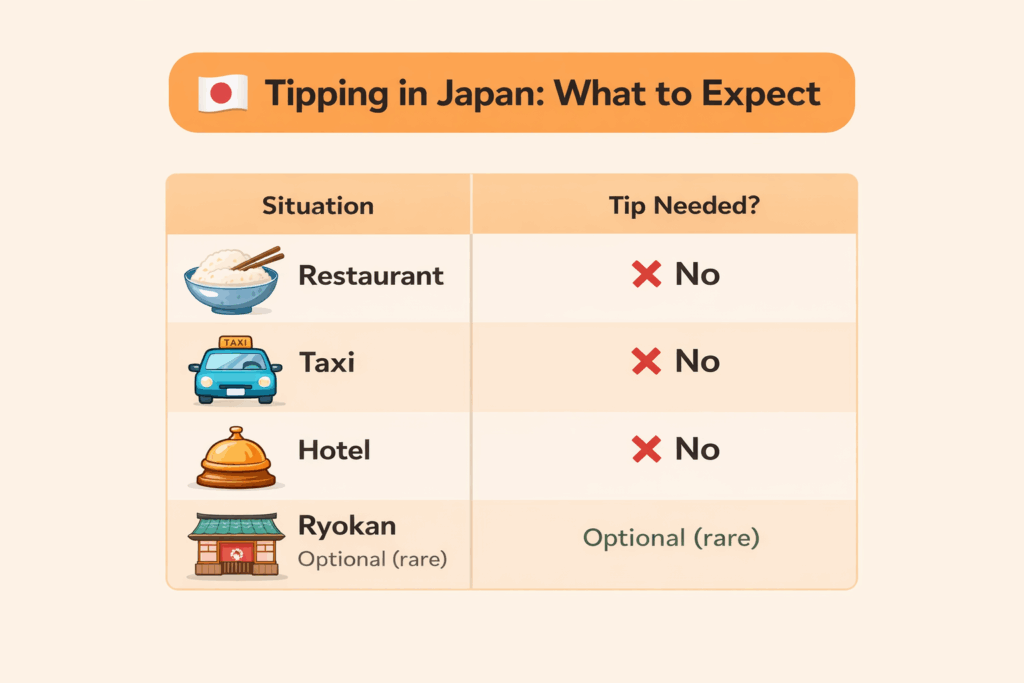
In most cases:
- Restaurants → No tipping
- Taxis → No tipping
- Hotels → No tipping
- Bars → No tipping
High-end ryokan (traditional inns) are slightly different.
Sometimes guests offer a small envelope of cash to attendants — but this is rare for foreign visitors and absolutely not required.
If you’re unsure:
👉 The safest rule is simple: Don’t tip.
🌍 How This Compares to Western Countries
In countries where tipping is expected:
- Wages may be lower
- Tips are part of income
- Service can vary based on tip expectations
In Japan:
- Prices already include service
- Staff are paid stable wages
- Service consistency is valued
That’s why you won’t see:
- 15%
- 18%
- 20%
- Or tip calculators
The bill is the bill.
And that’s it.
✨ What This Means for Travelers
Not having to tip removes:
- Mental math
- Social pressure
- Awkwardness
- Fear of underpaying
You can simply:
Enjoy your meal.
Pay the total.
Say thank you.
Leave peacefully.
Final Thought
When visiting Japan, remember:
You don’t need to tip.
You don’t need to calculate anything.
You don’t need to worry.
A sincere “thank you” is the best tip you can give.
And in Japan, that’s exactly enough.