
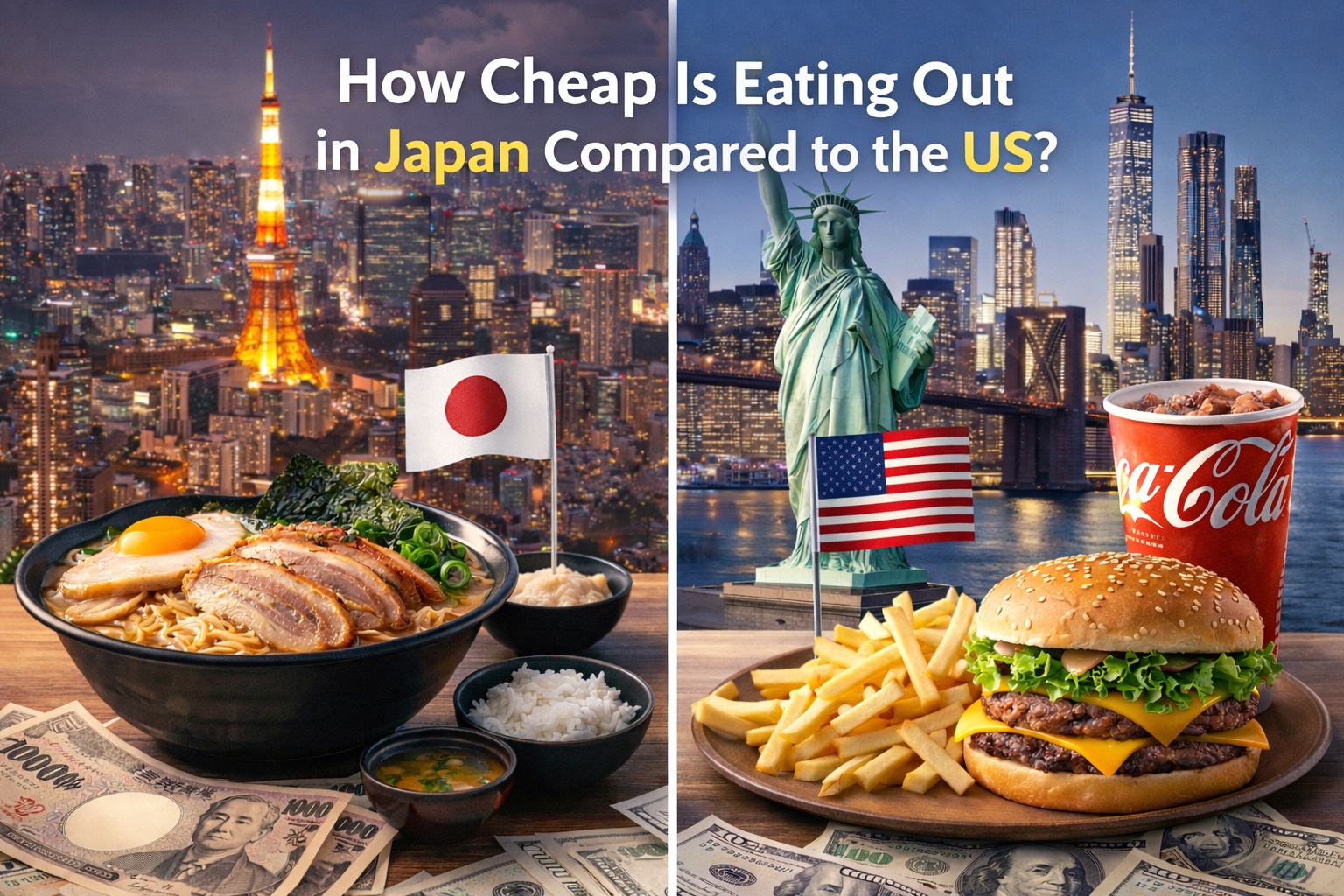
A Realistic 2026 Price Comparison
For years, Japan had a reputation for being expensive.
But recently, many visitors from the United States are saying something unexpected:
“Eating out in Japan feels surprisingly affordable.”
So how cheap is it really?
Let’s compare typical everyday meal prices in Japan and the U.S. using realistic numbers.
(Exchange rate used: ¥150 = $1)
🍜 1. Casual Lunch (Ramen / Set Meal)
🇯🇵 Japan
- Ramen: ¥800–1,200 ($5–8)
- Teishoku (set meal): ¥900–1,300 ($6–9)
These meals usually include:
- Main dish
- Rice
- Soup
- Sometimes small side dishes
No tipping required.
🇺🇸 United States
- Casual ramen: $15–22
- Casual lunch plate: $14–20
Plus:
- Tax (varies by state)
- Tip (15–20%)
Final total often becomes:
👉 $18–26
📌 Difference
A typical casual lunch in Japan can cost about half of a comparable meal in the U.S.
☕ 2. Coffee & Café Break
🇯🇵 Japan
- Convenience store coffee: ¥120–180 ($0.80–1.20)
- Café latte (Starbucks-style): ¥450–600 ($3–4)
🇺🇸 United States
- Coffee: $2–4
- Latte: $5–7
Again, tipping may apply.
Japan’s convenience store coffee is especially notable for its price-quality balance.
🍱 3. Fast Food
🇯🇵 Japan
- Gyudon bowl: ¥400–600 ($3–4)
- McDonald’s set: ¥700–900 ($5–6)
🇺🇸 United States
- Fast food combo: $8–12
In recent years, U.S. fast food prices have risen sharply.
Japan’s pricing remains relatively stable in comparison.
🍣 4. Mid-Range Dinner
🇯🇵 Japan
- Sushi dinner (casual): ¥2,000–4,000 ($13–27)
- Izakaya dinner with drinks: ¥3,000–5,000 ($20–33)
🇺🇸 United States
- Casual sushi dinner: $25–50+
- Dinner with drinks: $40–70+
After tax and tip, the gap widens.
📊 Price Comparison: Japan vs United States (2026)
| Category | 🇯🇵 Japan (Average) | 🇺🇸 United States (Average) | Notes |
|---|---|---|---|
| Casual Ramen | ¥900–1,200 ($6–8) | $15–22 | US price excludes tip |
| Set Meal (Teishoku) | ¥900–1,300 ($6–9) | $14–20 | Includes sides in Japan |
| Fast Food Combo | ¥700–900 ($5–6) | $8–12 | US price before tip |
| Coffee (Convenience Store) | ¥120–180 ($0.8–1.2) | $2–4 | Rare in US at this price |
| Café Latte | ¥450–600 ($3–4) | $5–7 | Tax + tip often extra in US |
| Casual Sushi Dinner | ¥2,000–4,000 ($13–27) | $25–50+ | Portion size differs |
| Izakaya Dinner w/ Drinks | ¥3,000–5,000 ($20–33) | $40–70+ | US includes tip |
💰 Monthly Example: Eating Out 5 Times Per Week
Let’s assume:
- 20 meals per month
- Casual lunch average
| Country | Estimated Monthly Cost |
|---|---|
| 🇯🇵 Japan | ~$140–180 |
| 🇺🇸 United States | ~$360–500 |
Prices vary by city and exchange rate, but the overall cost difference remains noticeable in everyday dining.
🏙 5. Why Is Japan Cheaper?
Several structural reasons explain the difference:
1. No tipping culture
Service cost is already included in menu prices.
2. Lower labor costs (compared to the U.S.)
Wage structures differ significantly.
3. High competition
Restaurants are everywhere.
Small profit margins are common.
4. Smaller portion sizes
Portions in Japan are typically more moderate.
5. Efficient supply chains
Food logistics are optimized nationwide.
📊 But Is Everything Cheap?
Not necessarily.
Certain items can be expensive in Japan:
- Imported beef
- Imported fruit
- Luxury dining
- Tourist-heavy areas
Tokyo fine dining can match New York prices.
However, everyday meals remain comparatively affordable.
👀 A Personal Observation
From daily life in Japan, eating out is often easier than cooking.
Many people regularly choose restaurants over convenience store meals simply because:
- Prices are reasonable
- Quality is consistent
- Service is reliable
That combination makes frequent dining out possible without feeling extravagant.
💡 What This Means for Travelers
For American visitors especially:
Japan can feel like a country where:
- You can eat well without overspending.
- You don’t need to calculate tip percentages.
- High-quality meals are widely accessible.
That said, exchange rates matter.
If the yen strengthens significantly, the price gap may narrow.
🇯🇵 Final Thoughts
So, how cheap is eating out in Japan compared to the U.S.?
For everyday meals:
👉 Often 30–50% cheaper.
For mid-range dining:
👉 Still noticeably more affordable.
Luxury dining:
👉 Comparable.
Japan may not be the ultra-cheap country it once was —
but compared to current U.S. restaurant prices, it still offers remarkable value.