
A Real Look at How Sake Fits Into Modern Japan
A few weeks ago, I was sitting at a small neighborhood izakaya with friends.
The menu was packed with choices:
Beer.
Highballs.
Lemon sours.
Wine.
Cocktails.
And of course — sake.
No one ordered sake.
Not because they dislike it.
Not because it was expensive.
It simply didn’t come to mind.
That moment captures something important about modern Japan.
Sake is still respected.
But it’s no longer automatic.
🍶 Sake Is Not an Everyday Default
Many people outside Japan imagine that sake is what Japanese people drink all the time.
But in everyday life, that’s not how it works.
Most people today:
- Don’t drink sake regularly
- Don’t think of it as their first option
- Choose lighter alternatives for casual nights
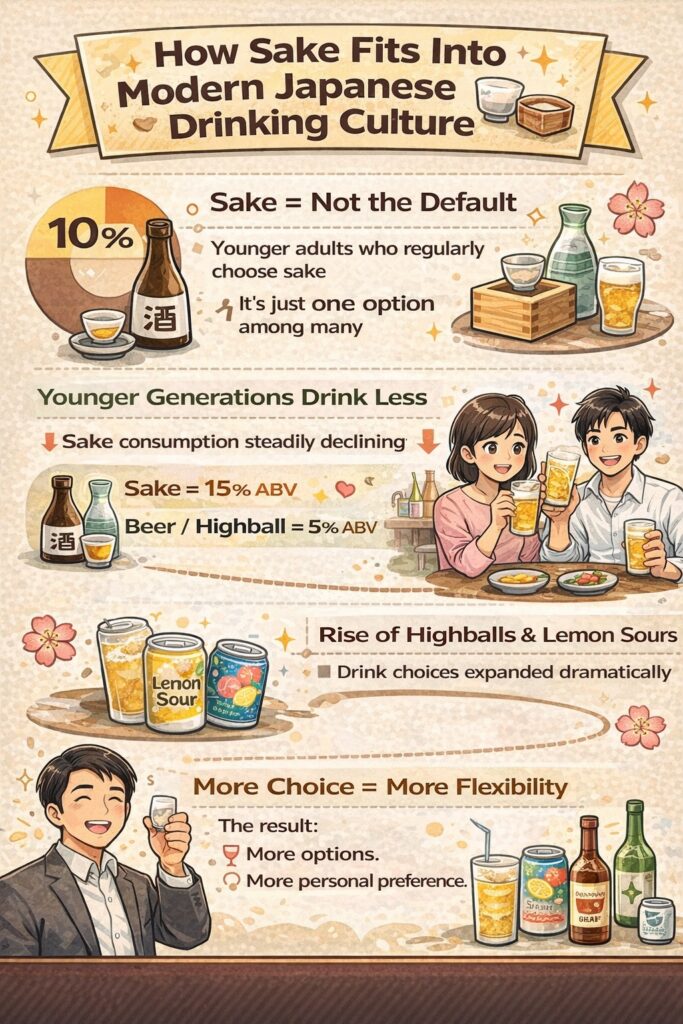
Sake is now one choice among many, not the cultural default.
🍺 What People Actually Drink Instead
If you sit in an izakaya or walk through a convenience store, you’ll notice what dominates:
- Beer
- Highballs (whisky + soda)
- Lemon sours
- Fruity canned cocktails
- Wine
These drinks feel:
- Lighter
- Easier to drink
- More casual
- Less intense
Compared to them, sake feels heavier and more deliberate.
👥 Younger Generations Rarely Start With Sake
From daily life, especially among people in their 20s and 30s, you often hear comments like:
“I don’t dislike it, but not tonight.”
“It feels a bit strong.”
“Beer is easier.”
“Sake gets me drunk quickly.”
Industry data over the past decades shows a steady decline in overall sake consumption, especially among younger adults.
While older generations may still appreciate it, sake is rarely the first drink for younger groups.
💴 It’s Not About Price
One common misunderstanding is that sake is expensive.
In reality:
- Beer: ~5% alcohol
- Sake: ~15% alcohol
When you compare alcohol content per yen, sake can actually be reasonable.
The issue isn’t price.
It’s strength and drinking style.
Sake feels like something you sit down and appreciate.
Beer or a highball feels effortless.
That difference changes behavior.
🏮 My Personal Relationship With Sake
I genuinely enjoy sake.
Its aroma, texture, and complexity can be incredible.
But I don’t drink it often.
Why?
Because sake feels intentional.
If I order it, I want to slow down.
I want to taste it properly.
On casual nights, I often choose beer or a highball instead.
That small psychological difference explains a lot about modern drinking habits in Japan.
🍸 Japan’s Drinking Culture Has Diversified
Over the past 20–30 years, alcohol options in Japan have expanded dramatically:
- Highball boom
- Explosion of lemon sours
- Craft beer growth
- Affordable imported wine
- Stylish canned cocktails
- Non-alcoholic options
With so many choices, sake no longer dominates the landscape.
It competes.
And sometimes, it quietly loses.
✨ The Bottom Line
Japanese people do not only drink sake.
In fact:
- Most people don’t drink it regularly
- Younger generations often choose other drinks
- Sake is respected but not routine
- It’s more intentional than casual
Sake hasn’t disappeared.
It has simply shifted from everyday default to selective enjoyment.
And that shift reflects something bigger about modern Japan:
More choice.
More flexibility.
More personal preference.
Not less tradition —
Just less pressure.