
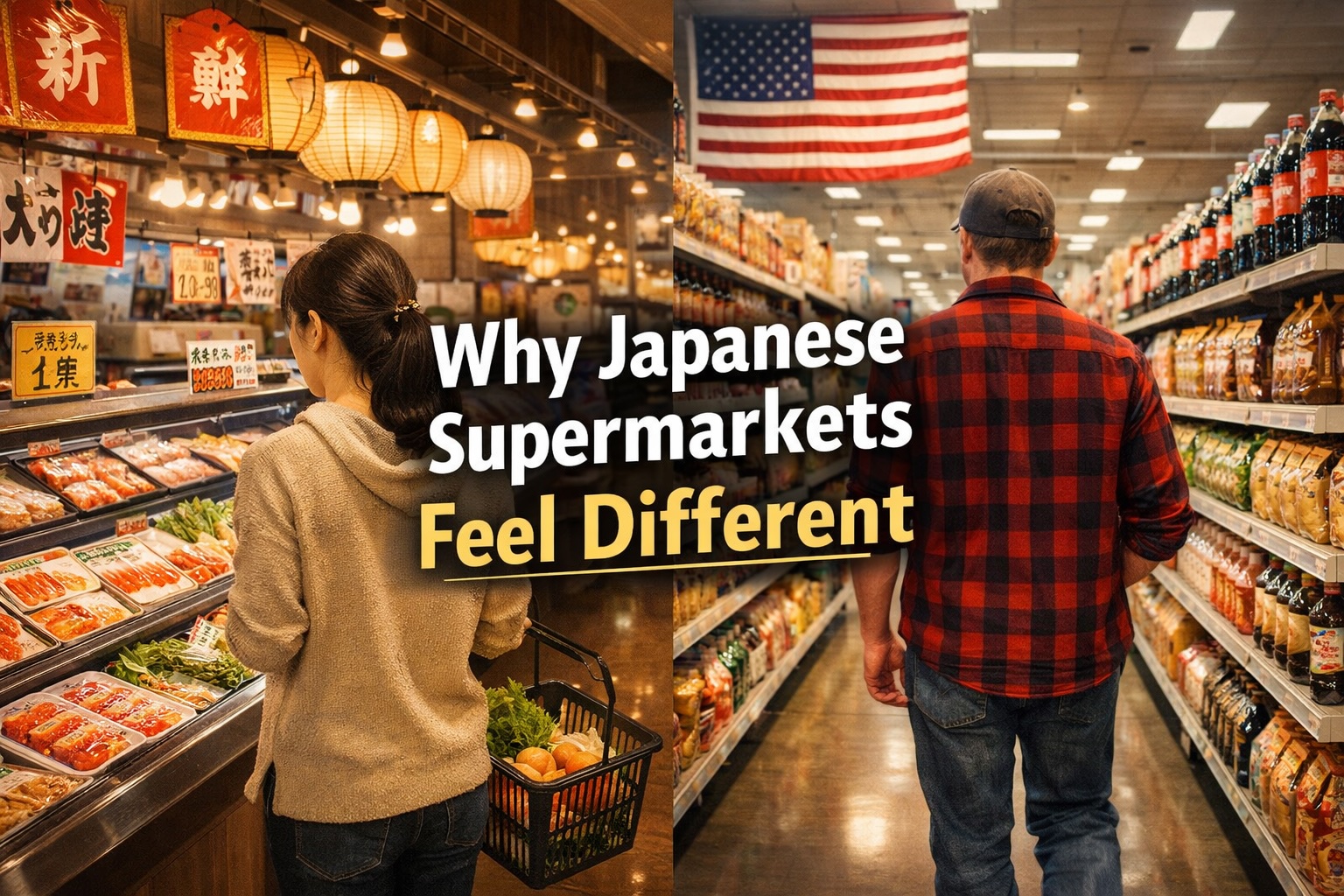
A Practical Look at Everyday Grocery Culture in Japan
If you’ve ever walked into a Japanese supermarket, you may have felt something was… different.
It’s not just the language on the labels.
It’s the layout.
The portion sizes.
The atmosphere.
Even the way food is packaged.
So what exactly makes Japanese supermarkets feel different from those in the U.S. or Europe?
Let’s break it down.
🛒 1. Smaller Portions, More Frequent Shopping
One of the first things visitors notice is portion size.
In Japan:
- Meat is often sold in 100g–300g packs
- Vegetables are frequently sold individually
- Ready-made meals are sold in single portions
By contrast, American supermarkets often emphasize bulk purchases.
Why?
Because many Japanese households:
- Have smaller refrigerators
- Shop several times per week
- Live in apartments with limited storage
Frequent, small purchases are normal.
🥕 2. Seasonal Displays Are Extremely Important
Japanese supermarkets place strong emphasis on seasonality.
You’ll often see:
- Spring strawberries prominently displayed
- Autumn sweet potatoes and chestnuts featured
- Seasonal fish highlighted with signage
Seasonal eating is deeply embedded in Japanese food culture.
Products are not just “in stock” — they are presented as part of the current season.
🍱 3. Prepared Food Sections Are Massive
One of the biggest surprises for visitors is the prepared food section.
Supermarkets in Japan typically offer:
- Bento boxes
- Fried chicken
- Tempura
- Sushi
- Grilled fish
- Salads
- Side dishes
These are freshly made daily and often discounted in the evening.
For many people, buying ready-made meals is part of normal life — not an occasional shortcut.
💴 4. Pricing Strategy Feels Different
Japanese supermarkets often compete aggressively on price.
You may see:
- “Today only” discounts
- Flash evening price cuts
- Discount stickers added just hours before closing
Because food expiration labeling is strict, stores prefer discounting over waste.
This creates a rhythm:
Full price → 10% off → 20% off → 50% off (late evening)
Regular shoppers know this pattern well.
🧼 5. Cleanliness and Organization
Clean presentation is noticeable.
- Floors are spotless
- Produce is neatly arranged
- Packaged food is aligned carefully
This reflects broader cultural expectations around cleanliness and order.
Even discount supermarkets maintain a certain visual standard.
🐟 6. The Fish Section Is a Centerpiece
In many Western supermarkets, meat dominates.
In Japan, fish sections are often equally prominent.
You’ll find:
- Whole fish
- Filleted fish
- Sashimi-grade seafood
- Pre-seasoned fish ready to cook
This reflects Japan’s long coastal food culture.
🏬 7. Space Efficiency
Japanese supermarkets are often more compact.
Aisles may be narrower.
Ceilings lower.
But product density is high.
Urban land costs influence store design, especially in cities like Tokyo or Osaka.
To make the differences easier to visualize, here’s a quick side-by-side comparison:
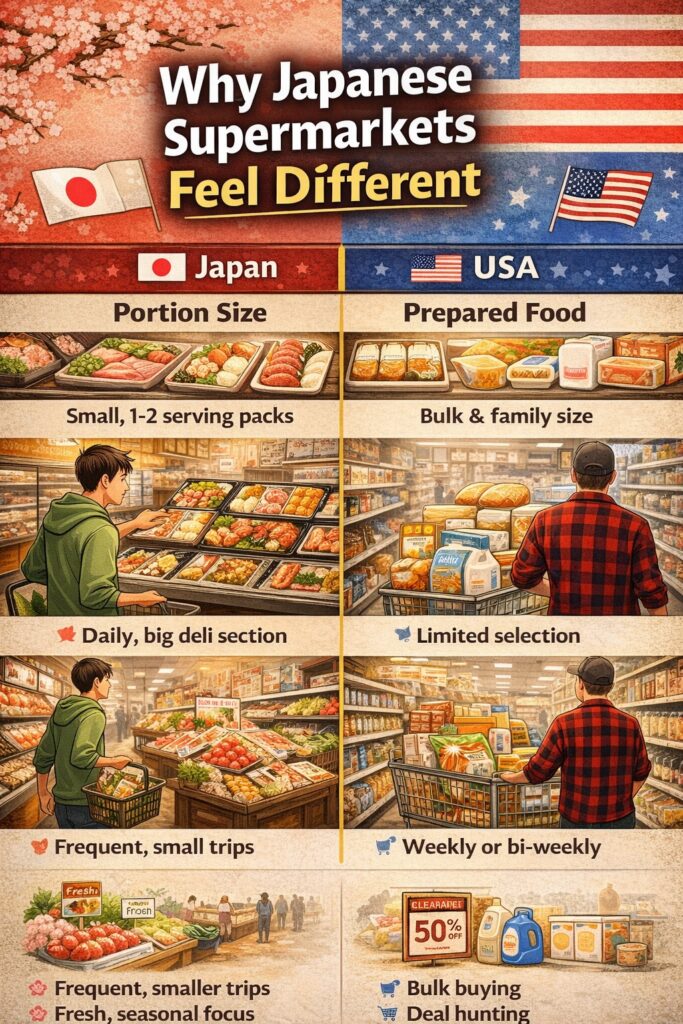
📊 US vs Japan Supermarket Comparison (2026)
(Exchange rate reference: ¥150 = $1)
| Category | 🇯🇵 Japan | 🇺🇸 United States | Key Difference |
|---|---|---|---|
| Portion Size | Small packs (100–300g) | Bulk & family size | Japan favors frequent small shopping |
| Shopping Frequency | Several times per week | Weekly or bi-weekly | US shopping is less frequent |
| Prepared Foods | Large bento & deli section | Limited ready meals (varies) | Japan offers daily meal solutions |
| Seasonal Displays | Very strong focus | Moderate | Japan emphasizes seasonal eating |
| Fish Section | Large & central | Often smaller than meat | Seafood plays bigger role in Japan |
| Discount Timing | Evening price drops common | Clearance varies | Japan uses structured markdown rhythm |
| Store Size | Compact, dense layout | Larger floor space | Urban density affects design |
| Cleanliness Presentation | Highly organized, uniform | Varies by chain | Cultural emphasis on order |
💰 Example: Typical Grocery Basket (Small Household)
| Item | 🇯🇵 Japan | 🇺🇸 United States |
|---|---|---|
| Chicken (300g / 0.6 lb) | ¥300–450 ($2–3) | $4–6 |
| Eggs (10) | ¥200–350 ($1.3–2.3) | $2–5 |
| Milk (1L / 0.26 gal) | ¥200–250 ($1.3–1.7) | $3–5 |
| Rice (1kg) | ¥400–600 ($2.7–4) | $4–8 |
| Total (basic basket) | ~$8–12 | ~$15–24 |
Prices vary by region and store type.
📊 8. Data Snapshot (2025 Context)
According to industry reports, Japan’s grocery retail market remains one of the largest in Asia, with supermarkets competing against:
- Convenience stores
- Discount chains
- Drugstores selling food
- Online grocery delivery
This intense competition keeps pricing relatively tight and encourages operational efficiency.
👀 A Personal Observation
From everyday life in Japan, supermarket visits are quick and purposeful.
People often stop by after work to buy:
- One pack of meat
- A few vegetables
- A prepared side dish
Not a week’s worth of groceries.
It feels less like a large weekly event — and more like part of a daily routine.
✈️ What This Means for Visitors
If you visit Japan, don’t just go to restaurants.
Spend 15 minutes inside a local supermarket.
You’ll learn:
- What people actually eat
- What’s in season
- How pricing works
- What everyday life looks like
In many ways, supermarkets reveal more about a country than tourist attractions.
🇯🇵 Final Thoughts
Japanese supermarkets feel different because they reflect:
- Smaller living spaces
- Seasonal awareness
- High food quality expectations
- Strict expiration standards
- Efficient urban design
It’s not just a place to shop.
It’s a window into how daily life in Japan really works.