
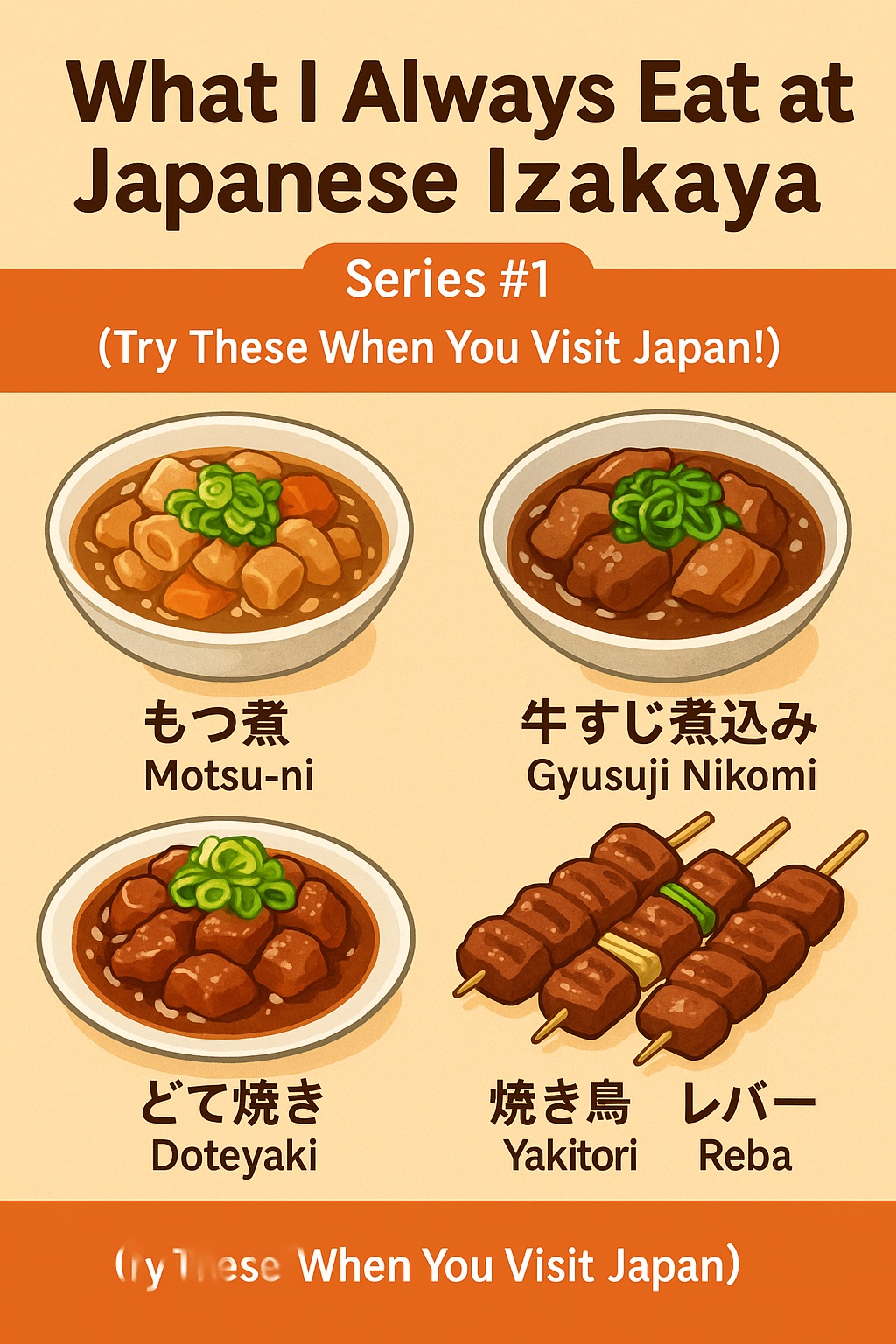
Real Dishes Japanese Locals Actually Order
After work, when I don’t feel like cooking and just want to unwind, I often end up at a small neighborhood izakaya.
Not the trendy ones you see in travel guides.
Just a simple local spot — wooden counter, handwritten menu, regular customers.
And over the years, I realized something:
👉 I almost always order the same types of dishes.
Not because I lack imagination — but because these dishes never disappoint.
They’re comforting, affordable, and made to pair perfectly with alcohol.
This isn’t a “tourist’s guide.”
This is what I actually eat.
What Makes Izakaya Food Different?
Before the dishes, here’s something important:
Izakaya food is designed to be:
- Shareable
- Strong in flavor
- Alcohol-friendly
- Moderately priced
Most small plates cost between:
¥400–¥800 (≈ $2.60–$5.30 USD, ¥150 = $1)
That affordability is why locals return weekly — sometimes several times a week.
Now, here’s what I personally order almost every time.
1. Motsu-ni(もつ煮)
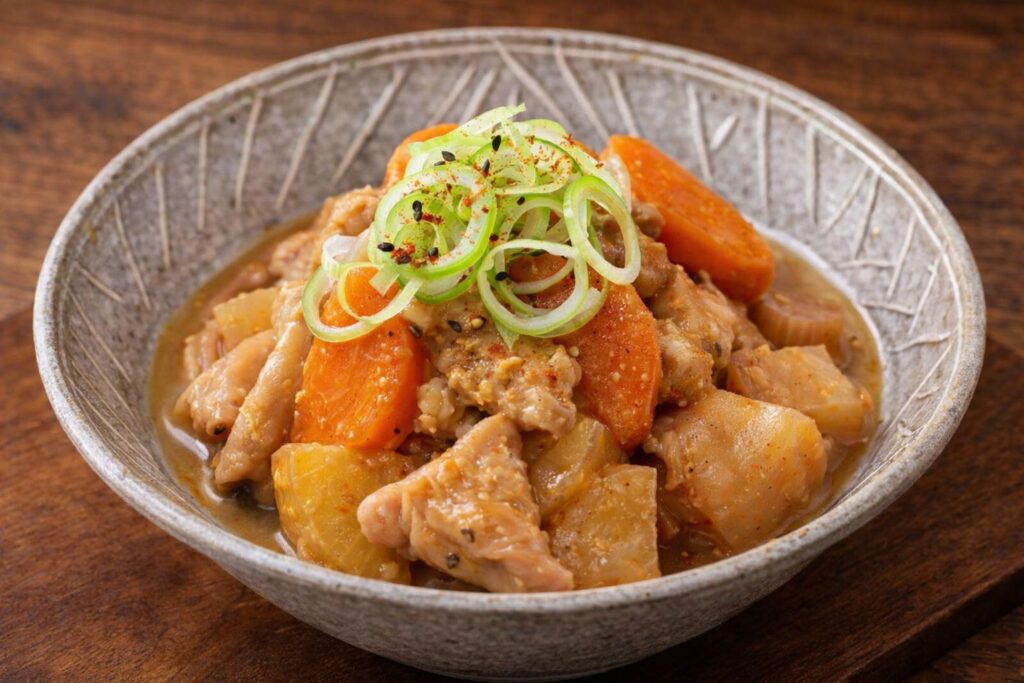
Simmered Pork Intestines in Miso
Yes — pork intestines.
But don’t let that scare you.
In Japan, motsu-ni is a classic comfort dish.
The intestines are slowly simmered in a miso-based broth with ginger and vegetables until extremely tender.
The result:
- No strong smell
- Deep umami flavor
- Soft, almost silky texture
It’s especially popular in winter.
For many people, this is “salaryman comfort food.”
2. Gyusuji Nikomi(牛すじ煮込み)
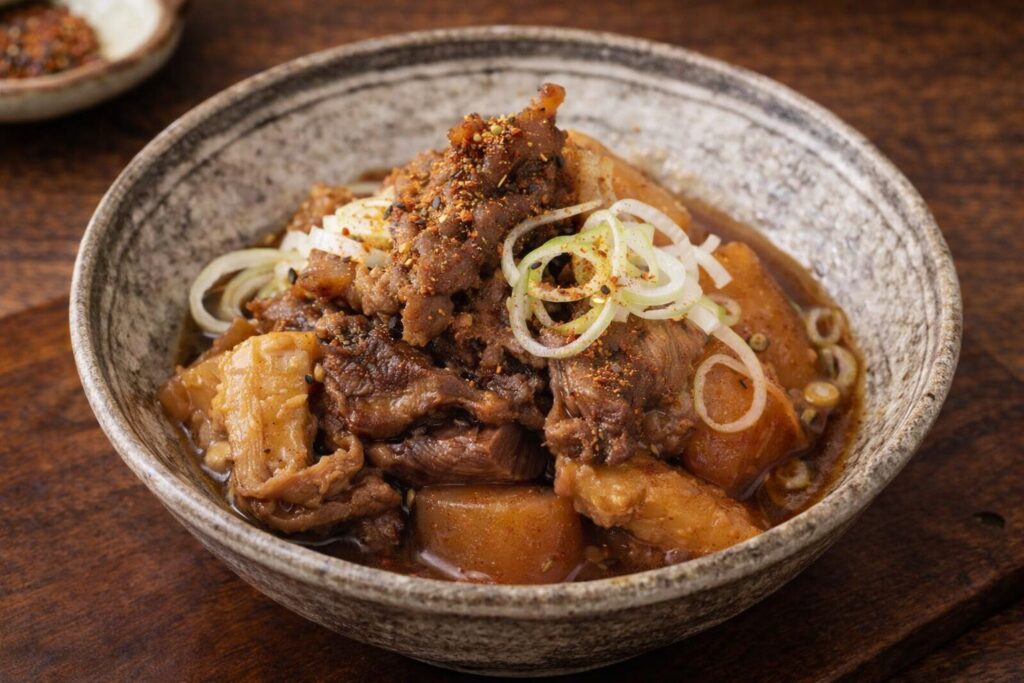
Slow-Simmered Beef Tendon
Beef tendon sounds tough.
But when cooked properly, it becomes incredibly soft.
It’s simmered for hours with:
- Soy sauce
- Mirin
- Ginger
- Aromatics
The flavor is rich but not heavy.
This is one of the most reliable beer companions at an izakaya.
It’s filling — but still feels like a small plate.
3. Doteyaki(どて焼き)
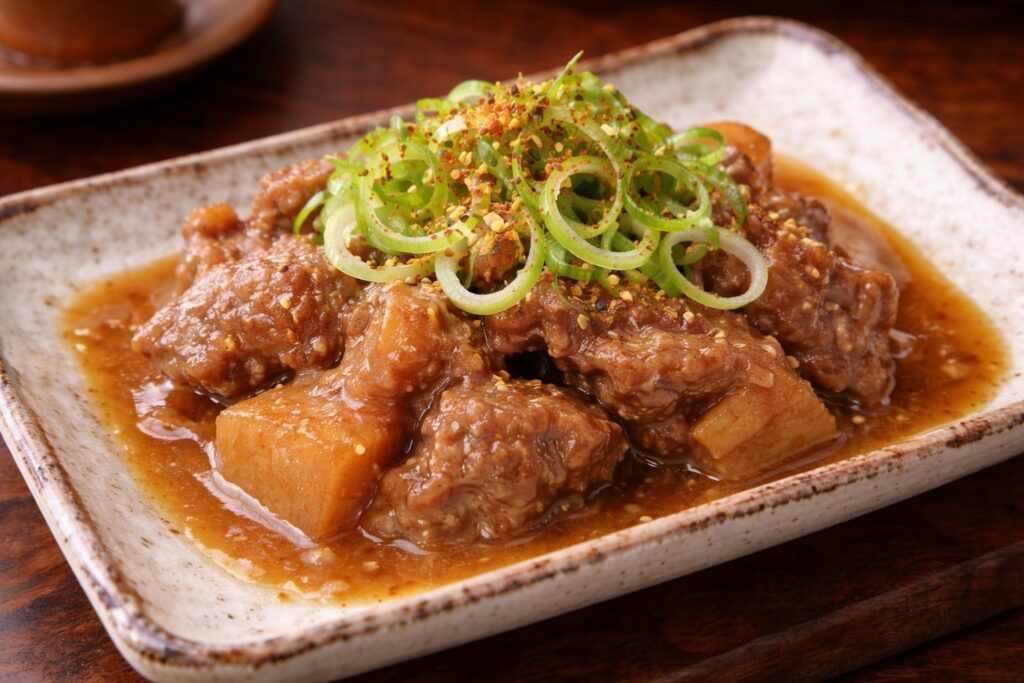
Osaka-Style Miso Beef Stew
This one is more regional.
Doteyaki is especially common in Osaka, less so in Tokyo.
The beef is simmered in sweet white miso until coated in a thick glaze.
It’s:
- Slightly sweet
- Deeply savory
- Extremely addictive
If you see this on a menu, order it.
It’s one of those dishes that makes you automatically take a sip of beer after every bite.
4. Yakitori – Hatsu(ハツ)[Salt / 塩]
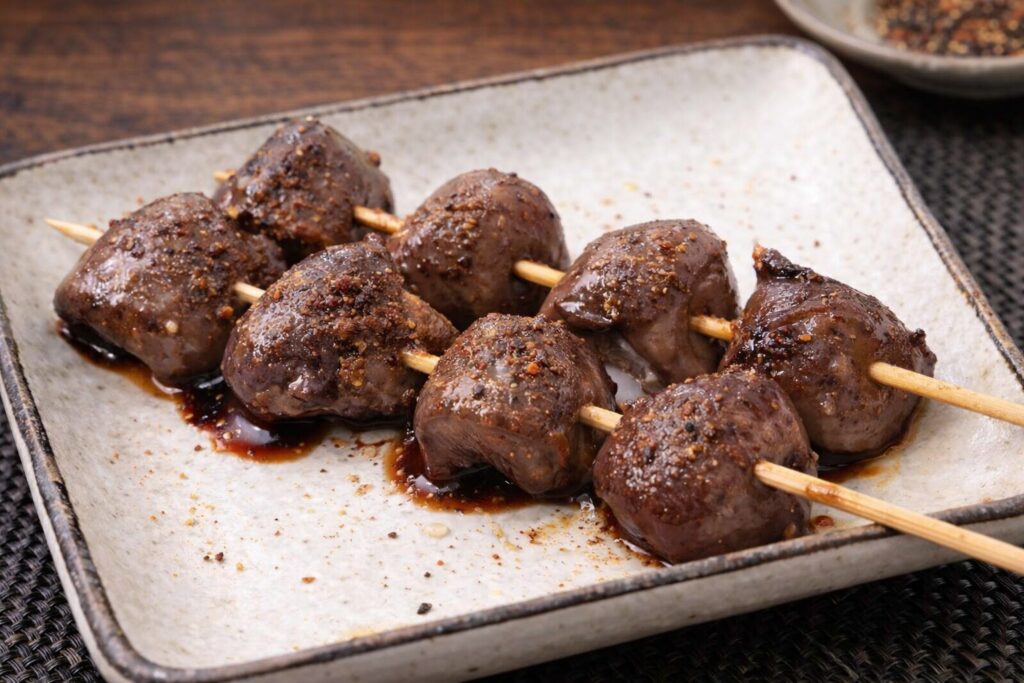
Chicken heart.
Sounds intimidating.
Actually very clean and mild.
Hatsu has:
- Springy texture
- Juicy bite
- Light flavor
I always order it with salt (shio).
Salt lets the natural taste stand out without masking it.
5. Yakitori – Negima(ネギ間)[Salt / 塩]
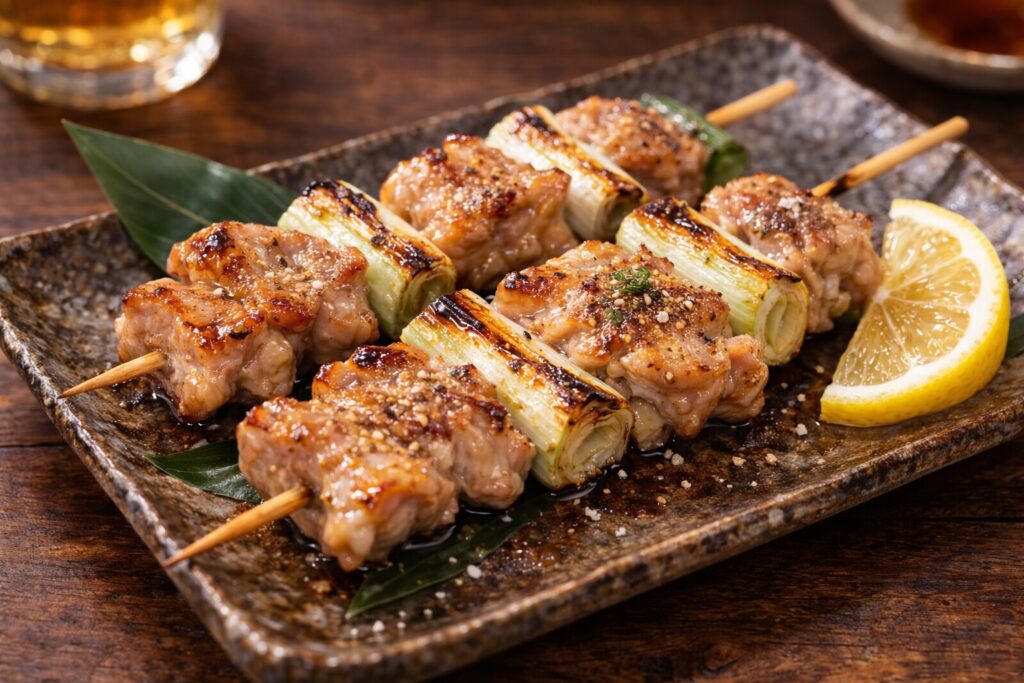
This is the classic.
Chicken thigh + green onion.
Grilled over charcoal.
It’s the safest and most reliable skewer for first-time visitors.
If you don’t know what to order:
Start here.
6. Yakitori – Reba(レバー)[Salt / 塩]
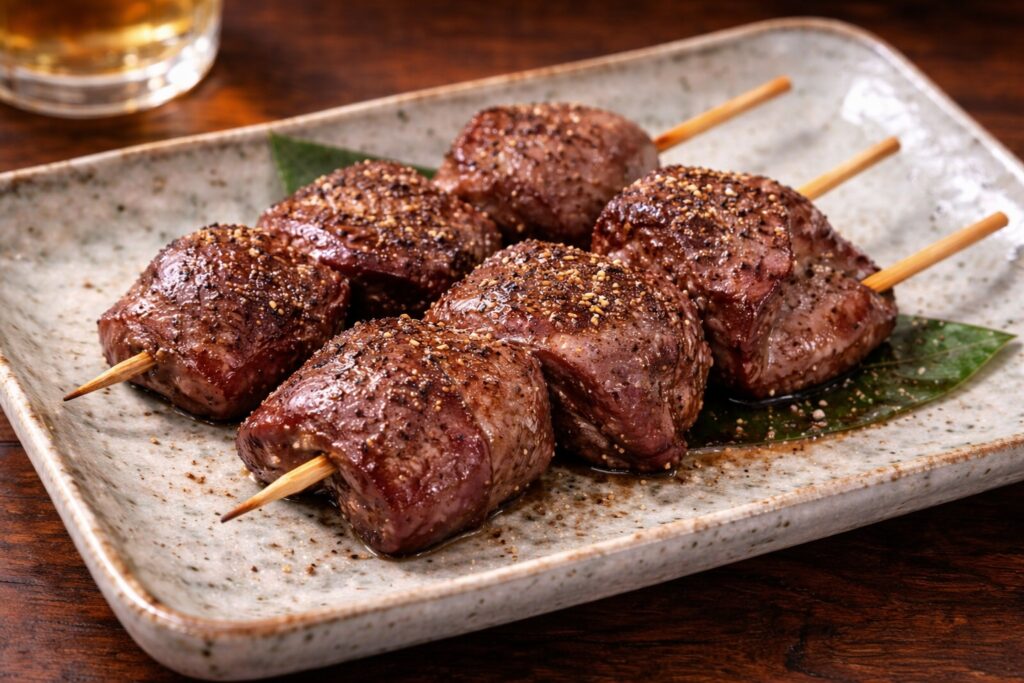
Many people say they hate liver.
But fresh yakitori liver is different.
When cooked properly, it’s:
- Soft
- Almost creamy
- Rich without bitterness
Freshness matters here.
At a good izakaya, reba can completely change your opinion of liver.
Why These Dishes Work
There’s a pattern in what I order:
✔ Slow-cooked
✔ Deep umami
✔ Works with alcohol
✔ Affordable
✔ Not flashy
Izakaya food isn’t about luxury.
It’s about reliability.
How to Order (Super Simple Japanese)
Just point and say:
Kore, onegaishimasu.
(これ、お願いします)
That’s it.
No perfect Japanese required.
What Tourists Often Miss
Many visitors order:
- Sushi
- Tempura
- Fancy seasonal specials
But locals often order:
- Simmered dishes
- Offal
- Simple yakitori
- Regional comfort food
The real izakaya experience is quieter and more practical than many people imagine.
Final Thoughts
For me, izakaya isn’t about chasing new dishes.
It’s about comfort.
It’s about sitting down, ordering something reliable, taking the first sip of beer, and feeling the stress fade.
The dishes I introduced aren’t glamorous.
But they’re real.
And that’s what makes them special.
In the next article, I’ll share the next set of dishes I always order.