
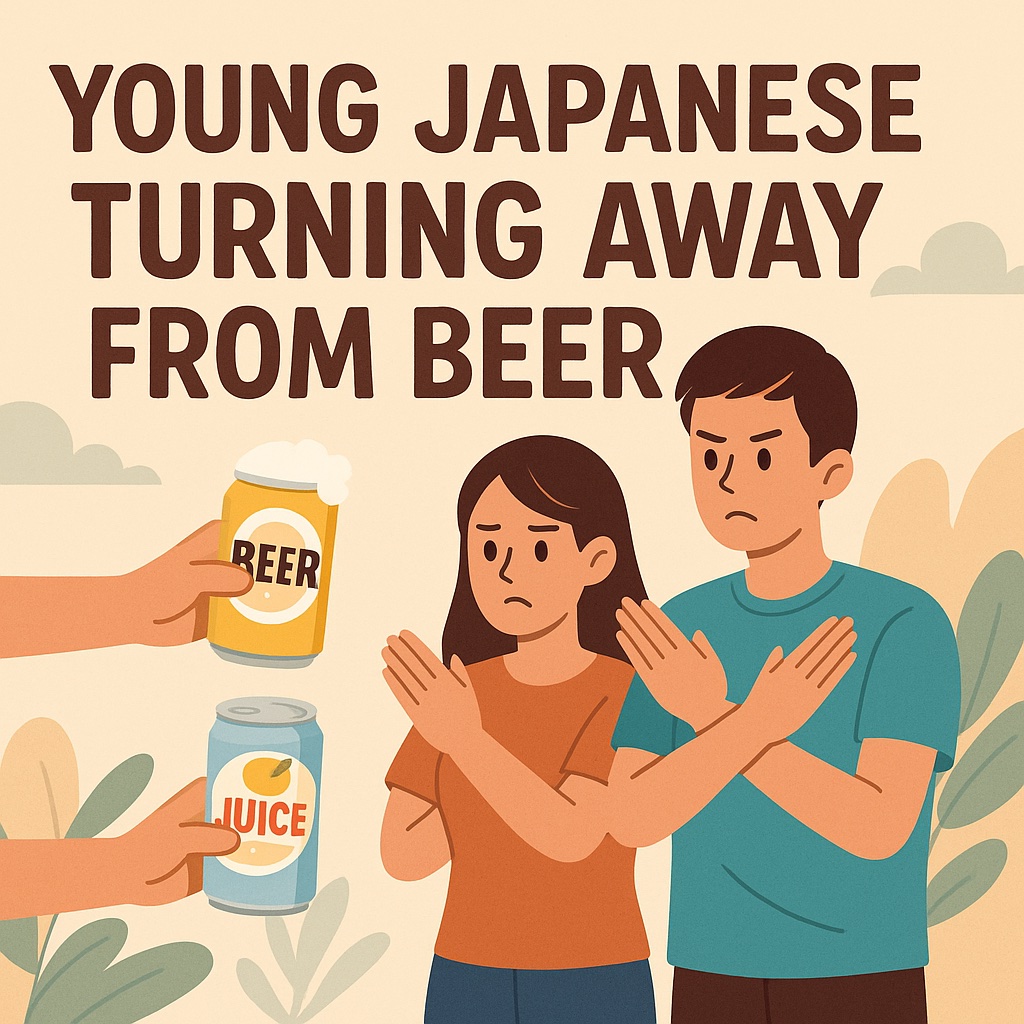
A Real Look at Japan’s Changing Drinking Culture
A few years ago, ordering drinks at an izakaya in Japan followed a predictable script.
Someone would smile and say:
“Toriaezu biiru?”
(Beer first?)
Everyone nodded.
Beer wasn’t a choice — it was the starting point.
But recently, when I sit with younger coworkers or friends in their 20s, something feels noticeably different.
No one asks about beer.
Instead, I hear:
“Lemon sour.”
“Highball.”
“I’ll just have tea.”
“I’m good — no alcohol.”
And no one reacts.
No one pressures.
No one explains.
That shift is subtle — but real.
🍺 Beer Is No Longer the Default
For decades, beer symbolized social drinking in Japan.
Office parties.
After-work gatherings.
Company welcome parties.
Beer came first.
Today, especially among people in their 20s and early 30s, that habit is fading.
This isn’t rebellion.
It’s not anti-tradition.
It’s simply that beer is no longer automatic.
📊 Young People Are Drinking Less — Period
Government and industry surveys consistently show:
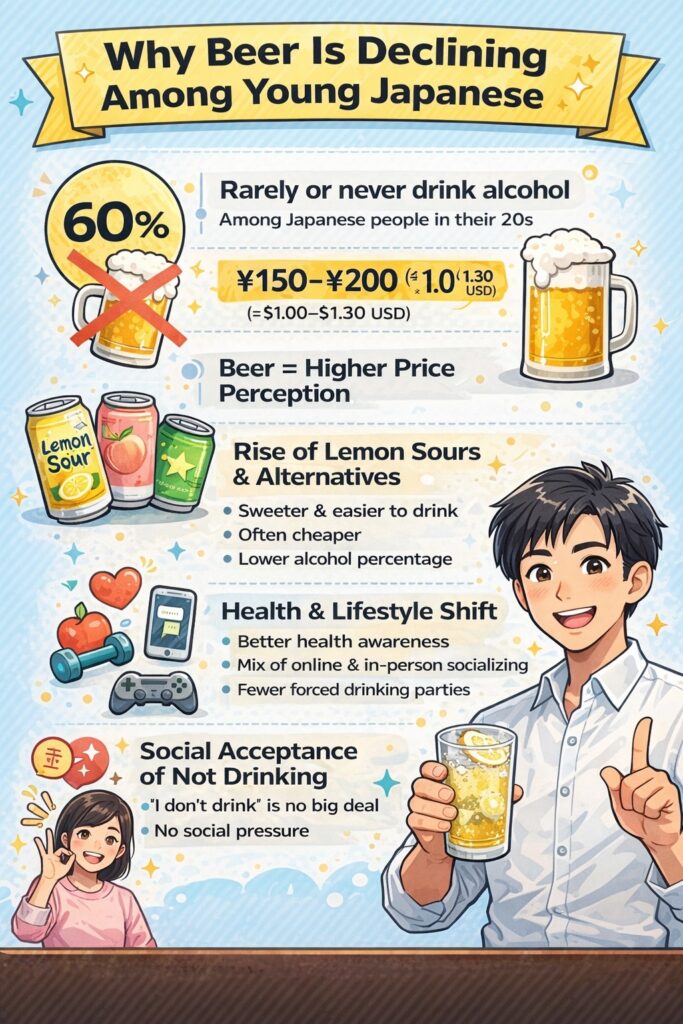
👉 Around 60% of people in their 20s say they rarely or never drink alcohol.
That’s not just about beer.
It reflects broader lifestyle changes:
- Stronger focus on health
- Less obligation to attend drinking parties
- More digital socializing (gaming, streaming, online communities)
- Greater acceptance of personal choice
In the past, not drinking required a reason.
Now you can just say:
“I don’t drink.”
And the conversation moves on.
That cultural change is significant.
💴 Beer Feels Expensive
Another simple factor: price.
A 350ml can of beer in Japan typically costs:
¥150–¥200
(≈ $1.00–$1.30 USD, exchange rate approx. ¥155/USD, late 2025)
That may not sound high globally — but in Japan’s price-sensitive culture, it matters.
Historically, Japan’s alcohol tax system placed higher taxes on beer compared to alternatives like happoshu or mixed drinks.
Even though tax reforms are narrowing the gap, the perception remains:
👉 Beer = the premium option.
For budget-conscious young adults, that influences habits.
🍋 What Replaced Beer?
Walk into any Japanese convenience store and you’ll see what’s winning.
Rows of colorful canned drinks:
- Lemon sours
- Peach cocktails
- Grape mixes
- Low-alcohol sparkling drinks
- Alcohol-free options
Why are they popular?
- Sweeter
- Less bitter
- Easier to drink
- Often cheaper
- Lower alcohol percentage
For people who don’t enjoy bitterness, beer feels heavy compared to these options.
🧠 It’s Not Just About Taste — It’s About Lifestyle
Younger generations in Japan are:
- More health-conscious
- Less tolerant of hangovers
- More focused on work-life balance
- Less interested in “drinking as bonding”
Drinking culture has become more optional.
In fact, some companies have reduced mandatory after-work drinking culture entirely.
That would have been almost unthinkable 20 years ago.
🌍 Japan Is Part of a Global Trend
This shift isn’t unique to Japan.
Similar patterns appear in:
- The United States
- South Korea
- Europe
Younger generations worldwide drink less alcohol than previous generations.
Japan simply reflects this global movement — with its own cultural twist.
🍺 Beer Isn’t Disappearing — It’s Evolving
Breweries are adapting.
You now see:
- Low-alcohol beers
- Alcohol-free beer
- Lighter-tasting varieties
- Less bitter styles
“Kanpai” still happens.
It just doesn’t automatically mean beer anymore.
🏮 From My Everyday Experience
From sitting at izakaya tables over the years, the change is clear:
- Beer used to dominate the table.
- Now, the table looks mixed.
- Sometimes half the group doesn’t drink alcohol at all.
And that’s completely normal.
No tension.
No explanation needed.
Just personal choice.
✨ The Bottom Line
Young people in Japan aren’t rejecting beer dramatically.
They’re simply choosing differently.
- Drinking less overall
- Choosing lighter options
- Watching their budgets
- Prioritizing health
- Embracing flexibility
Japanese drinking culture hasn’t disappeared.
It’s become quieter.
More individual.
More optional.
And honestly —
That feels like modern Japan.